
When the Body Stays but the Mind Slips Away: “The Other Side of Town” and Quiet Escapes from Love
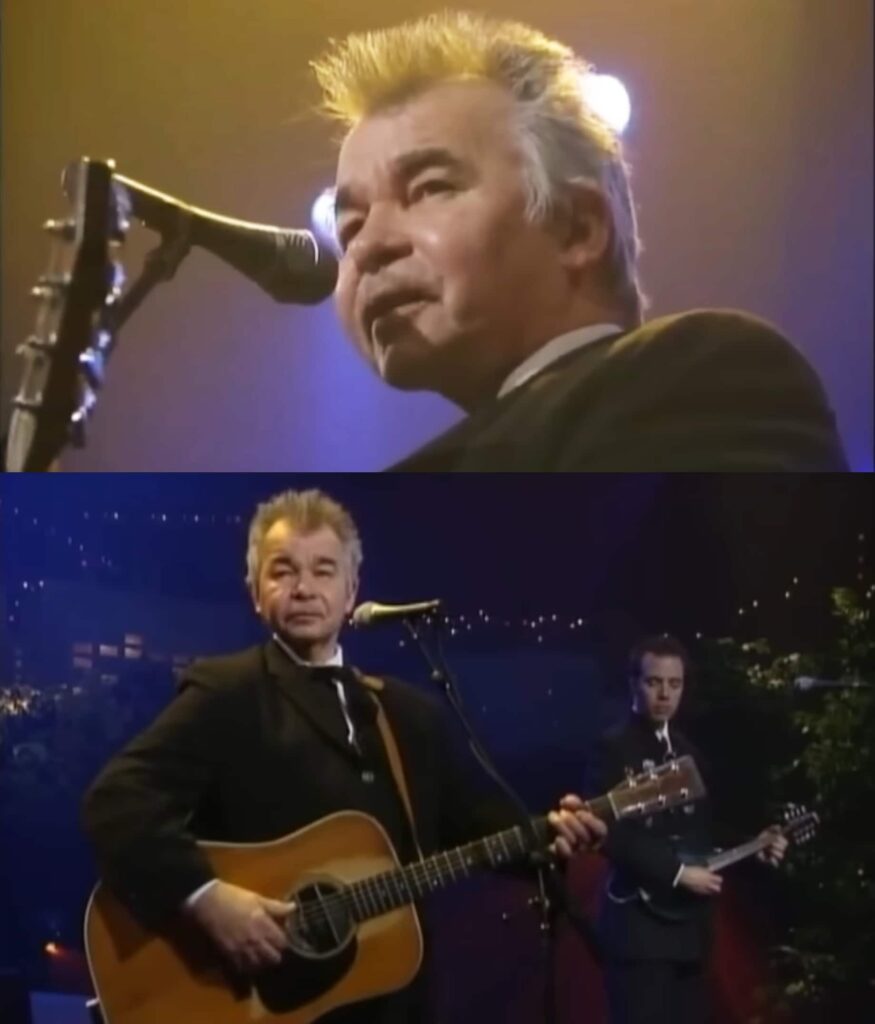
A 2005 live moment where John Prine turns humor into a tender confession of emotional distance
In a 2005 live performance, John Prine introduced The Other Side of Town with a grin and a story that felt almost too familiar to be fiction. He spoke of a man who had developed a “special ability” to travel in his mind, especially when conversations at home stretched a little too long. The audience laughed, gently, knowingly. Then Prine added a playful disclaimer, insisting there was “absolutely nothing autobiographical” about the song, a line that drew even warmer laughter. It was classic Prine. Humor first, truth waiting just beneath.
What followed was not just a performance, but a quiet unraveling of something deeply human.
From the opening lines, “The Other Side of Town” reveals a relationship worn thin by small, accumulated disappointments. There is no dramatic betrayal, no grand collapse. Instead, there is criticism, misunderstanding, and the slow erosion of tenderness. “Must you always seem to criticize me,” he sings, his voice steady, almost conversational. It is not anger that fills the room, but a kind of tired resignation.
Prine had a rare gift. He could take ordinary moments and turn them into something gently devastating. In this song, he paints the image of a man physically present, sitting in the same room, listening to the same words, yet already gone. Not in body, but in spirit. While the conversation continues, his mind drifts elsewhere, to a bar, a quiet corner, a place where he can breathe again. It is an escape that requires no movement, only imagination.
The metaphor of the clown appears like a soft echo through the song. A figure who paints on a smile, even when wearing a crown of sadness. It is simple, almost childlike, yet it carries weight. The man in the song becomes that clown, performing presence while feeling something entirely different inside. The contrast is not loud, but it lingers.
What makes this 2005 performance especially memorable is its intimacy. There is no distance between John Prine and his audience. His voice, aged and textured, carries every word with quiet authority. He does not force emotion. He lets it settle naturally, like a conversation shared late at night when the world has gone still.
The humor never fully disappears. Lines about drifting off while hearing a grocery list or mentally leaning on a jukebox bring soft laughter. But the laughter feels different as the song unfolds. It becomes recognition. Because beneath the wit lies a truth many understand but rarely say out loud. Sometimes, when words no longer connect, silence begins to grow inside a person, even while they continue to speak.
By the final verses, the image becomes almost surreal. The body remains in the room, enduring the moment, while the soul has already crossed a river, wandered into another town, found temporary refuge in imagination. It is not a triumphant escape. It is a necessary one.
Looking back, this performance stands as a quiet testament to John Prine’s storytelling brilliance. He did not need grand gestures or elaborate arrangements. Just a guitar, a voice, and an understanding of life’s smaller, more fragile moments.
And when the song ends, there is a lingering feeling that stays behind. Not sadness alone, but recognition. The kind that arrives softly, like a memory you did not realize you were carrying.