
A Quiet Voice, A Timeless Truth: When “From a Distance” First Found Its Soul Before Fame Ever Touched It
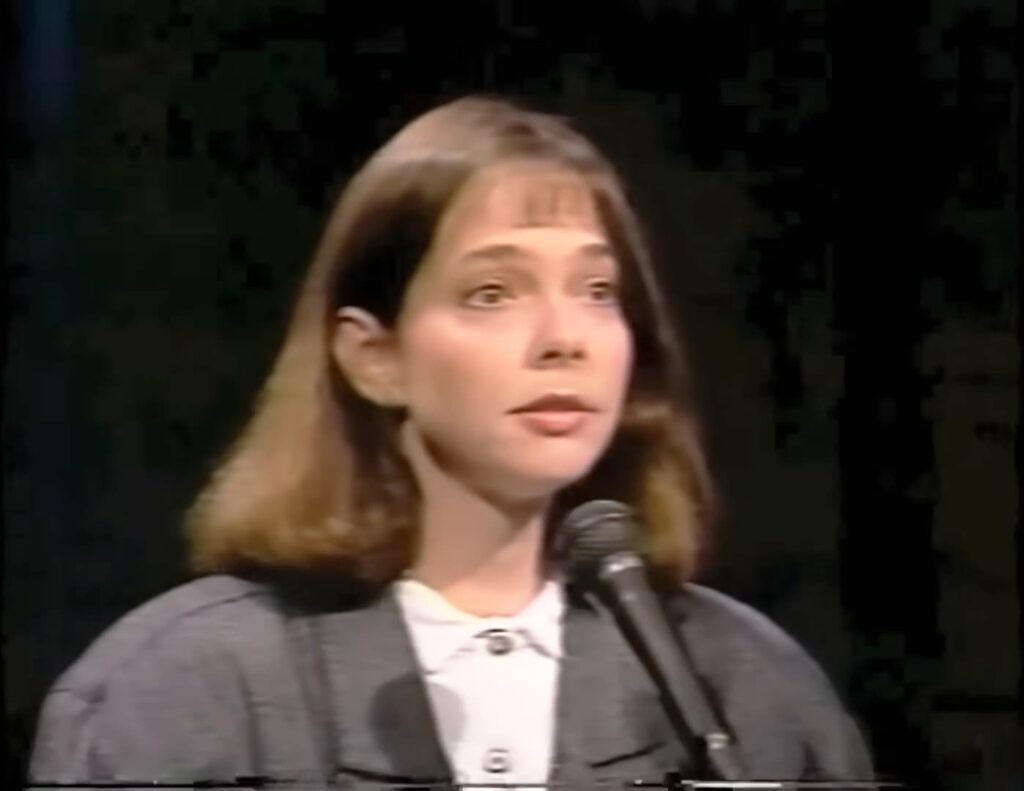
On August 30, 1988, Nanci Griffith appeared on Late Night with David Letterman, delivering an understated yet deeply affecting performance of “From a Distance.” There was no elaborate staging, no dramatic introduction, and no attempt to command attention. Instead, Griffith stood calmly under the studio lights and allowed the song to unfold with quiet conviction. In a television era increasingly drawn to spectacle, the restraint of the moment became its defining strength.
At that time, the song had not yet reached mainstream recognition. It would only gain widespread global attention years later through Bette Midler, whose polished and orchestral version transformed it into a commercial success. Yet this earlier interpretation reveals something markedly different. Griffith’s delivery feels intimate, almost fragile, as though the song were still searching for its place in the world.
The arrangement is sparse. Her voice carries the narrative without embellishment, allowing the lyrics to breathe. There is a sense of stillness in the room, a rare quiet that television seldom permits. The audience listens rather than reacts, absorbing the message rather than applauding its presentation. It is in this silence that the performance gains its emotional weight.
What distinguishes this rendition is not technical perfection but emotional authenticity. Griffith does not project the song outward as an anthem. Instead, she draws it inward, turning it into a personal reflection. The distance described in the lyrics feels less like a physical space and more like an emotional vantage point, a way of observing the world with both hope and quiet resignation.
In retrospect, this performance stands as a compelling document of a song before it became widely defined by success. It captures a moment when “From a Distance” was still delicate, still forming, still deeply connected to the voice that first carried it into the public ear. There is no sense of anticipation for future acclaim, only a sincere act of storytelling.
That is precisely why it endures. Long after the song found global recognition, this early rendition remains a reminder that sometimes the most powerful interpretations are not the ones that reach the widest audience, but the ones that speak softly enough to be truly heard.