
A song about loss, memory, and the cold silence of history — reborn decades later by musicians who understood every shadow inside it.
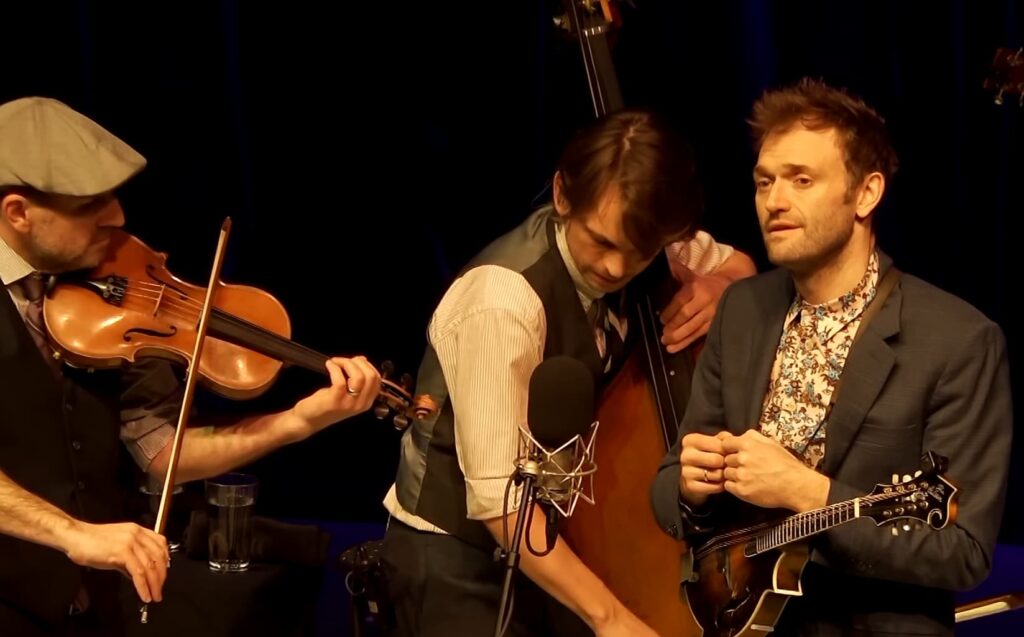
When Punch Brothers performed “The Wreck of the Edmund Fitzgerald” in Boston on March 3, 2022, they were not simply covering a famous folk ballad. They were stepping carefully into one of the most sacred stories ever written in North American songwriting — a song that had already become part legend, part mourning hymn, part historical document. And somehow, in their hands, it felt alive again.
Originally written and recorded by Gordon Lightfoot in 1976, “The Wreck of the Edmund Fitzgerald” was inspired by the real sinking of the SS Edmund Fitzgerald, a massive freighter that disappeared into Lake Superior during a violent storm on November 10, 1975. All 29 crew members were lost. There were no survivors. No final explanations. Only wreckage beneath dark water and unanswered questions carried by the wind across the Great Lakes.
The song was released as a single in November 1976 from Lightfoot’s album Summertime Dream, and against all expectations for such a somber, lengthy folk narrative, it became a major international hit. It reached No. 2 on the Billboard Hot 100 in the United States and No. 1 in Canada. Even more remarkably, it became one of the defining songs of Lightfoot’s career — not because it chased radio trends, but because it spoke with uncommon dignity and humanity. In an era crowded with disco rhythms and polished pop productions, Gordon Lightfoot offered listeners seven minutes of cold waves, church bells, and grief.
That alone says something extraordinary about the power of storytelling in music.


6
What made the song endure was not simply the tragedy itself, but the way Lightfoot approached it. He did not sensationalize the disaster. He did not turn the crew into mythical heroes or force dramatic conclusions. Instead, he wrote with restraint — almost like an old newspaper reporter standing quietly at the edge of a funeral service. The lyrics move carefully between factual details and poetic reflection, creating a mood that feels suspended between memory and weather.
“The lake, it is said, never gives up her dead…”
That opening line alone has lived in the minds of listeners for nearly half a century.
Many songs about tragedy eventually become dated by their production or tied too tightly to one historical moment. But “The Wreck of the Edmund Fitzgerald” escaped that fate because it was built on timeless emotions: helplessness, respect for working men, fear of nature, and the haunting realization that ordinary lives can vanish without warning.
By 2022, when Punch Brothers performed the song live in Boston, the meaning had evolved again. The band — known for blending bluegrass, chamber music, folk, and progressive acoustic arrangements — approached the material with deep reverence. Their version did not try to imitate Lightfoot. That would have been impossible anyway. Instead, they uncovered different textures hidden inside the composition: tension in the harmonies, fragility in the pauses, unease in the instrumental interplay.
Led by Chris Thile, Punch Brothers transformed the song into something almost cinematic. The acoustic instruments breathed like waves themselves. At moments, the arrangement felt sparse and intimate; at others, it carried the emotional weight of an approaching storm front over black water.
What made the performance especially moving was the passage of time surrounding it. By 2022, Gordon Lightfoot had become one of the last towering voices from a generation of singer-songwriters who treated songs as literature. His influence stretched across folk, country, and soft rock, inspiring artists from Bob Dylan to Elvis Presley. Hearing younger musicians reinterpret one of his masterpieces felt less like nostalgia and more like stewardship — the careful passing of a torch.
And perhaps that is why audiences continue returning to this song.
Not because it is comforting.
Not because it offers closure.
But because it reminds listeners that music can preserve human memory better than headlines ever could.
The actual wreck of the Edmund Fitzgerald still rests beneath Lake Superior today, broken in two on the lake floor. Investigations over the decades produced theories — massive waves, structural damage, cargo shifting, flooding — yet no explanation ever fully erased the mystery surrounding the sinking. That lingering uncertainty became part of the song’s emotional gravity. Lightfoot himself later made small lyrical updates after learning more details about the disaster, demonstrating how seriously he treated the story and the families connected to it.
There is also something profoundly North American about the song’s atmosphere. The Great Lakes region has its own mythology — iron ore freighters, freezing winds, isolated harbors, and blue-collar lives tied to dangerous waters. “The Wreck of the Edmund Fitzgerald” captured that world with unusual authenticity. Listeners who had never even seen Lake Superior could still feel its coldness through the music.
And when Punch Brothers revived the song in Boston, they proved something important: great songs do not age the way trends do. They deepen.
Some performances entertain for an evening.
Some songs dominate a season.
But a rare few become permanent companions to memory itself.
“The Wreck of the Edmund Fitzgerald” belongs to that final category — a song carried forward not by nostalgia alone, but by the quiet understanding that certain stories should never disappear beneath the water.