
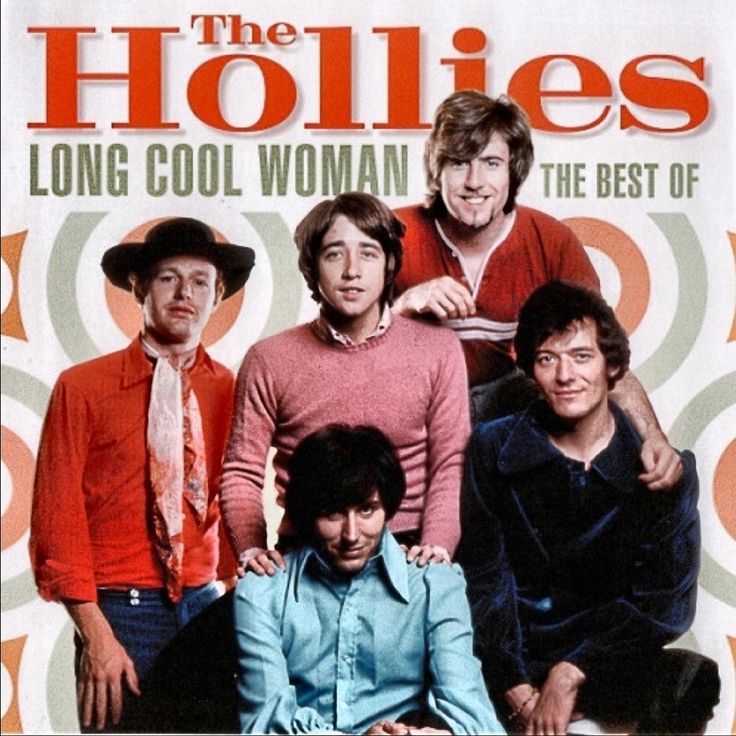
A Shadowy Tale of Desire and Danger — Where Love, Mystery, and Rock ’n’ Roll Collide in One Unforgettable Night
When Long Cool Woman (In a Black Dress) by The Hollies burst onto the airwaves in 1972, it carried with it a raw, swampy energy that felt worlds apart from the polished harmonies the band had built their reputation on. Released as a single from the album Distant Light, the song quickly climbed the charts, reaching No. 2 on the Billboard Hot 100 in the United States and No. 32 on the UK Singles Chart. For a British group often associated with melodic pop, this transatlantic success marked a striking reinvention—one that still echoes decades later.
At the center of the recording is the unmistakable voice of Allan Clarke, whose gritty, almost American Southern delivery led many listeners to mistake the band for a homegrown U.S. act. Inspired in part by the sound and attitude of Creedence Clearwater Revival, Clarke and his co-writer Roger Cook crafted something lean, urgent, and cinematic. It wasn’t just a song—it was a scene unfolding in real time.
From its opening riff, Long Cool Woman (In a Black Dress) drops the listener into a smoky, dimly lit world of Prohibition-era intrigue. The story follows an undercover federal agent caught in the chaos of a raid, only to be distracted—perhaps fatally—by the presence of a mysterious woman dressed in black. She is never fully explained, never defined, and that ambiguity becomes her power. Is she an accomplice? A bystander? A symbol of temptation? The song refuses to say, leaving space for imagination to fill in the shadows.
Behind the scenes, the recording itself has become part of rock folklore. Produced by Ron Richards, the track was reportedly laid down quickly, almost casually, with minimal overdubs. That rough immediacy is precisely what gives the song its edge—it feels alive, unpolished, and dangerously close to slipping out of control. There’s even a long-standing story that the band hadn’t intended the track to be a major single, yet its undeniable groove told a different story once it reached the public.
What gives the song its enduring resonance is not just its rhythm or narrative, but its atmosphere. There is a sense of fleeting encounter—of a moment that passes too quickly to be understood, yet lingers for years in memory. The “long cool woman” herself becomes less a person and more a feeling: the kind that arrives unannounced, changes everything, and disappears before it can be held onto.
In the broader context of The Hollies’ career, this track stands as a bold departure. Known for hits like “Bus Stop” and “He Ain’t Heavy, He’s My Brother,” the band had built a legacy on harmony and sentiment. Yet here, they traded polish for pulse, elegance for grit. It was a risk that paid off—not only commercially, but artistically, proving their ability to evolve without losing their identity.
More than fifty years on, Long Cool Woman (In a Black Dress) remains a testament to the power of reinvention. It reminds us that sometimes, the most memorable moments in music are the ones that feel almost accidental—caught in the flicker between control and spontaneity. And like the woman at its center, the song itself never fully reveals its secrets. It simply invites us to listen again, and perhaps, to remember something we can’t quite name.