
A Joyful Declaration of Love That Captures the Simple, Unshakable Desire to Be Close to the One Who Makes Life Shine
Few songs in the early 1960s captured the breathless excitement of young love as beautifully as I Only Want to Be with You, the sparkling debut single by Dusty Springfield. Released in November 1963, the song immediately announced Springfield as one of the most distinctive voices of the British pop era. It climbed to No. 4 on the UK Singles Chart and crossed the Atlantic to reach No. 12 on the Billboard Hot 100 in the United States in early 1964—an impressive achievement at a time when British artists were only beginning to break into the American market.
Written by Mike Hawker and Ivor Raymonde, the song also appeared on Springfield’s debut album Stay Awhile/I Only Want to Be with You (1964). But statistics and release dates only tell part of the story. What truly made the record unforgettable was the feeling inside it—the bright rush of devotion, the sense that nothing else mattered except being near the person who had suddenly changed everything.
From the very first drum fill and jangling guitar line, the song bursts with an almost naïve happiness. Springfield sings not with polished restraint but with a kind of eager urgency. Her voice trembles slightly, as if she herself cannot quite believe how deeply she has fallen in love. Lines like “I don’t know what it is that makes me love you so” feel spontaneous and sincere, capturing the universal experience of loving someone without needing to explain why.
Producer Ivor Raymonde, who also co-wrote the song, arranged the track with lush orchestration that balanced pop energy with sophistication. The bouncing rhythm section, the bright brass flourishes, and the sweeping strings created a sound that was both radio-friendly and emotionally rich. It was the perfect vehicle for Springfield’s warm, expressive voice—one that would soon make her one of the defining female singers of the decade.
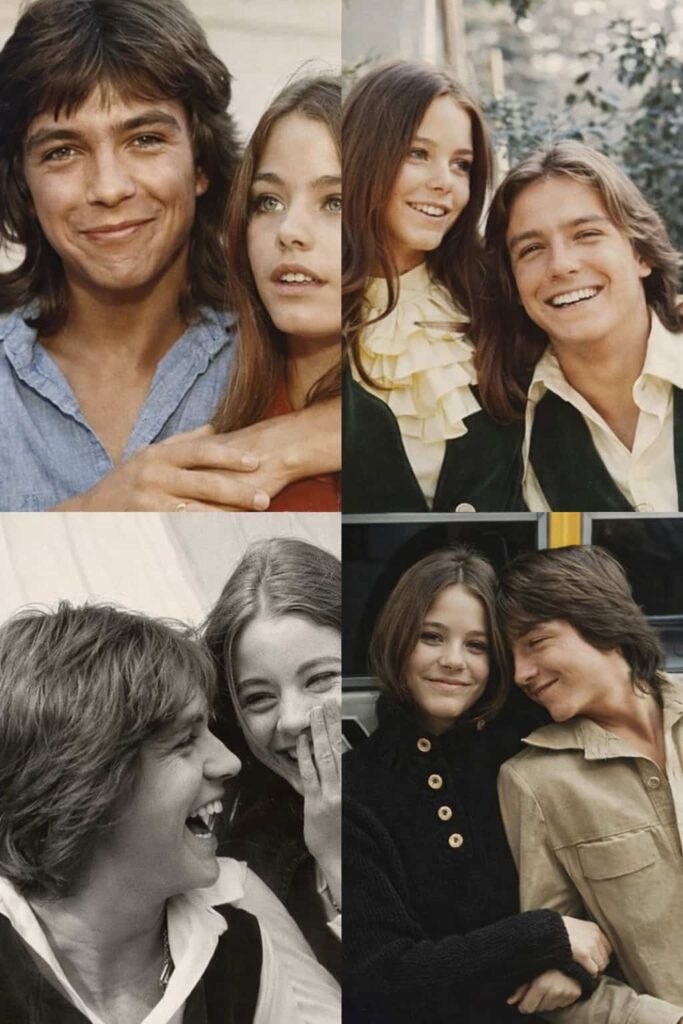
The song’s spirit of innocent devotion later resonated strongly with fans of David Cassidy and Susan Dey, the beloved young stars of the television series The Partridge Family. During the early 1970s, audiences watched Cassidy and Dey portray Keith and Laurie Partridge, siblings in a fictional musical family touring the country in their colorful bus. Yet behind the scenes—and in the imaginations of millions of viewers—there was a gentle romantic curiosity about the pair’s chemistry.
For many fans of that era, “I Only Want to Be with You” seemed to express the same sweet emotional world that surrounded Cassidy’s image as a teen idol. Though he did not record the song himself during the height of his fame, the sentiment within it perfectly matched the dreamy atmosphere of early-1970s pop culture: heartfelt, uncomplicated, and full of youthful longing.
Part of the enduring charm of Springfield’s recording lies in its simplicity. Unlike many love songs that dwell on heartbreak or dramatic passion, this one celebrates something quieter but equally powerful—the simple joy of companionship. The narrator doesn’t ask for promises of eternity or grand gestures. She asks only to be near the person she loves. That modest request, expressed with such warmth, makes the song timeless.
Over the decades, “I Only Want to Be with You” has been covered by many artists, including The Bay City Rollers, Samantha Fox, and The Tourists—the latter featuring a young Annie Lennox. Yet the original recording by Dusty Springfield remains unmatched in emotional warmth.
Listening today, the song feels like opening an old photo album: the colors are slightly faded, but the feelings remain vivid. In those two and a half minutes lives the thrill of discovering love for the first time, the hope that it might last forever, and the quiet happiness of simply sharing a moment with someone who matters.
And perhaps that is why the song continues to resonate so deeply. Long after chart positions have been forgotten and decades have passed, the message of “I Only Want to Be with You” still feels wonderfully familiar—a reminder that sometimes the greatest declaration of love is also the simplest one.