
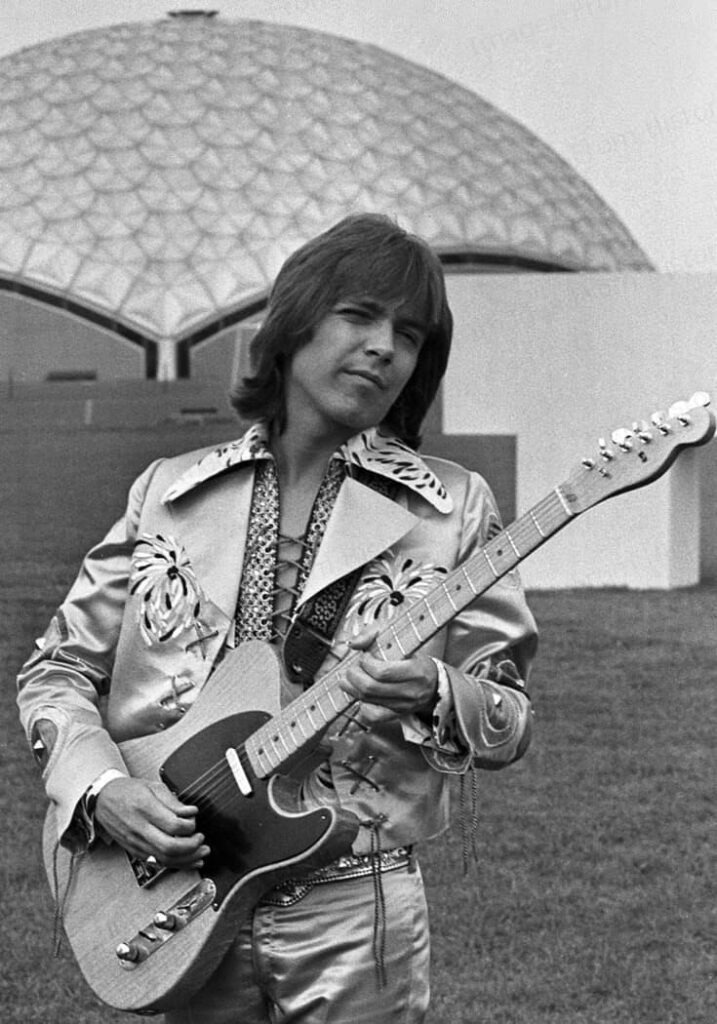
A Quiet Reflection on Youth, Fame, and the Gentle Passing of Time
When David Cassidy released “Song for a Rainy Day” in 1972 as part of his album Rock Me Baby, it did not storm the upper reaches of the charts in the way his earlier hits had. The album itself reached No. 20 on the UK Albums Chart and performed modestly in the United States, while the song remained more of a deep cut than a chart-topping single. And yet, in retrospect, this gentle, introspective piece reveals far more about Cassidy’s artistry than many of his more commercially successful recordings.
By 1972, David Cassidy was already a household name, propelled to international fame through the television series The Partridge Family and a string of pop hits that defined the early 1970s teen idol era. Songs like “Cherish” and “How Can I Be Sure” dominated radio waves, placing him firmly in the spotlight. But fame, as Cassidy would later admit, came at a personal cost. Behind the polished image was a young man searching for authenticity—yearning to be taken seriously as a musician rather than merely adored as a face on a magazine cover.
It is within this context that “Song for a Rainy Day” finds its true meaning. Unlike the upbeat, radio-friendly singles that surrounded it, the track unfolds with a quiet sincerity. Its arrangement is understated, allowing Cassidy’s voice—so often framed in bright pop production—to take on a more reflective, almost fragile tone. The song feels less like a performance and more like a confession, as though it were written for a moment of solitude rather than an audience of thousands.
Lyrically, the song speaks to introspection, to those quiet afternoons when memories drift in like soft rain against a window. It is not a song about heartbreak in the conventional sense, but rather about contemplation—about looking back, perhaps with a mixture of gratitude and melancholy. There is a sense of stillness in its melody, a deliberate pacing that mirrors the emotional weight carried within its lines. It suggests that even amid success and adoration, there are moments when one longs for something simpler, more grounded, more real.
The story behind the song is not one of dramatic events or headline-making controversy, but rather of subtle artistic intention. During the recording of Rock Me Baby, Cassidy began to assert more creative control over his work. He sought to distance himself from the manufactured pop image that had been carefully constructed for him. In doing so, he gravitated toward songs that carried deeper emotional resonance—songs that allowed him to express vulnerability. “Song for a Rainy Day” stands as a testament to that shift, capturing a fleeting but significant moment in his artistic evolution.
Listening to the track today, one cannot help but hear it differently than audiences might have in 1972. Time has a way of reshaping music, of revealing layers that were perhaps overlooked upon first release. What may have once seemed like a quiet interlude in Cassidy’s catalog now feels like a window into his inner world—a reminder that even those who appear to have everything often carry unspoken reflections within them.
In the broader landscape of early 1970s pop, “Song for a Rainy Day” may not occupy the same commercial pedestal as Cassidy’s biggest hits, but its value lies elsewhere. It is a song that rewards patience, that invites the listener to slow down and listen—not just to the music, but to the emotions beneath it. For those who return to it years later, it offers something rare: a sense of connection across time, as if the quiet thoughts of a young artist have somehow found their way into the present.
And perhaps that is the true legacy of David Cassidy’s more reflective work. Beyond the fame, beyond the charts, there remains the music itself—gentle, thoughtful, and enduring, like the soft rhythm of rain on a distant afternoon.