
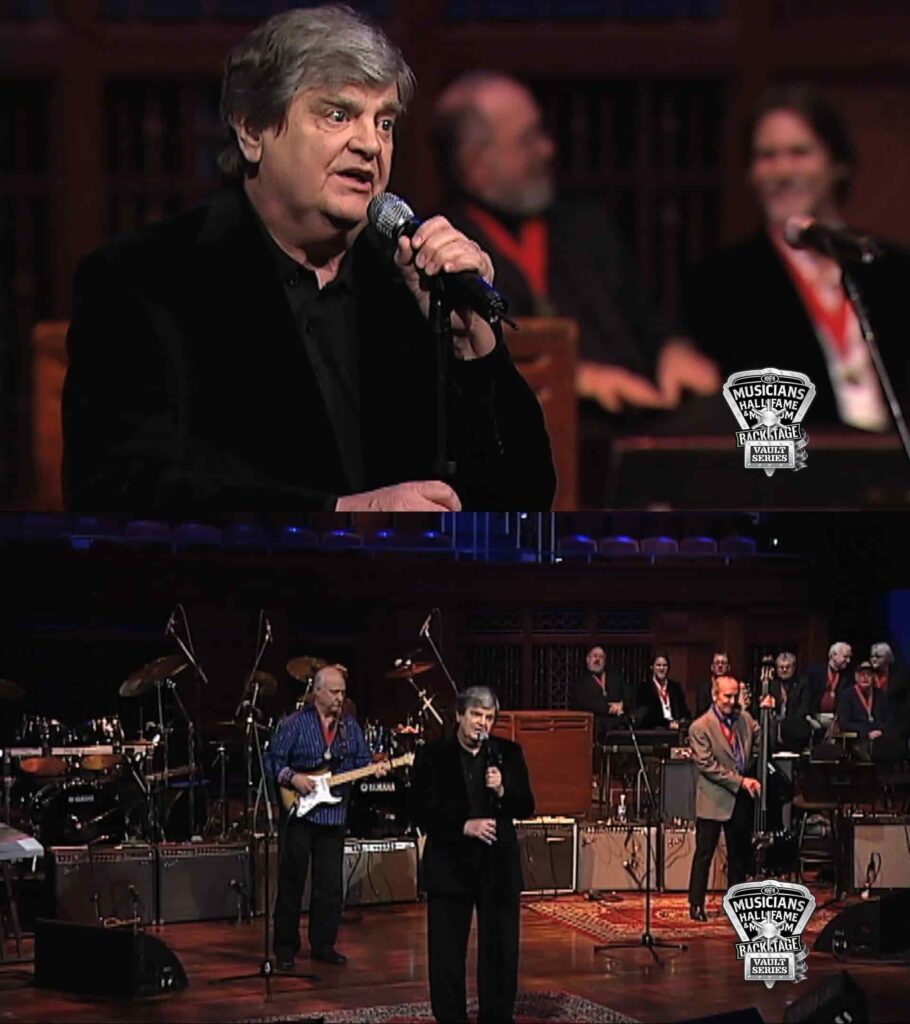
A Quiet Farewell in Song: When Let It Be Me Became a Possible Last Bow
In 2008, at the Musicians Hall of Fame Concert, one moment rose above ceremony and celebration, settling instead into something far more intimate. Phil Everly stepped onto the stage alongside The Crickets, performing the timeless ballad Let It Be Me with a grace that felt suspended between memory and goodbye. According to host Joe Chambers, Everly quietly shared that this performance might be his “swan song,” a final live appearance. Whether or not it ultimately proved true, the weight of that possibility lingered in every note.
Originally popularized in the late 1950s and forever associated with the golden harmonies of the The Everly Brothers, Let It Be Me has long stood as a declaration of devotion. But on this night, its meaning deepened. Backed by members of The Crickets, a group foundational to early rock and roll, Everly’s voice carried not the pristine blend of youth, but the textured honesty of years lived and songs remembered.
From the opening line, there was a noticeable stillness in the room. “I bless the day I found you…” was no longer just a lyric, but a reflection shaped by time. The phrasing was unhurried, almost conversational, as if each word needed space to settle. The familiar plea “now and forever, let it be me” resonated differently here, less a romantic vow and more a quiet wish not to be forgotten.
Observers noted the restraint in the arrangement. There was no attempt to recreate the lush studio sound of earlier decades. Instead, the performance leaned into simplicity, allowing Everly’s voice to stand at the center. That choice revealed subtle cracks and warmth alike, transforming the song into something deeply human. It was not perfection that held attention, but sincerity.
Historically, the connection between Everly and The Crickets added another layer of significance. Both acts helped define the vocal and instrumental language of early rock and roll. Seeing them share the stage again felt less like a reunion and more like a closing circle, a return to the roots of a musical era that shaped generations.
As the final lines faded, there was no grand gesture, no dramatic farewell. Just a gentle ending, as if the song itself knew it had said enough. In that moment, Phil Everly did not simply perform Let It Be Me. He inhabited it, turning a classic love song into a quiet meditation on presence, memory, and the fragile beauty of lasting connection.
For those who witnessed it, the performance remains less about finality and more about feeling. A reminder that sometimes, the most enduring goodbyes are the ones never formally spoken.