
When Roy Orbison Sang “It’s Over” in 1965, Heartbreak Suddenly Sounded Larger Than Life
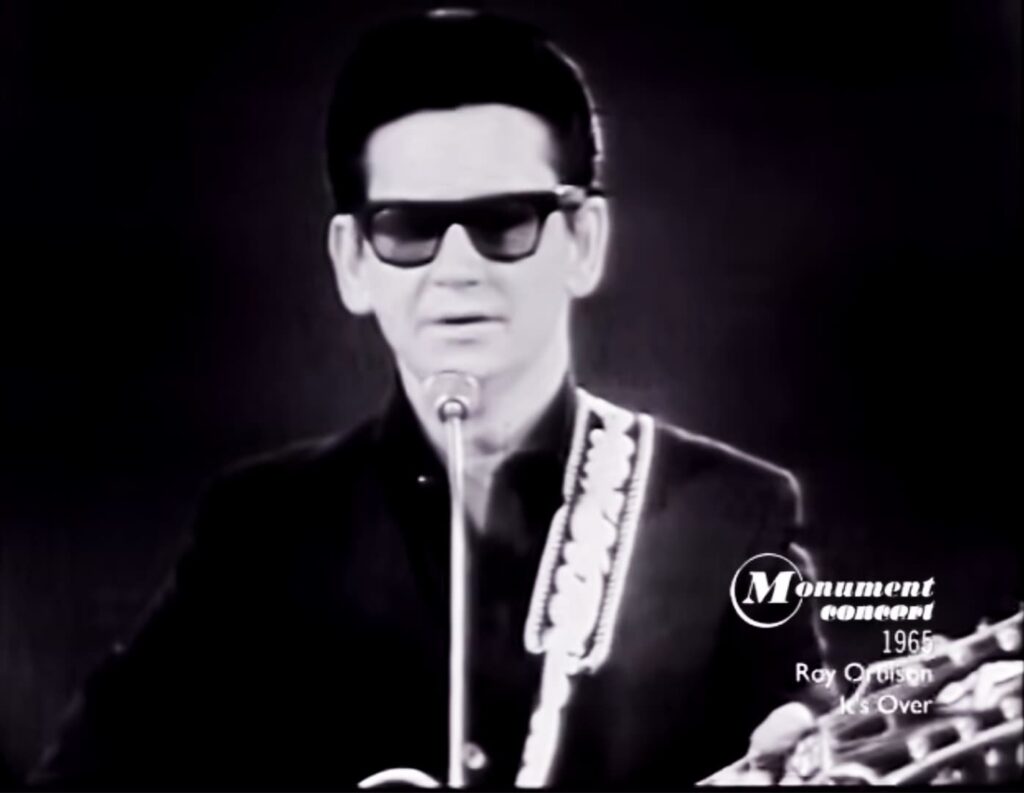
In 1965, at the height of his extraordinary career, Roy Orbison stepped onto the stage for the famous Monument Concert and delivered a performance of “It’s Over” that still feels devastating decades later. Dressed in black, standing nearly motionless beneath the lights, Orbison did not need dramatic gestures to command the room. His voice carried all the emotion the audience could bear.
Released in 1964 on Monument Records, “It’s Over” became one of Orbison’s most powerful heartbreak ballads. Written by Roy Orbison and legendary songwriter Bill Dees, the song followed the enormous success of classics like “Oh, Pretty Woman”, yet it revealed a darker and more vulnerable side of Orbison’s artistry. Where many love songs of the era softened heartbreak, “It’s Over” stared directly into it.
The 1965 concert performance captured that pain perfectly.
From the opening line, “Your baby doesn’t love you anymore,” the atmosphere inside the hall changed completely. The audience grew almost silent as Orbison’s trembling tenor moved through lyrics filled with fading rainbows, lonely sunsets, and shattered promises. He sang with a rare kind of control, holding back just enough emotion to make every word ache even more.
What made the performance unforgettable was the contrast between Orbison himself and the emotional storm inside the song. He barely moved. His face remained solemn behind his dark glasses. Yet his voice climbed higher and higher until the repeated cry of “It’s over” felt almost unbearable. By the final minute, it sounded less like a performance and more like a man trying to survive the moment in front of the audience.
During the mid-1960s, while rock and roll was becoming louder and more rebellious, Roy Orbison stood apart. He brought operatic emotion into popular music. His songs were cinematic, filled with loneliness, longing, and quiet desperation. Performances like this one reminded listeners that heartbreak could feel enormous, almost mythic, when filtered through Orbison’s voice.
The arrangement at the Monument Concert also deserves attention. The swelling orchestra behind him gave the song a grand, dramatic feeling without ever overpowering the vocal. Every rise in the strings seemed to mirror the collapse happening inside the lyrics. It was elegant, restrained, and deeply emotional all at once.
Looking back now, the performance feels like a snapshot from a vanished era of live music. No flashing screens. No elaborate choreography. Just a singer, a microphone, and thousands of people hanging onto every note. The applause at the end arrived almost as a release from the emotional tension Orbison created during those few unforgettable minutes.
For many longtime fans, “It’s Over” remains one of the clearest examples of why Roy Orbison was unlike anyone else in popular music. He could turn sorrow into something strangely beautiful. Even today, that 1965 performance continues to echo like an old memory people never quite forget, a reminder of a time when a single voice could break hearts in complete silence.