
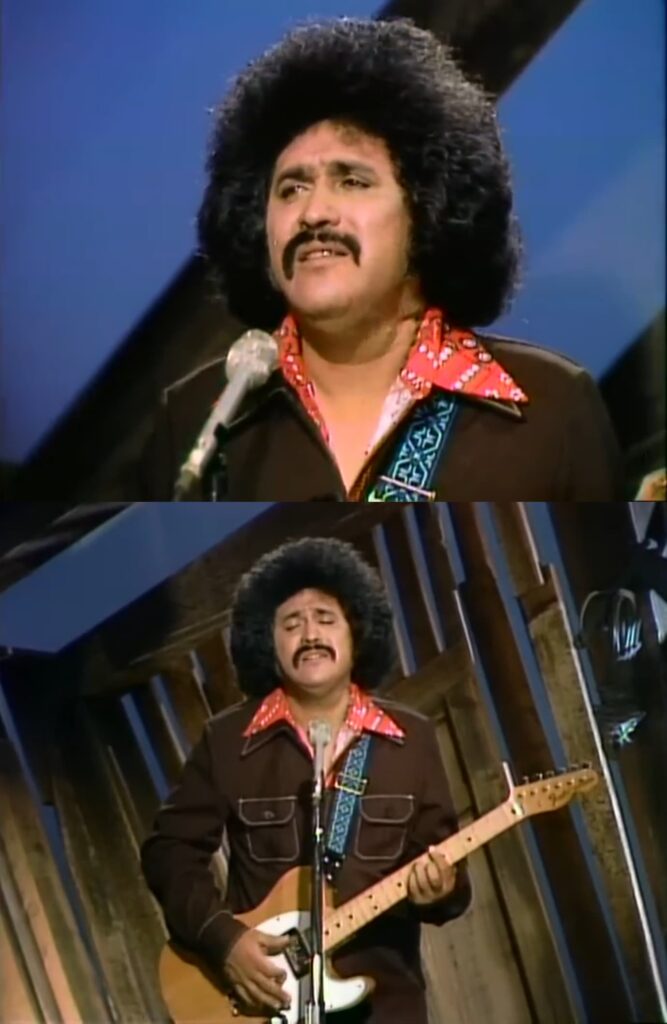
A SIMPLE SONG OF HEARTBREAK AND DEVOTION TURNED FREDDY FENDER INTO ONE OF COUNTRY MUSIC’S MOST UNFORGETTABLE VOICES
On the brightly lit stage of Hee Haw, surrounded by laughter and easy country charm, Freddy Fender stepped forward with a softness that instantly changed the mood in the room. The jokes faded. The audience grew quiet. Then came the opening line of “Before the Next Teardrop Falls”, a song that carried tenderness, sorrow, and unconditional love in every note.
Released in 1975, the song had already become a defining moment in Fender’s remarkable career. It reached No. 1 on both the Billboard Hot Country Singles chart and the Billboard Hot 100, an achievement few country artists accomplished during that era. Yet what made the song unforgettable was never just its commercial success. It was the honesty in Freddy Fender’s voice. He did not sing like a polished superstar trying to impress the world. He sounded like a man speaking directly from the heart.
During this memorable Hee Haw performance, that sincerity filled every second.
As the band played gently behind him, Fender sang the opening words with deep restraint:
“If he brings you happiness, then I wish you all the best…”
There was no bitterness in the lyric. No anger. Only quiet heartbreak and enduring love. That emotional maturity became one of the reasons the song connected so deeply with listeners across America. It spoke to people who understood sacrifice, regret, and the painful grace of letting someone go.
Then came the moment that always set “Before the Next Teardrop Falls” apart from other country ballads of the decade. Freddy Fender shifted effortlessly into Spanish.
The atmosphere changed instantly.
His bilingual performance was more than a musical choice. It was a reflection of his identity, his roots, and the cultural bridge he carried into mainstream country music at a time when such representation was rare. Fender, born Baldemar Huerta in Texas, brought a warm South Texas flavor into Nashville without ever abandoning who he was. That authenticity gave the song a unique emotional texture that listeners never forgot.
On the Hee Haw stage, the Spanish verses flowed naturally, almost like a private confession whispered through melody. Even those who did not understand every word could feel the emotion behind them. The audience listened in complete stillness as Fender promised:
“I’ll be there… before the next teardrop falls.”
By the final chorus, the performance no longer felt like television entertainment. It felt personal. Familiar. Like hearing an old memory come back to life late at night beside a radio.
And then, just as quickly, the sorrow gave way to laughter.
The applause erupted, and Freddy Fender returned to the playful spirit of Hee Haw with a pair of humorous jokes about marriage and husbands. The audience laughed warmly as he delivered the punchlines with effortless charm, even joking in Spanish that if a man claims he is the boss of the house, “you better watch him. He’ll lie about other things, too.”
That contrast captured exactly why Freddy Fender remained so beloved for decades. He could break hearts with a ballad one moment, then make an entire crowd laugh the next. There was no distance between the performer and the people listening to him. He felt real.
Today, that performance of “Before the Next Teardrop Falls” remains one of the most cherished memories from classic country television. Not because it was flashy or dramatic, but because it reminded audiences of something timeless: the most powerful songs are often the gentlest ones.
 Oldies Songs