
A Young Love Captured on Live Television That Helped Define Early Rock & Roll
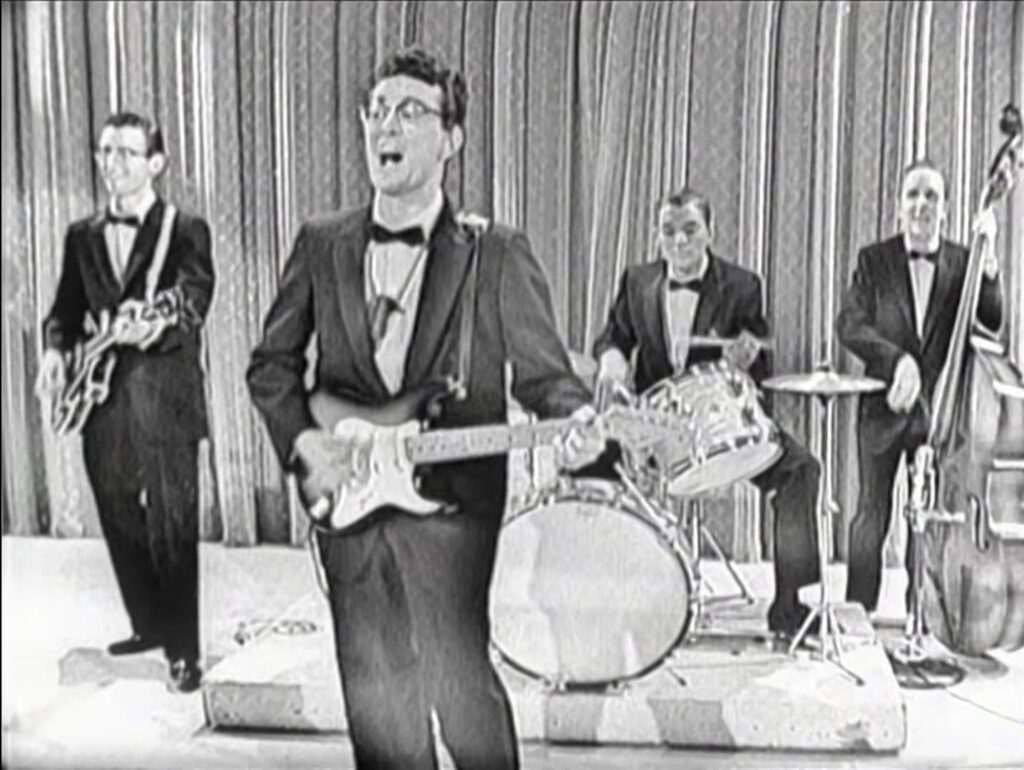
On December 1, 1957, Buddy Holly & The Crickets stepped onto the stage of The Ed Sullivan Show, delivering a performance of “Peggy Sue” that would quietly etch itself into the foundation of rock & roll history. Broadcast into millions of American homes, the moment carried a raw, unpolished energy that studio recordings could never fully replicate. It was not just a song. It was a declaration of a new musical spirit.
Released earlier that year as a single, “Peggy Sue” had already climbed the charts, reaching No. 3 on the Billboard pop chart. Written by Buddy Holly, along with Jerry Allison and Norman Petty, the song stood out for its infectious rhythm and emotional immediacy. Yet, on that December evening, it was the live performance that revealed its true heartbeat.
From the opening line, Holly’s voice rang clear and earnest, carrying a sense of youthful longing that felt both intimate and universal. Backed by The Crickets, the sound was tight yet spontaneous. The steady rhythm guitar, the crisp drumming, and the unmistakable hiccup in Holly’s vocal delivery created a sonic texture that felt alive, almost conversational. The repeated refrain of “Peggy Sue” was not merely a lyric but a pulse, echoing through living rooms with a kind of urgency that lingered long after the applause faded.
What made this performance remarkable was its simplicity. There were no elaborate stage effects, no theatrical gestures. Holly stood with his guitar, glasses catching the studio lights, delivering the song with a quiet confidence. In that restraint, there was authenticity. It was the sound of a young artist trusting the power of melody and emotion over spectacle.
Looking back, the performance now carries an added layer of poignancy. Just over a year later, in February 1959, Buddy Holly would be gone, leaving behind a legacy far greater than his brief career might suggest. Moments like this appearance on The Ed Sullivan Show serve as living documents of his artistry.
In that fleeting television broadcast, “Peggy Sue” became more than a hit record. It became a memory, preserved in black and white, where a young man’s voice and a simple love song helped shape the sound of a generation.