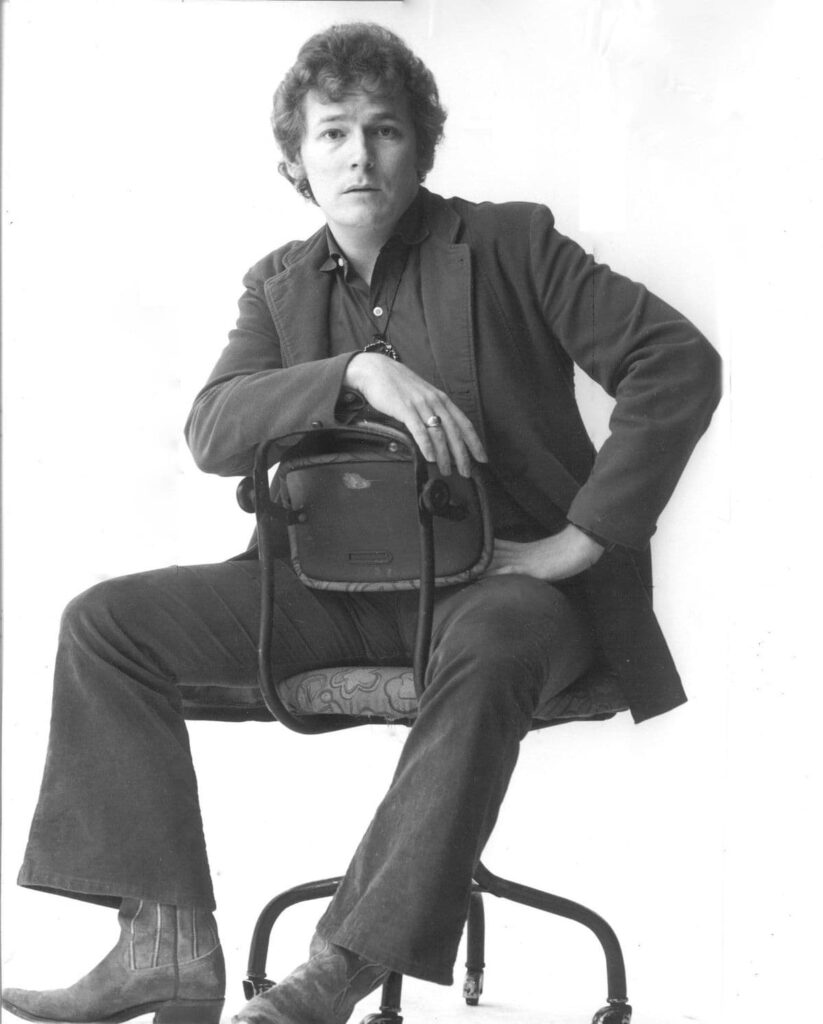
A quiet song about friendship, distance, and the painful truth that some circles in life never stay complete forever.

When Gordon Lightfoot released “The Circle Is Small (I Can See It in Your Eyes)” in 1978, it did not arrive with the thunder of arena rock or the glitter of disco that dominated the era. Instead, it came softly—almost cautiously—like an old letter rediscovered in a drawer years after it was written. Yet that quiet sincerity became the very reason the song endured. It reached No. 33 on the Billboard Hot 100 in the United States and climbed even higher in Canada, where Lightfoot remained one of the nation’s most treasured storytellers. The song later appeared on the album Endless Wire, a record that captured the reflective mood of Lightfoot’s late-1970s songwriting period.

What many listeners may not realize is that “The Circle Is Small” actually began its life much earlier. Gordon Lightfoot first recorded a different version of the song back in the 1960s, during his folk-club years, long before his international commercial peak. But like many great songwriters, Lightfoot revisited old ideas when age and experience had deepened their meaning. By the time he re-recorded it in 1978, the song no longer sounded like youthful observation—it sounded lived-in. The passing years had added weight to every line.

And perhaps that is why the song touches people so deeply.

Unlike many breakup songs of its time, “The Circle Is Small” is not filled with bitterness or dramatic accusations. There is no grand explosion, no villain, no theatrical heartbreak. Instead, the song speaks about the quiet drifting apart that happens between people who once believed their bond was unshakable. Lightfoot understood something many songwriters missed: sometimes relationships do not end because of betrayal. Sometimes life itself slowly pulls people in different directions until the distance becomes impossible to ignore.

See also  Gordon Lightfoot - Somewhere U.S.A.

That emotional subtlety became one of Gordon Lightfoot’s greatest strengths as a writer.

By the late 1970s, Lightfoot was already widely respected thanks to classics like “If You Could Read My Mind,” “Sundown,” and “The Wreck of the Edmund Fitzgerald.” But “The Circle Is Small” revealed another side of him—less cinematic perhaps, but deeply human. The song carries the weary wisdom of someone looking back at old friendships, old romances, and the invisible lines that separate memory from reality. There is resignation in the lyrics, but also compassion. Lightfoot never sounds angry. He sounds thoughtful… almost accepting.

Musically, the arrangement is understated in the best possible way. The acoustic guitar remains central, as expected in a Gordon Lightfoot recording, but the production reflects the polished adult contemporary sound of the late 1970s. Gentle electric piano textures, restrained percussion, and smooth harmonies surround his unmistakable voice. By this point in his career, Lightfoot’s vocals had developed a roughened texture that gave his songs even greater emotional credibility. He no longer sounded like a young dreamer. He sounded like a man who had seen promises fade and still chose to sing gently about them.

There is also something timeless about the title itself: “The Circle Is Small.” It feels almost philosophical. A reminder that human lives intersect only briefly. Friends disappear. Lovers become strangers. Even families drift apart with time. The world becomes smaller as the years pass, not because there are fewer people, but because experience teaches us how fragile connection really is.

That idea resonated strongly with audiences during the late 1970s, an era when singer-songwriters were beginning to move away from idealism toward more reflective, mature storytelling. Artists like James Taylor, Jackson Browne, and Joni Mitchell were exploring similar emotional territory, but Gordon Lightfoot possessed a uniquely Canadian restraint—quiet, observant, deeply poetic without ever sounding overly literary.

See also  Gordon Lightfoot - High and Dry

Today, “The Circle Is Small” may not receive the same radio attention as “Sundown” or “Carefree Highway,” yet many longtime listeners consider it one of Lightfoot’s most emotionally honest recordings. It belongs to that special category of songs that seem to grow more meaningful over time. A younger listener may hear sadness in it. An older listener often hears recognition.

And perhaps that is the true power of Gordon Lightfoot’s music.

He never tried to overwhelm the listener with spectacle. He simply told the truth as he understood it—about love, distance, memory, regret, and the quiet passing of time. “The Circle Is Small” remains one of his most delicate reflections on those themes, carried not by dramatic production or chart dominance, but by emotional authenticity.

Long after the song fades, that feeling lingers. The realization that life moves forward, people change, and some circles never close the way we once hoped they would.

Video

Leave a Reply

Your email address will not be published. Required fields are marked *