
A quiet meditation on faith, longing, and the lifelong search for grace within “The Maker”
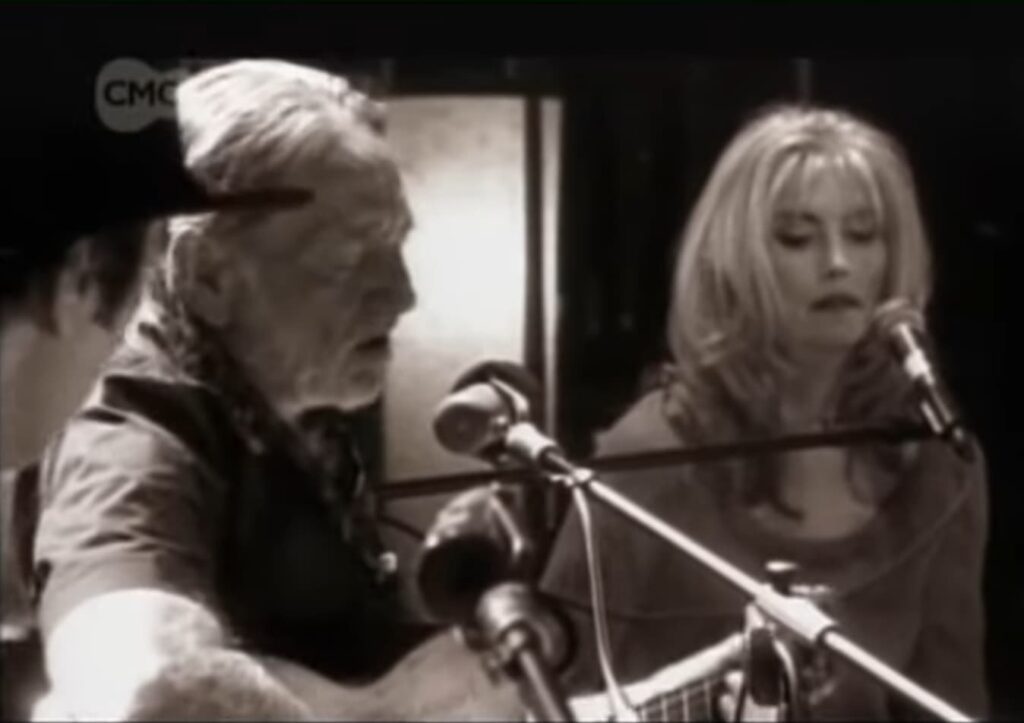
In a performance that feels suspended in time, Willie Nelson and Emmylou Harris breathe new life into “The Maker”, a song originally penned by Daniel Lanois. Their rendition unfolds not as a mere cover, but as a deeply personal conversation with memory, faith, and the passage of years.
From the opening notes, the atmosphere is unmistakably intimate. Nelson’s weathered voice carries the weight of lived experience, each line delivered with a fragile sincerity that cannot be imitated. Harris follows with harmonies that feel almost spiritual, her tone hovering gently above the melody like a quiet reassurance. Together, they transform “The Maker” into something less performative and more confessional.
What stands out immediately is the restraint. There is no rush, no attempt to impress. Instead, the song unfolds patiently, allowing every lyric to settle. The sparse instrumentation creates space for reflection, drawing the listener inward. It recalls an earlier era of music where emotion was not amplified through production, but through presence and honesty.
The lyrics themselves speak of searching for meaning, for connection with something greater. In the hands of these two artists, those words resonate differently. There is a sense of having walked long roads, of having asked these questions before. When Nelson sings, it feels like a man looking back. When Harris joins, it feels like an answer that may never fully arrive, yet still comforts.
Listeners may find themselves transported, not to a specific place, but to a feeling. Perhaps a quiet evening long ago, a familiar voice on the radio, or a moment when music provided solace without explanation. This is where the performance finds its true power. It does not demand attention, it earns it slowly, gently.
In an age of constant noise, this version of “The Maker” stands as a reminder of what music once was and still can be. It invites stillness. It rewards patience. And most importantly, it lingers long after the final note fades, like a memory that refuses to be forgotten.