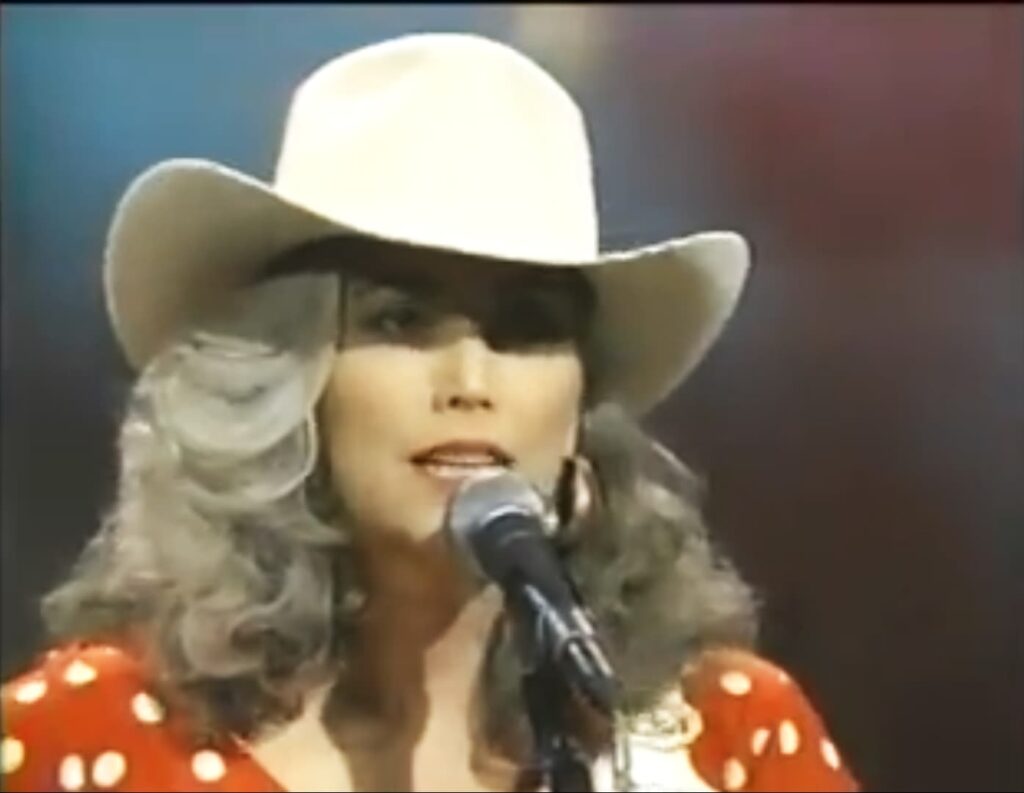
When Emmylou Harris Sang “Guitar Town” Live with The Nash Ramblers, It Sounded Less Like a Cover Song and More Like a Letter Sent Back to the Last Great Era of Highway Country Music
There is something beautifully fitting about hearing Emmylou Harris sing Steve Earle’s “Guitar Town.”
The song was already built from restless American imagery: highways at night, cheap motels, radio static, trucks rolling through Texas darkness, musicians chasing impossible dreams with little more than a guitar and stubborn hope. But when Emmylou Harris and The Nash Ramblers performed it live, the song gained another emotional layer entirely.
It became a reflection on survival.
Originally released by Steve Earle in 1986, “Guitar Town” arrived during a period when mainstream country music was becoming increasingly polished and commercially controlled. Earle’s version still carried dirt under its fingernails. It sounded like real roads, real bars, and real musicians trying to outrun failure one mile at a time.
By the time Emmylou Harris took hold of the song, she understood that world intimately.
No artist represented the wandering soul of Americana music more completely than Emmylou. From her earliest days alongside Gram Parsons through decades of country, folk, bluegrass, and roots music, she always seemed connected to the drifting side of American songwriting, the side filled with highways, loneliness, and beautiful uncertainty.
That connection gives her version of “Guitar Town” remarkable emotional authenticity.
When she sings, “Hey pretty baby, won’t you hold me tight,” there is no flashy performance energy behind it. It sounds lived in. Weathered. Like someone who has spent decades moving from town to town beneath stage lights and motel signs, understanding exactly how temporary life on the road can become.
And then there is the sound of The Nash Ramblers behind her.
The band does not overpower the song or modernize it unnecessarily. Instead, they preserve the rolling locomotive rhythm that made the original recording feel like motion itself. Every instrument pushes forward with relaxed confidence. The guitars ring brightly, the rhythm section keeps everything moving like tires on asphalt, and the entire performance feels suspended somewhere between honky tonk tradition and open highway freedom.
What makes the live version especially moving now is the perspective Emmylou brings to it.
When younger artists sing about the road, it can sound romantic. With Emmylou Harris, it sounds remembered.
There is a quiet wisdom inside her phrasing that transforms the song from youthful escape fantasy into something more reflective. The highways inside “Guitar Town” no longer feel endless. They feel traveled.
That emotional maturity is part of what made Emmylou Harris such an extraordinary interpreter of songs throughout her career. She never simply sang lyrics. She carried history into them.
Watching this performance today also revives memories of an older country music world that has largely disappeared. A world where artists could still sound rough around the edges, where roots music remained tied to regional identity and storytelling instead of branding strategies and digital algorithms.
Performances like this remind audiences that country music once belonged to wanderers, drifters, working musicians, and road weary dreamers.
There is also something quietly symbolic about Emmylou Harris singing “Guitar Town.”
By the time of this performance, she herself had already become one of the last great guardians of that entire musical tradition. Her silver hair, calm stage presence, and unshakable dignity gave the song an almost historical weight. She no longer sounded like someone chasing the dream.
She sounded like someone who survived it.
And perhaps that is why the performance lingers emotionally long after the final note fades.
It captures a rare feeling modern music often forgets:
That the road can break your heart and still feel like home.
Video: