
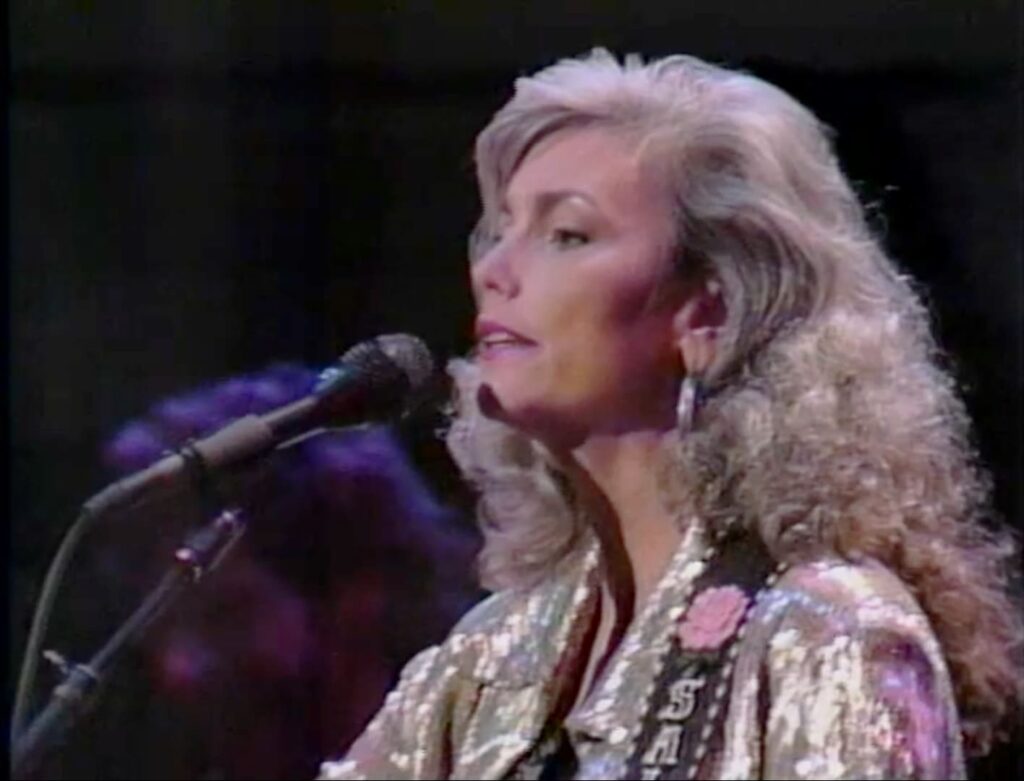
When Emmylou Harris Sang “One of These Days,” She Wasn’t Looking Back. She Was Finally Ready to Move Forward.
By the early 1990s, Emmylou Harris had already established herself as one of country music’s most respected voices. Yet when she performed “One of These Days” with The Nash Ramblers, the song carried a freshness that proved great music does not belong to a single era. Rather than revisiting an old favorite out of nostalgia, Harris breathed new life into a classic about resilience, quiet determination, and the promise that better days still lie ahead.
Originally written by Earl Montgomery and first recorded by George Jones in the early 1970s, “One of These Days” tells the story of someone refusing to remain trapped by heartbreak forever. There is sadness in the lyrics, but there is also confidence. Instead of pleading for lost love to return, the narrator believes that healing will come in time. It is a message of patience rather than revenge, making the song feel deeply human decades after it was first written.
That emotional balance has always suited Emmylou Harris. Throughout her career, she possessed a remarkable ability to find hope inside melancholy. Her voice never exaggerated pain, nor did it rush toward optimism. Instead, she allowed both emotions to exist together, giving listeners the feeling that recovery is a journey rather than a single moment.
Her collaboration with The Nash Ramblers brought another layer of authenticity to the performance. Formed to accompany Harris during her acclaimed acoustic tours, the group embraced traditional country instrumentation rooted in fiddles, mandolins, upright bass, and acoustic guitars. Their sound reflected a deep respect for classic American country music while avoiding the polished production that had become increasingly common in Nashville during the period.
That simplicity allows “One of These Days” to breathe naturally. Every instrument serves the song instead of competing for attention. The gentle rhythm, tasteful harmonies, and understated musicianship create the feeling of an intimate gathering rather than a carefully choreographed concert. It is music built on craftsmanship, where every note supports the story.
One of the performance’s greatest strengths is Emmylou Harris’ vocal restraint. She never forces emotion or relies on dramatic flourishes. Instead, she sings with quiet conviction, allowing years of experience to deepen every lyric. By the early 1990s, Harris had already lived through remarkable artistic triumphs and profound personal losses. That lived experience gives her interpretation a wisdom that cannot be taught.
The performance also reflects an important chapter in Harris’ career. During this period, she increasingly embraced acoustic arrangements and traditional country influences, reconnecting with the roots that had shaped her earliest recordings. Working with The Nash Ramblers was not an exercise in nostalgia. It was a reminder that timeless songs often become even more powerful when stripped to their essentials.
Looking back today, “One of These Days” feels especially relevant because its message remains universal. Everyone experiences disappointment. Everyone reaches moments when moving forward seems impossible. Yet the song quietly insists that healing does not always arrive dramatically. Sometimes it comes one ordinary day at a time until the heart discovers it is finally ready to begin again.
That quiet optimism is what makes this performance so memorable. Emmylou Harris does not promise that life will be free of sorrow. She simply reminds us that heartbreak does not have the final word.
More than thirty years later, “One of These Days” remains a beautiful example of why Emmylou Harris continues to be admired across generations. Her voice carries compassion instead of bitterness, grace instead of regret, and hope instead of certainty. In doing so, she transforms a classic country song into a timeless reminder that no matter how difficult today may feel, one of these days the sun will rise a little brighter, and the road ahead will begin to feel like home once again.