
A haunting ballad of absence and memory, where a mother’s voice lingers long after time has taken everything else
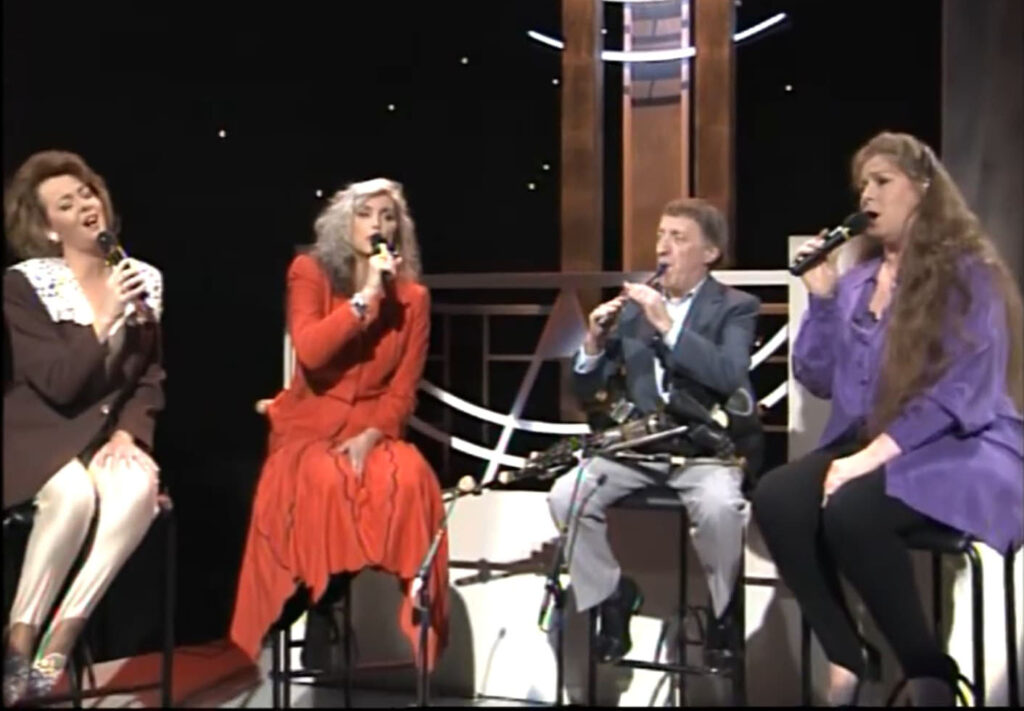
In a deeply moving performance, Sandy Kelly, Emmylou Harris, Dolores Keane, and Paddy Moloney come together to breathe new life into the timeless ballad “Sonny’s Dream”. Written by Canadian songwriter Ron Hynes, the song has long been regarded as one of the most poignant folk narratives ever composed, and this rendition stands as a masterclass in emotional restraint and storytelling.
From the very first line, the listener is drawn into a fragile world shaped by longing and quiet endurance. The arrangement is deliberately sparse. Paddy Moloney’s gentle uilleann pipes drift like distant winds across an empty shoreline, while the voices of Sandy Kelly, Emmylou Harris, and Dolores Keane weave together with remarkable sensitivity. There is no sense of performance here in the conventional sense. Instead, it feels like a shared remembrance, as if each artist carries a piece of Sonny’s life within them.
At its core, “Sonny’s Dream” tells the story of a young boy growing up in isolation, shaped by absence and the echo of his mother’s plea. His father, a sailor who never returns, becomes a silent presence that defines Sonny’s entire existence. As the years pass, the song quietly transforms. The child becomes an old man, yet nothing truly changes. The same longing remains, and the same voice continues to call him back through memory and dream.
What makes this particular performance so unforgettable is its restraint. Emmylou Harris sings with a softness that feels almost like a whisper carried through time. Dolores Keane’s phrasing carries the weight of Irish folk tradition, grounding the song in something ancient and deeply human. Sandy Kelly provides warmth and clarity, while Paddy Moloney paints the emotional landscape with subtle, aching precision.
There are no dramatic crescendos, no overt displays of virtuosity. The power lies in what is left unsaid. Each pause, each breath between lines, feels as important as the words themselves.
By the final verse, when Sonny is described as old and alone, the song no longer feels like a story. It feels like memory itself, fragile and persistent. And as the last notes fade, one truth remains quietly suspended in the air: some voices, once heard in childhood, never truly leave us.