
When Two Worlds Met in Quiet Harmony, “Killing the Blues” Became a Gentle Reckoning with Loss and Memory
In October 2007, Raising Sand, the unlikely yet masterful collaboration between Robert Plant and Alison Krauss, arrived under the banner of Rounder Records. Among its most haunting tracks, “Killing the Blues” stood out not through grandeur, but through restraint. Originally written by Rowland Salley, the song found new life in the hands of two artists whose musical histories could not have seemed further apart, yet whose voices intertwined with an almost spiritual symmetry.
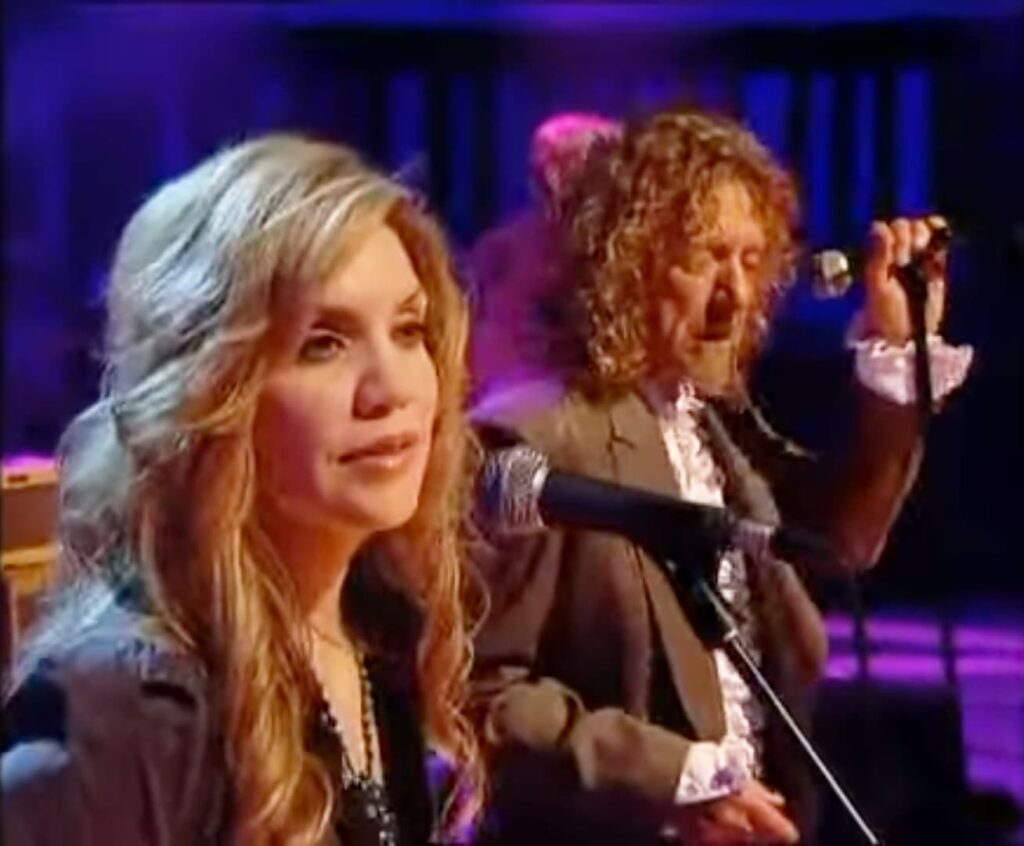
Captured in live performance, the rendition unfolds with an unhurried grace. Robert Plant, once the roaring voice of Led Zeppelin, approaches the song with a softened, reflective tone. Beside him, Alison Krauss offers a voice so clear and weightless it feels like memory itself. Together, they do not simply sing. They listen, respond, and breathe within the same fragile emotional space.
The lyrics drift through images of fading colors and quiet regret, suggesting a journey not outward, but inward. There is no dramatic climax. Instead, the performance leans into stillness, where every note feels suspended in time. The line between sorrow and acceptance becomes almost invisible, as if the song itself is searching for peace rather than resolution.
What makes this performance endure is not technical perfection, but emotional honesty. In an era often driven by volume and spectacle, “Killing the Blues” reminds listeners of the power of understatement. It speaks to those quiet moments when life slows, and reflection becomes unavoidable.
Looking back, Raising Sand was more than a collaboration. It was a meeting point of past and present, of rock legacy and bluegrass purity. And in “Killing the Blues”, that meeting becomes something deeply human. A soft conversation about loss, about letting go, and perhaps, about the quiet hope that something gentle still remains after the blues have passed.