
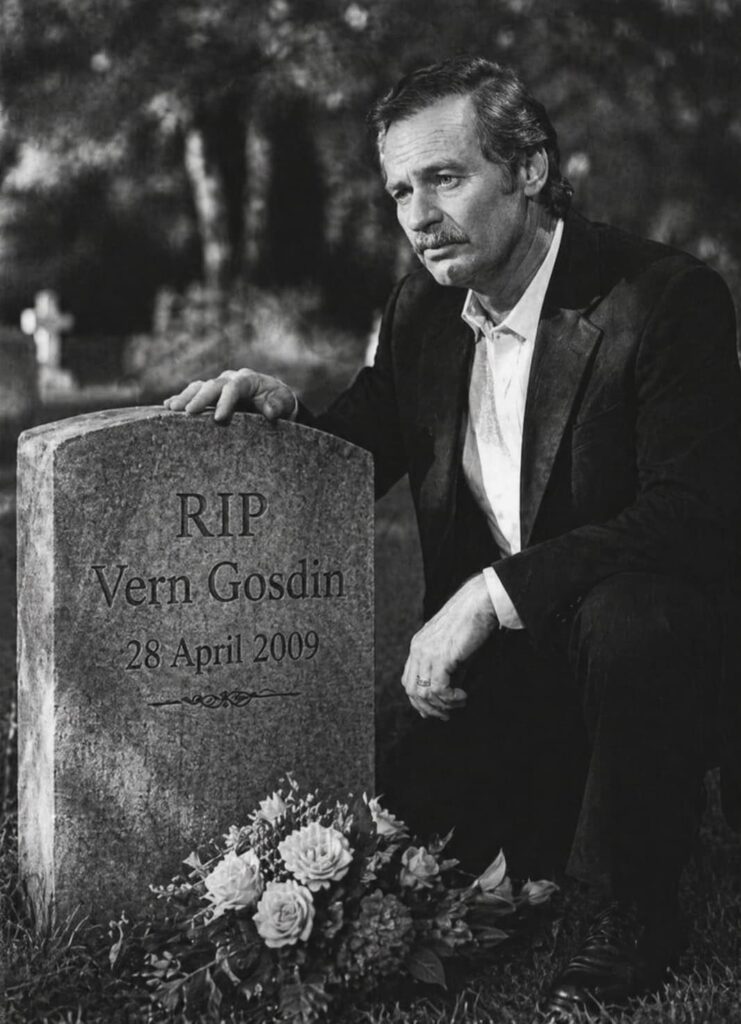
A quiet confession of regret, where pride fades and truth finally finds its voice
When “Do You Believe Me Now” by Vern Gosdin** was released in 1988, it did more than climb the charts—it lingered, settled, and stayed. The song reached No. 4 on the Billboard Hot Country Singles chart, marking another high point in a career built not on flash, but on emotional truth. By then, Gosdin had already earned a reputation as “The Voice,” a singer whose phrasing carried the weight of lived experience. And in this song, that voice doesn’t just perform—it confesses.
Written by Max D. Barnes and Vern Gosdin, the song unfolds like a late-night admission, the kind that comes only after time has stripped away illusion. Its narrator isn’t asking for sympathy—he’s asking for recognition. “Do you believe me now?” is not just a question directed at a former lover; it’s a quiet reckoning with one’s own past mistakes. There’s no anger left here, only the ache of having been right too late to matter.
The late 1980s were a period when country music still allowed space for vulnerability without adornment. Unlike the more polished productions emerging at the time, “Do You Believe Me Now” leans into simplicity. The arrangement is understated—steel guitar weeping gently in the background, a slow, deliberate rhythm that mirrors the heaviness of reflection. This restraint gives Gosdin room to do what he did best: inhabit the lyric fully. Every line feels measured, as if each word had been carried for years before finally being spoken aloud.
What makes the song endure is its emotional honesty. It speaks to a universal moment—the realization that understanding often arrives after loss. The narrator had seen the truth all along, had warned of what was coming, but his voice went unheard. Now, standing alone in the aftermath, he doesn’t celebrate being right. Instead, he mourns the cost of it. That subtle inversion—where vindication brings no comfort—is what gives the song its quiet power.
There is also something deeply human in the way Gosdin delivers the chorus. He doesn’t raise his voice; he doesn’t demand. He simply asks. And in that softness lies the song’s greatest strength. It trusts the listener to feel rather than be told what to feel. For those who have lived long enough to recognize the pattern of love, misunderstanding, and regret, the question “Do you believe me now?” resonates on a deeply personal level.
In the broader context of country music, Gosdin’s work stands as a reminder of a time when storytelling was paramount. Songs were not constructed for instant impact but for lasting connection. “Do You Believe Me Now” fits squarely within that tradition—a song that reveals more of itself with each listen, its meaning deepening as memory and experience accumulate.
Today, revisiting Vern Gosdin and this recording feels less like listening to a hit single and more like opening an old letter—one written with care, sealed with emotion, and only fully understood years later. It is not a song of resolution, but of realization. And perhaps that is why it continues to echo so clearly: because some truths, no matter how late they arrive, still need to be heard.
 Oldies Songs
  Oldies Songs