
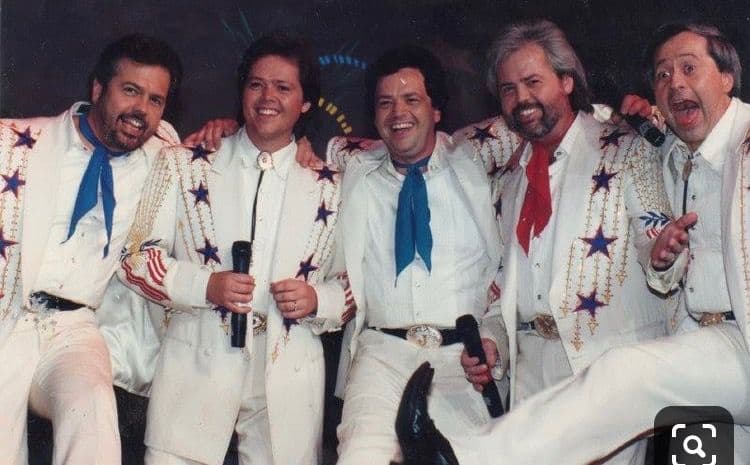
A brother’s burden is never a weight—but a quiet promise carried through time, memory, and music
When He Ain’t Heavy, He’s My Brother found new life in the voices of The Osmonds, especially during their 50th Anniversary Reunion Concert, it was not simply a revival of a classic—it became a deeply personal reflection of a lifetime spent together. Originally released in 1969 by The Hollies, the song reached No. 3 on the UK Singles Chart and climbed to No. 7 on the Billboard Hot 100 in the United States. Decades later, its emotional gravity remains undiminished, perhaps even strengthened when carried by voices that have truly lived its meaning.
For The Osmonds, a group built not only on harmony but on blood ties, this song resonates on a profoundly intimate level. Watching them perform it again—older, gentler, and marked by time—feels less like a concert and more like a quiet conversation between brothers who have shared everything: fame, struggle, faith, and endurance. The lyrics, simple yet enduring, speak of compassion and unwavering support, but in their hands, those words transform into lived testimony.
The story behind “He Ain’t Heavy, He’s My Brother” is rooted in a much older expression of empathy, often associated with Father Edward Flanagan’s Boys Town, where the phrase symbolized selfless care for others. Over time, it evolved into a universal message—one that transcends generations. When The Osmonds revisit it during their reunion concert, the symbolism becomes even richer. These are not just performers interpreting a song—they are brothers who have carried each other through the unpredictable tides of life.
By the time of their 50th anniversary, the innocence of their early years had long given way to experience. The bright pop success of the early 1970s—hits like “One Bad Apple” and “Love Me for a Reason”—had already cemented their place in music history. Yet, it is in moments like this performance that their legacy feels most authentic. No choreography, no youthful exuberance—just voices layered with memory, each note carrying the quiet weight of decades.
There is something profoundly moving about hearing a familiar melody reframed by time. The harmonies may not be as polished as they once were, but they are richer—filled with nuance, vulnerability, and truth. The slight tremble in a note, the pause between lines—these are not imperfections, but evidence of lives fully lived. And in that sense, the song’s meaning deepens: the “weight” is no longer metaphorical, but something they have all known and carried.
The performance also serves as a reminder of how music evolves alongside those who sing it. What once may have been interpreted as a general message of kindness now feels like a quiet acknowledgment of shared burdens—illness, loss, distance, and the inevitable passage of time. Yet, through it all, the central message remains intact: love makes even the heaviest load bearable.
For listeners who have followed The Osmonds across the decades, this rendition offers more than nostalgia. It provides a moment of reflection—a chance to look back not only on the group’s journey but perhaps on one’s own. The song becomes a mirror, gently asking what it means to stand beside someone through life’s long road.
In the end, “He Ain’t Heavy, He’s My Brother” is not defined by its chart positions, though those milestones are part of its history. Its true significance lies in its enduring message—a message that finds new meaning each time it is sung by voices that understand it more deeply than before. And in the hands of The Osmonds, that message feels less like a lyric and more like a quiet truth, spoken from one brother to another, across the years.