
A Young Man’s Question That Echoes Through Every Broken Heart
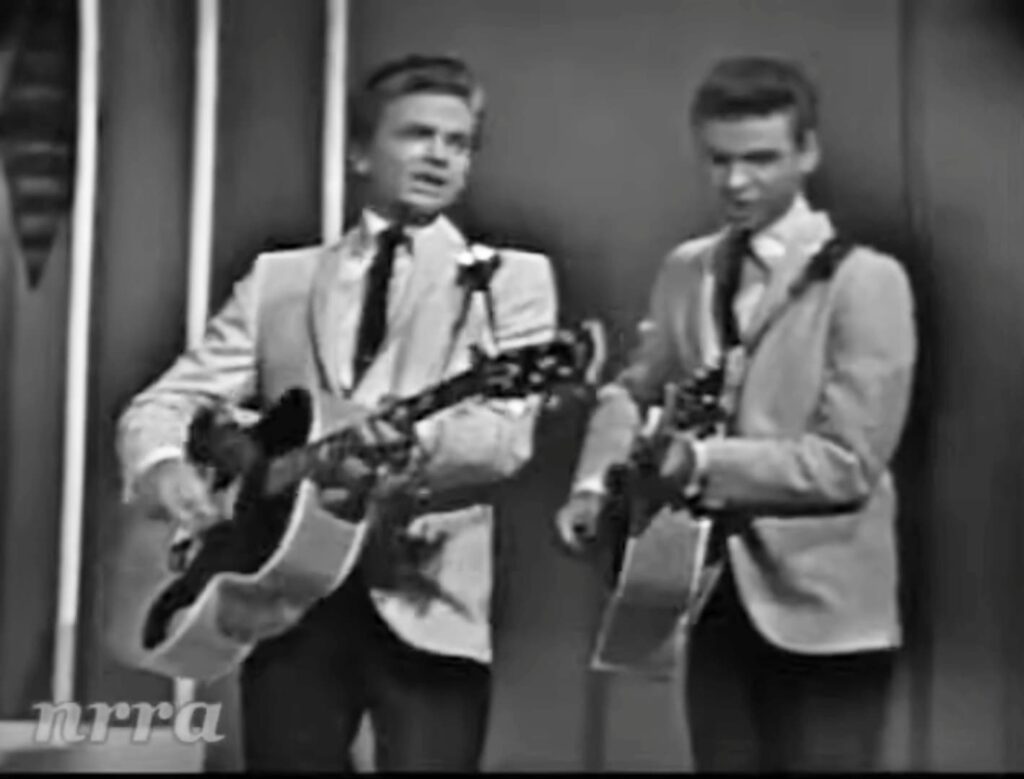
On July 9, 1960, during an appearance on The Saturday Night Beech-Nut Show, The Everly Brothers stepped onto the stage at a moment when their rise seemed almost unstoppable. Introduced as artists who had already delivered hit after hit in just a few short years, Don Everly and Phil Everly performed “When Will I Be Loved”, a song that would soon become one of the defining statements of youthful heartbreak in early rock and roll. Originally released in 1960, the track climbed to No. 8 on the Billboard Hot 100, while also finding strong success on the country charts. It later appeared on their album “The Fabulous Style of The Everly Brothers”, further cementing their place in American music history.
What makes this particular television performance so compelling is its immediacy. There is no distance between the emotion in the song and the way it is delivered. The Everly Brothers were still young men, yet their harmonies carried a kind of emotional precision that felt far beyond their years. When they sing “I’ve been made blue, I’ve been lied to,” it does not sound like exaggeration. It sounds like something quietly understood.
Their signature close harmony is, of course, the heart of the performance. The voices of Don and Phil Everly blend so seamlessly that it becomes difficult to separate one from the other. This unity creates a unique emotional effect. The pain in the song does not feel isolated. It feels shared, almost universal. For older listeners, especially those who remember the early 1960s, this sound carries with it a deep sense of time and place. It recalls jukeboxes, radio evenings, and a world where songs spoke directly to the simple, unguarded feelings of youth.
Yet beneath its upbeat tempo, “When Will I Be Loved” holds a quiet frustration. The repeated question is never answered. Each verse circles back to the same uncertainty, the same longing for something stable and true. That tension between lively rhythm and unresolved emotion is what gives the song its lasting appeal.
On that July night in 1960, The Everly Brothers did not need elaborate staging or dramatic gestures. Their presence was enough. Standing side by side, they delivered a performance that felt both effortless and deeply sincere. Looking back now, it is easy to see why their music has endured. They captured something simple, yet profound: the universal longing to be loved, and the quiet ache of not knowing when, or if, that moment will finally come.