
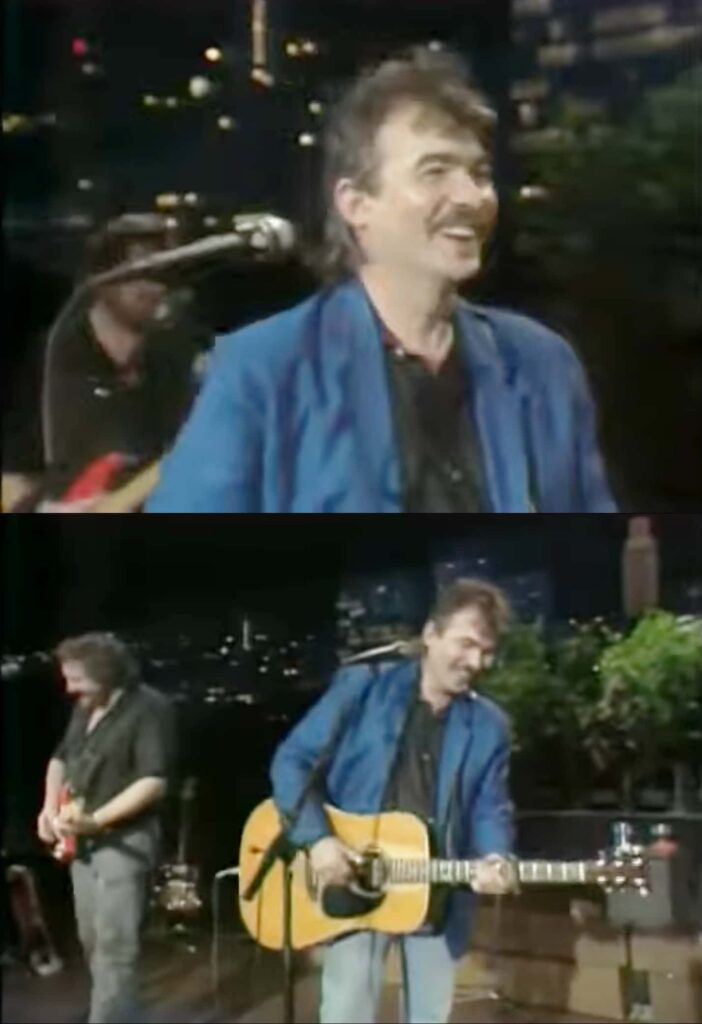
In “Illegal Smile,” John Prine transformed everyday frustration into sly comedy, proving that sometimes survival depends less on escape and more on learning how to laugh at the absurdity of life.
When John Prine stepped onto the Austin City Limits stage in 1987, the audience knew they were about to hear great songwriting. What they may not have expected was how effortlessly he would turn the entire performance into a conversation filled with humor, warmth, and beautifully offbeat humanity.
Before singing a single lyric of “Illegal Smile,” Prine immediately disarmed the crowd with a joke. If anyone forgot the words, he told them to simply move their mouths while the cameras passed by. Then, with perfect deadpan timing, he admitted that he often made up the lyrics himself. Within seconds, the formal distance between performer and audience disappeared. The room no longer felt like a television studio. It felt like a gathering of old friends.
That gift for intimacy had always separated John Prine from nearly every songwriter of his generation.
Released originally on his landmark 1971 debut album, “Illegal Smile” quickly became one of Prine’s signature songs. Though often interpreted purely as a lighthearted marijuana anthem, the song carried a deeper emotional undercurrent beneath its humor. Prine was writing about exhaustion, disappointment, and the quiet search for relief in a world that often felt absurdly repetitive.
The brilliance of the lyrics lies in their ordinary details. A bowl of oatmeal staring him down. A thinning bankroll. Friends who somehow became insurance salesmen. In Prine’s hands, these small observations became miniature portraits of adult disillusionment. Yet he never delivered them bitterly. Instead, he smiled through them, turning frustration into comedy without denying the sadness underneath.
That balance defined the entire 1987 performance.
Prine’s voice by this point had grown rougher and more weathered than in his younger years, but that only deepened the authenticity of the song. Every grin in his delivery sounded earned. He performed not like a polished celebrity, but like the sharpest storyteller at the back table of a neighborhood bar, someone who had seen enough disappointment to stop pretending life made complete sense.
The audience responded to every line with growing affection. Laughter rolled through the studio, especially during moments when Prine playfully lost himself inside the lyrics or leaned into the song’s absurd imagery. But beneath the humor sat a strangely comforting truth: many people recognized themselves inside these songs about confusion, routine, and the desperate need for a little emotional breathing room.
Then came the famous refrain:
“I have the key to escape reality…”
Prine sang it with a mischievous shrug rather than rebellious swagger. That distinction mattered. His songs rarely glorified escape. Instead, they acknowledged how deeply human it is to occasionally need relief from worry, loneliness, or disappointment.
By the time the performance ended, John Prine had done what he always did best. He made wisdom sound casual. He made loneliness sound survivable. And somehow, through humor alone, he made an entire audience feel less alone inside the strange comedy of everyday life.