
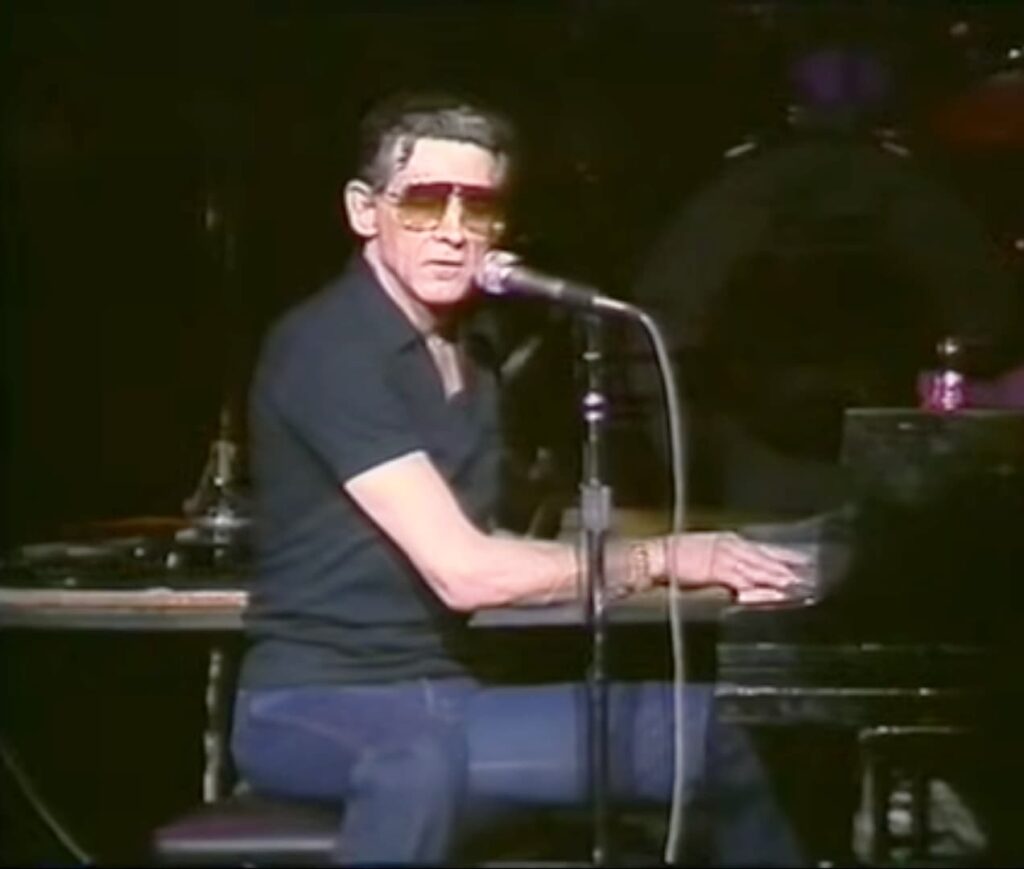
In 1983, Jerry Lee Lewis Stopped the Roar of Rock ’n’ Roll Long Enough to Sing About Death, Salvation, and the Long Ride Home
At London’s packed Hammersmith Odeon, Jerry Lee Lewis revealed the trembling heart hidden beneath “The Killer” persona.
In April 1983, the legendary Jerry Lee Lewis arrived in England carrying everything audiences expected from him: danger, swagger, sweat, wild piano energy, and the electric unpredictability that had followed him since the birth of rock ’n’ roll. The Hammersmith Odeon was sold out. Young fans came to witness the myth. Older fans came to remember the man who once set pianos ablaze and terrified polite America with songs like “Whole Lotta Shakin’ Goin’ On” and “Great Balls of Fire.”
But in the middle of that roaring London concert, Lewis suddenly turned toward something far quieter.
He introduced “Life Is Like a Mountain Railroad” not with polished showmanship, but with rambling humor and old memories. He spoke about hearing the song in a film, recalling actor David Carradine singing it before death in a dramatic scene that clearly stayed with him. Lewis laughed, wandered through the story, tossed out jokes, then slowly settled into the performance as if stepping into another part of himself.
And then came the first line.
“Life is like a mountain railroad…”
The atmosphere inside the theater changed immediately.
For decades, Jerry Lee Lewis had built his legend on chaos. Yet gospel music had always lived underneath the surface of his career. Long before fame, before scandal, before the nickname “The Killer,” he was a boy from Ferriday, Louisiana, raised on Pentecostal fire, church hymns, and the fear of salvation slipping through human hands.
That conflict never truly left him.
During this 1983 performance, it rose visibly to the surface. Lewis sang the old gospel standard with surprising vulnerability, gripping the words as though they carried personal weight. His voice cracked in places, roughened by hard living and years on the road, but the imperfection only deepened the emotion. When he sang about keeping “your hand upon the throttle and your eyes upon the rail,” it no longer sounded like a simple hymn lyric. It felt like autobiography.
The audience sensed it too.
Between bursts of applause and piano flourishes, there was an unusual tenderness in the room. This was no longer merely a rock concert. It became something closer to confession. Lewis seemed caught between entertainer and believer, between the reckless young rebel the world celebrated and the aging Southern man wrestling privately with mortality.
Near the end, after pouring himself through the song, he admitted softly, “I don’t know why I get nervous when I sing that song… I kind of choke up a little bit.”
That single moment may have revealed more about Jerry Lee Lewis than decades of headlines ever did.
Because beneath the wild stories, the scandals, the broken marriages, and the explosive stage persona, there was always a frightened spiritual tension inside him. He could command thousands with pure rock ’n’ roll fury, yet an old gospel song about heaven could still shake him emotionally in front of a live audience.
That contradiction became the essence of Jerry Lee Lewis himself.
The 1983 Hammersmith performance remains unforgettable precisely because it captured both sides of the man at once. The fearless rocker was still there, hammering the piano with violent joy. But standing beside him was someone older, reflective, and perhaps quietly haunted by time.
For a few minutes in London, “Life Is Like a Mountain Railroad” became more than a hymn. It became Jerry Lee Lewis looking down the tracks of his own life, wondering how much journey remained before the final station appeared.