
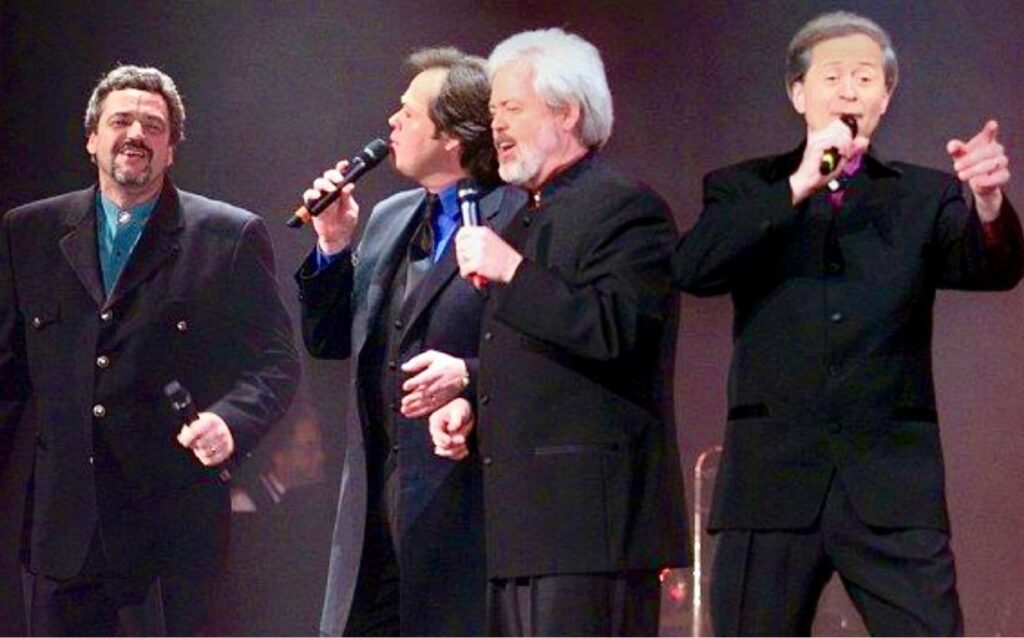
A joyful river of youth, harmony, and television-era magic — “Down by the Lazy River” became more than a hit for The Osmonds; it became a lasting memory of a time when family groups could still light up the world with innocence, energy, and unmistakable harmony.
There are songs that become attached to a season of life. The moment the first notes begin, they do not simply play — they return us to somewhere. A living room glowing with television light. A summer evening with the radio on. A world that still felt optimistic, colorful, and endlessly musical. For many listeners, “Down by the Lazy River” by The Osmonds carries exactly that feeling.
Released in 1972 from the album Phase III, the song marked one of the most energetic and surprising moments in the group’s career. At a time when many people still viewed The Osmonds mainly as a clean-cut family act born from television appearances, this record arrived with a far rougher edge — pounding drums, gritty vocals, and a driving rock sound that showed the brothers were capable of far more than polished pop harmonies.
The single became a major international success. In the United States, it reached No. 4 on the Billboard Hot 100, while in the United Kingdom it climbed to No. 9. The song also charted strongly across Europe and other parts of the world, helping solidify The Osmonds as one of the defining family groups of the early 1970s. By then, the phenomenon often called “Osmondmania” was already in full force. Crowds screamed at concerts. Teen magazines placed their faces on every cover imaginable. Yet behind the fame was a family deeply involved in creating their own music — especially older brothers Alan Osmond and Wayne Osmond, who helped shape much of the group’s sound.
What made “Down by the Lazy River” stand out was its atmosphere. Despite the title suggesting a peaceful afternoon beside the water, the song explodes with restless energy. It is loud, rhythmic, almost wild in places. There is gospel influence, rock influence, even a touch of psychedelic-era experimentation buried underneath the harmonies. That contrast became part of its charm. The “lazy river” was not really about stillness — it was about escape. About freedom. About finding a place away from pressure and noise, where life could once again feel simple and alive.
And perhaps that explains why the song has endured for more than five decades.
By the time The Osmonds celebrated the 50th anniversary of “Down by the Lazy River” in Las Vegas, the performance carried a very different emotional weight than it did in 1972. Time changes every song. A youthful anthem eventually becomes a memory piece. The voices mature. Faces grow older. Some members step away from touring. Some battles become public — health struggles, changing times in the music industry, the fading of an era when family vocal groups dominated television entertainment.
Yet when the music begins, something remarkable happens: the years seem to collapse.
The Las Vegas anniversary celebration was not simply nostalgia for an old hit. It became a tribute to endurance — to brotherhood, family loyalty, and the extraordinary longevity of a group that survived changing musical trends for decades. Watching Merrill Osmond, Jay Osmond, and the remaining performing members revisit the song after fifty years felt deeply symbolic. The energy of youth was no longer the point. The memory of youth was.
And memory has always been central to the power of old music.
Unlike many manufactured acts of the era, The Osmonds were musicians who worked relentlessly. They wrote songs, played instruments, toured constantly, and adapted as popular music evolved. While critics during the 1970s sometimes dismissed them because of their clean public image, history has been kinder. Looking back now, it becomes easier to recognize the craftsmanship inside records like “Down by the Lazy River.” The layered harmonies, the sharp production, the confident rhythm section — all of it reflected a group striving to move beyond stereotypes.
The Las Vegas anniversary performance also reminded audiences how rare it is for a family act to remain culturally beloved across generations. The song no longer belongs only to those who first heard it in 1972. It now belongs equally to children, grandchildren, and anyone who discovers the golden warmth of 1970s pop-rock decades later.
There is also something touching about the title itself after fifty years. A “lazy river” suggests time flowing onward, slowly carrying everything with it — youth, fame, dreams, even entire musical eras. But some songs manage to float above that current. They survive because they are connected not only to charts or sales, but to human memory itself.
That may be the real legacy of “Down by the Lazy River.”
Not simply a Top 10 hit.
Not simply a beloved song from The Osmonds.
But a surviving echo from a gentler chapter of popular music history — still flowing, still singing, still carrying old emotions downstream half a century later.