
“Mr. Bojangles” Began as a Chance Meeting in a New Orleans Jail Cell. Jerry Jeff Walker Turned It Into One of America’s Most Enduring Songs
There are songs that become hits, and there are songs that become part of a nation’s memory. “Mr. Bojangles” belongs to the second category.
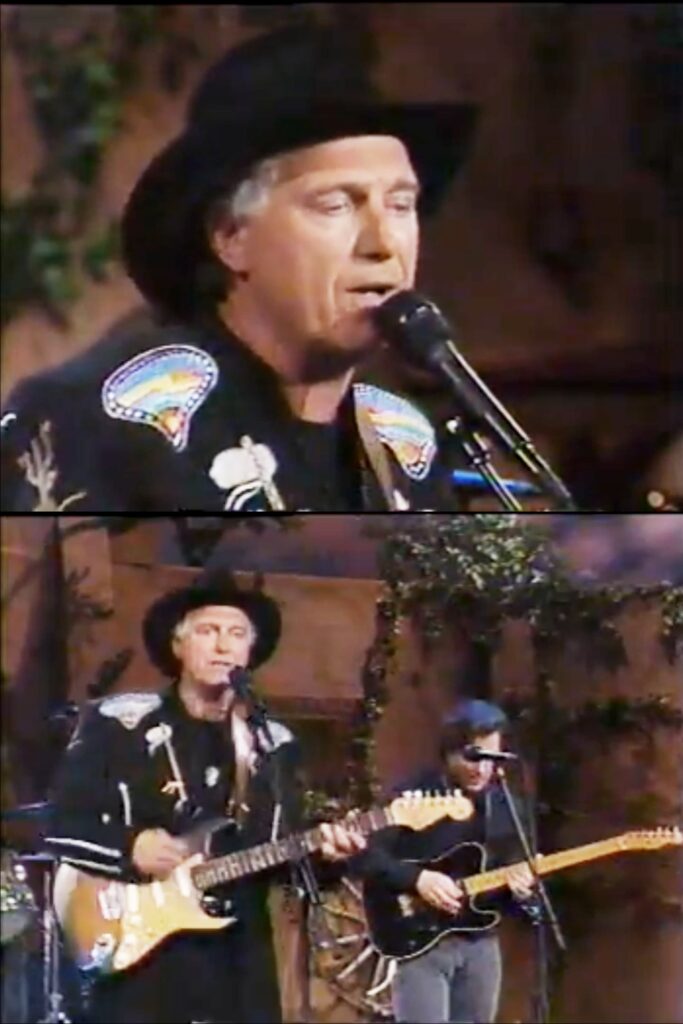
When Jerry Jeff Walker performed the song on The Texas Connection, audiences were not simply hearing a beloved folk classic. They were witnessing the songwriter revisit the moment that changed his life, returning to the story that transformed an anonymous stranger into one of the most unforgettable characters in American music.
The origins of “Mr. Bojangles” have become legendary. In 1965, Walker found himself spending a night in a New Orleans jail after being arrested during a period of youthful wandering. Inside the drunk tank, he met an elderly man who entertained fellow prisoners with stories, humor, and dance steps. The man called himself “Mr. Bojangles.”
What began as a casual conversation would eventually inspire one of the most celebrated narrative songs ever written.
By the time of this television performance, “Mr. Bojangles” had already traveled far beyond its humble beginnings. The song had been embraced by artists across multiple genres, recorded by performers ranging from Nina Simone to the Nitty Gritty Dirt Band, and introduced to audiences around the world. Yet there remained something uniquely powerful about hearing Walker sing it himself.
On The Texas Connection, all traces of commercial polish seemed to disappear.
There were no elaborate arrangements competing for attention. No dramatic production tricks. Just Walker, his guitar, and the story.
That simplicity allowed the song’s emotional core to emerge with remarkable clarity.
Walker never approached “Mr. Bojangles” as a grand theatrical performance. Instead, he delivered it with the relaxed confidence of a storyteller sitting among friends. His weathered voice carried the unmistakable character of a man who understood the roads, bars, and chance encounters that often shape great folk songs.
Every line felt lived rather than performed.
The details that make the song unforgettable remain as moving today as they were decades ago. The worn-out shoes. The stories of traveling shows. The deep grief over a beloved dog lost years before. In lesser hands, such details might feel sentimental. Walker treated them with restraint, allowing listeners to discover their meaning naturally.
That approach is precisely what made the performance so effective.
As the familiar waltz rhythm unfolded, Walker seemed less like a famous songwriter revisiting one of his greatest successes and more like a wandering troubadour honoring an old acquaintance. The years between the original encounter and the television performance seemed to vanish completely.
The song’s enduring appeal comes from a simple but profound truth. Mr. Bojangles was not a celebrity, politician, or historical figure. He was an ordinary man carrying extraordinary sadness and resilience. Walker recognized something universal in him and preserved it forever through music.
Today, listening to this performance feels like opening a time capsule from an America that existed before social media, before viral fame, and before every moment could be documented. It reminds us that some of the most important stories are found not in headlines but in brief conversations with strangers.
Perhaps that is why “Mr. Bojangles” continues to resonate across generations.
The greatest songwriters do not always set out to create legends. Sometimes they simply listen carefully when life places an unforgettable character in their path.
And on a quiet night in a New Orleans jail cell, Jerry Jeff Walker did exactly that.