
“I DON’T WANT TO WORK ANYMORE” — ANNE MURRAY’S QUIET RETURN HOME TO NOVA SCOTIA
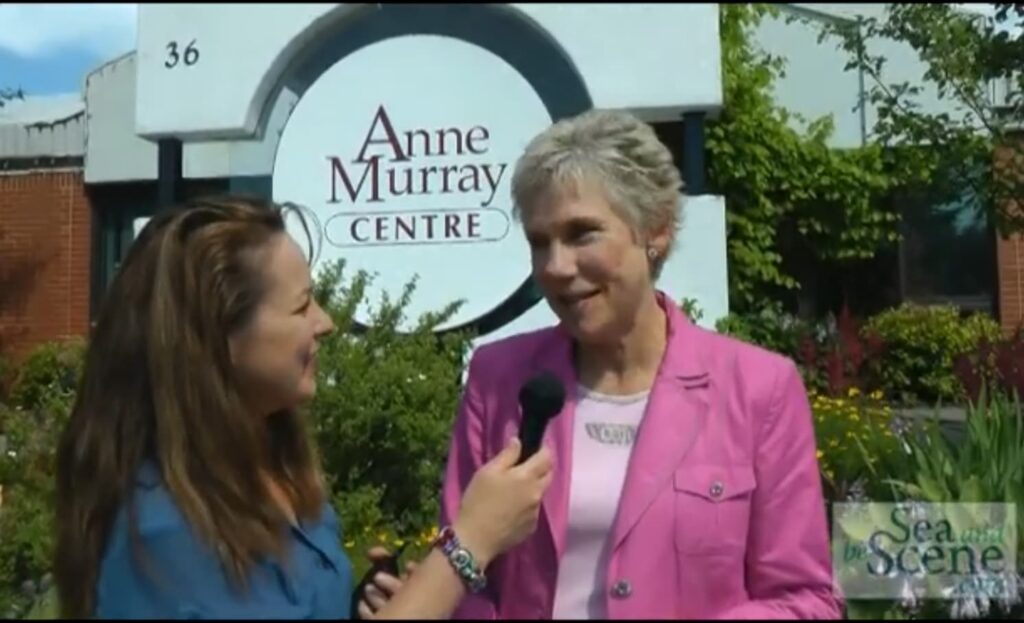
There is something deeply comforting about seeing Anne Murray back in Springhill, Nova Scotia, the small mining town where her story began. After decades of sold-out concerts, platinum albums, television specials, and worldwide fame, Murray returned not as a distant celebrity, but as someone who still belonged to the place that raised her. In this warm and remarkably personal interview at the Anne Murray Centre, she speaks with the calm honesty that made audiences trust her for more than forty years.
And perhaps the most touching part of all is this: she sounds completely at peace with slowing down.
During the conversation with host Stephanie Beaumont, Anne Murray reflects on career, sacrifice, aging, family, golf, and the simple joy of finally learning how to say “no.” There is no dramatic farewell tone, no bitterness toward fame, no desperate attempt to remain relevant. Instead, what emerges is the portrait of a woman who gave an enormous part of her life to music and now treasures the quiet things she once had to leave behind.
By the time of this interview, Murray had already become one of the most successful recording artists in Canadian history. Her voice had carried songs like “Snowbird,” “Danny’s Song,” “You Needed Me,” and “Could I Have This Dance” into homes across generations. Yet when she talks about success here, she does not focus on awards or chart positions. She talks about time.
Time spent in Nova Scotia during July, August, and September. Time on the golf course at Northumberland Links in Pugwash. Time greeting fans once a year at the Anne Murray Centre. Time simply being home.
For older listeners especially, there is something profoundly relatable in the way Murray discusses retirement. She laughs gently about turning down projects now because, after forty years of nonstop work, she simply does not want to work anymore. “It’s very easy,” she says. “They ask me to do things that I don’t want to do.”
It is a funny line, but also an honest one.
Many performers spend their later years chasing the spotlight they once had. Anne Murray seems relieved to have stepped away from it. She speaks openly about how difficult writing her memoir was, admitting it became the final major task on her career list. When Beaumont jokingly suggests a movie about her life, Murray immediately recoils with a laugh: “Oh no, no, please.”
That reaction tells you almost everything about her personality.
Unlike many stars shaped by ego or mythology, Murray always projected practicality. Even at the height of her fame, she carried herself more like a thoughtful neighbor than an untouchable icon. In this interview, that grounded quality remains intact. She is happiest discussing golf handicaps, Maritime summers, and dropping by the Anne Murray Centre unannounced to surprise visitors.
Yet beneath the warmth and humor, there is also a quiet sadness when she discusses sacrifice.
Asked what advice she would give young artists starting out today, Murray answers with striking honesty. Yes, talent matters. Passion matters. Dedication matters. But she emphasizes sacrifice above all else. “You sacrifice family life,” she says softly. “You sacrifice an awful lot.”
It is one of the most revealing moments in the interview because it cuts through the fantasy of celebrity. For all the applause and admiration, Murray acknowledges there were personal costs that audiences rarely saw. And unlike younger performers eager to glamorize success, she does not romanticize those losses.
Still, she does not sound regretful in a bitter sense. Reflective, perhaps. Older. Wiser.
That honesty may be why Anne Murray continues to resonate so deeply with longtime listeners. Her voice always carried emotional truth, and so does her conversation here. Watching her walk through Springhill, talking about golf and retirement while fans line up for autographs, feels less like observing a superstar and more like visiting an old friend who finally made it home.
And in many ways, that may be the happiest ending her story could have had.