
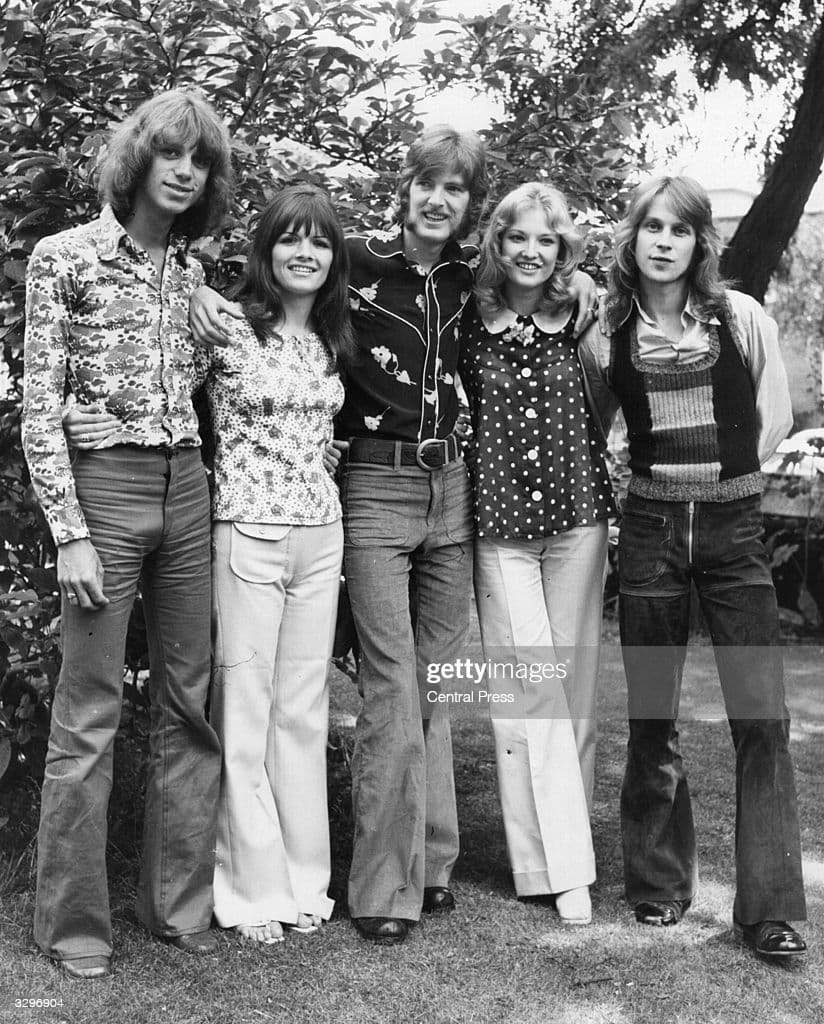
A gentle anthem about growing up, accepting one another, and learning that freedom begins with being yourself.
In the early 1970s, when popular music was often divided between polished pop entertainment and deeply political folk music, The New Seekers found a rare middle ground. They carried warmth without sounding naïve, optimism without sounding artificial. And few recordings captured that spirit more beautifully than “Free To Be… You And Me.”
Released in 1974 as part of the soundtrack connected to the groundbreaking television special and project created by Marlo Thomas, the song became far more than just another easy-listening pop tune of the era. It was a statement about individuality, kindness, equality, and emotional freedom — themes that quietly resonated with families around the world during a time of enormous cultural change.
Musically, The New Seekers were already well established by then. The British-Australian vocal group had achieved international fame through songs like “I’d Like to Teach the World to Sing”, a melody forever tied to the hopeful spirit of the early 1970s. Their sound blended folk-pop harmonies with polished studio arrangements, creating music that felt welcoming and human. By the time they recorded “Free To Be… You And Me,” they had become specialists in songs that sounded simple on the surface yet carried emotional sincerity underneath.
The song itself was written by Stephen Lawrence and Bruce Hart, two creators deeply associated with thoughtful children’s entertainment and socially aware songwriting. Rather than speaking down to listeners, the lyrics encourage self-worth and mutual respect in remarkably direct language. Even decades later, that honesty still feels refreshing.
Commercially, the song achieved respectable chart success. “Free To Be… You And Me” reached the Billboard Easy Listening chart in the United States and became especially appreciated among adult audiences who connected with its uplifting message. While it did not become as massive a global hit as some of the group’s earlier singles, its emotional longevity has proven far greater than many chart-toppers of its time. Sometimes the songs that stay in people’s hearts are not necessarily the loudest ones on the radio.
And perhaps that is exactly why this recording continues to matter.
There is something deeply touching about the arrangement. The gentle acoustic textures, the carefully layered harmonies, the soft orchestral touches — everything feels designed to comfort rather than impress. Unlike many modern productions that demand attention, this song quietly invites listeners in. It speaks softly, but its message is enduring.
The early 1970s were filled with uncertainty. Traditional ideas about family roles, gender expectations, and personal identity were being challenged everywhere — in schools, homes, television, and music. The larger “Free To Be… You And Me” project dared to suggest that children did not need to fit into rigid molds to be valued. Boys could be sensitive. Girls could be ambitious. People could define themselves beyond society’s expectations. At the time, those ideas were surprisingly bold for mainstream entertainment.
Yet the song never sounds angry or confrontational. That is one of its greatest strengths.
Instead of lecturing, The New Seekers approached the material with tenderness. Their harmonies create the feeling of a shared conversation — almost like a group of old friends gently reassuring each other that individuality is not something to fear. Listening now, one can almost picture living rooms filled with warm lamp light, vinyl records spinning slowly, and families sitting together during quieter evenings that seem impossibly distant today.
There is also a certain innocence preserved in the recording. Not innocence in the sense of ignorance, but innocence as hope — the belief that people could become kinder if they simply learned to understand one another better. That hopeful spirit defined much of the finest folk-pop music of the era.
Vocally, the group’s performance is beautifully restrained. No one tries to overpower the song. There are no dramatic vocal acrobatics or oversized emotional gestures. Instead, the beauty comes from balance and unity — a reminder that harmony, both musical and human, often depends on listening as much as singing.
Over the years, many listeners have returned to “Free To Be… You And Me” not merely because of nostalgia, but because its message still feels necessary. In a world that often pressures people to conform, songs like this remain quietly courageous. They remind us that music does not always need heartbreak, rebellion, or spectacle to leave a lasting mark. Sometimes a gentle affirmation can survive longer than louder statements.
And that may be the real legacy of The New Seekers.
They understood that soft songs could still carry enormous emotional weight.
Today, when the opening harmonies of “Free To Be… You And Me” begin to play, it feels less like hearing an old pop record and more like opening a faded photograph album — one filled with memories of a more hopeful time, when music still believed it could help people become a little more understanding, a little more compassionate, and perhaps a little more free to simply be themselves.