
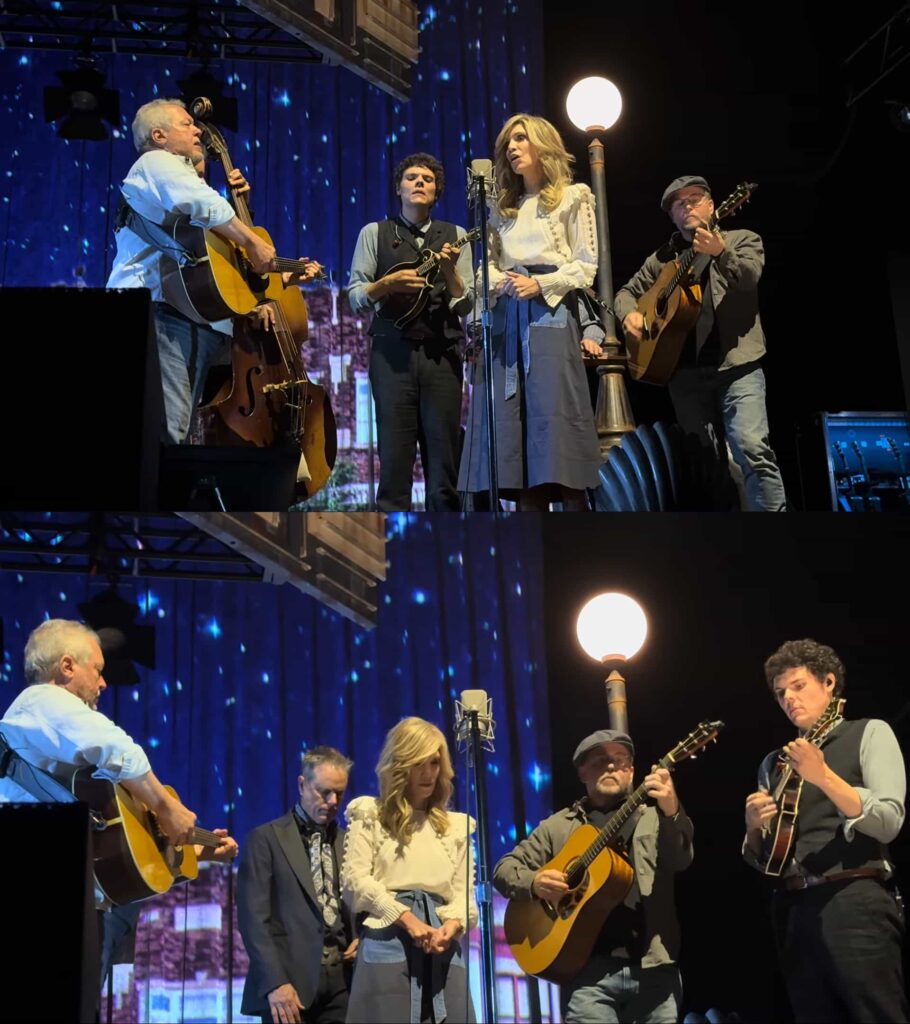
ONE VOICE, FOUR SONGS, AND A NIGHT THAT FELT LIKE CHURCH FOR THE BROKENHEARTED
On April 24, 2026, during the encore performance at DPAC in Durham, North Carolina, Alison Krauss reminded everyone why her voice has remained one of the most beloved sounds in American music for more than three decades. The evening did not unfold like a modern concert driven by spectacle or noise. Instead, it moved like an old memory slowly returning after many years. One song flowed into another until the entire encore felt less like entertainment and more like a gathering of shared emotions, faith, heartbreak, and healing.
By the end of the night, many in the audience were visibly emotional.
The encore began gently with “When You Say Nothing at All,” the timeless ballad that became one of Alison Krauss & Union Station’s signature recordings after its release on the 1995 album Now That I’ve Found You: A Collection. The song has always carried a quiet intimacy, but in this performance, Krauss sang it with remarkable tenderness. Her voice floated through the theater with almost no strain, soft yet impossibly clear.
“It’s amazing how you can speak right to my heart without saying a word…”
The crowd barely made a sound during the verses. People seemed afraid to interrupt the moment. What has always separated Alison Krauss from many singers is not vocal power but emotional precision. She never oversings. She never pushes a lyric harder than necessary. Instead, she allows silence and restraint to carry the emotion. At DPAC, that gift felt especially powerful.
Then came a dramatic emotional shift.
Without warning, the band moved into “Whiskey Lullaby,” the devastating classic first made famous by Brad Paisley and Alison Krauss in 2004. The atmosphere inside the theater changed immediately. If the first song felt like a whispered conversation between lovers, this one felt like a funeral memory nobody ever fully escaped.
“He put that bottle to his head and pulled the trigger…”
Even after all these years, those lyrics still hit with shocking force.
Krauss delivered the haunting chorus with an almost ghostlike calmness. Her harmonies seemed to drift above the instruments like a distant church choir heard through fog. The audience remained frozen, absorbing every line about regret, loneliness, and self-destruction. One could feel the collective weight of memory in the room. Old losses. Old mistakes. Faces no longer sitting beside them.
Yet the night did not remain in darkness.
The encore gradually transformed into something spiritual as Krauss and her musicians launched into “Down to the River to Pray.” Suddenly the concert no longer felt confined to a theater stage. It sounded like an old Appalachian gathering, where music existed not for applause but for survival. Voices from the crowd quietly joined the chorus.
“Oh brothers, let’s go down…”
The song’s roots stretch deep into American folk and gospel traditions, but Krauss helped introduce it to a new generation through the soundtrack of O Brother, Where Art Thou? in 2000. Hearing it live in 2026 carried a different kind of resonance. The world has changed enormously since then, yet the longing inside the song remains timeless. A longing for peace. Forgiveness. Rest.
What made the performance extraordinary was the emotional sequencing of the songs. Each one seemed to answer the one before it.
Love led to heartbreak.
Heartbreak led to prayer.
Prayer led to surrender.
Later in the encore, Krauss performed “Living Prayer” and “He Reached Down,” allowing the evening to settle into something deeply reflective. Her delivery during these gospel-centered moments felt completely sincere, untouched by performance tricks or theatrical dramatics. The simplicity made it even more moving.
“The way is dark, the road is steep…”
By this point, the audience no longer reacted like concertgoers. They listened like witnesses.
There has always been something unusual about Alison Krauss as an artist. While many performers grow louder with age, she has become quieter, gentler, and somehow even more emotionally effective. Her voice no longer sounds merely beautiful. It sounds comforting. Like an old hymn heard through a kitchen radio late at night. Like a hand resting softly on someone’s shoulder during difficult times.
At DPAC, that quality transformed the encore into one of those rare live moments people carry home with them long after the lights come back on.
No elaborate speeches were needed.
No grand finale was necessary.
Only the sound of Alison Krauss singing songs about love, sorrow, faith, and redemption in a voice still capable of stopping a crowded room completely still.