
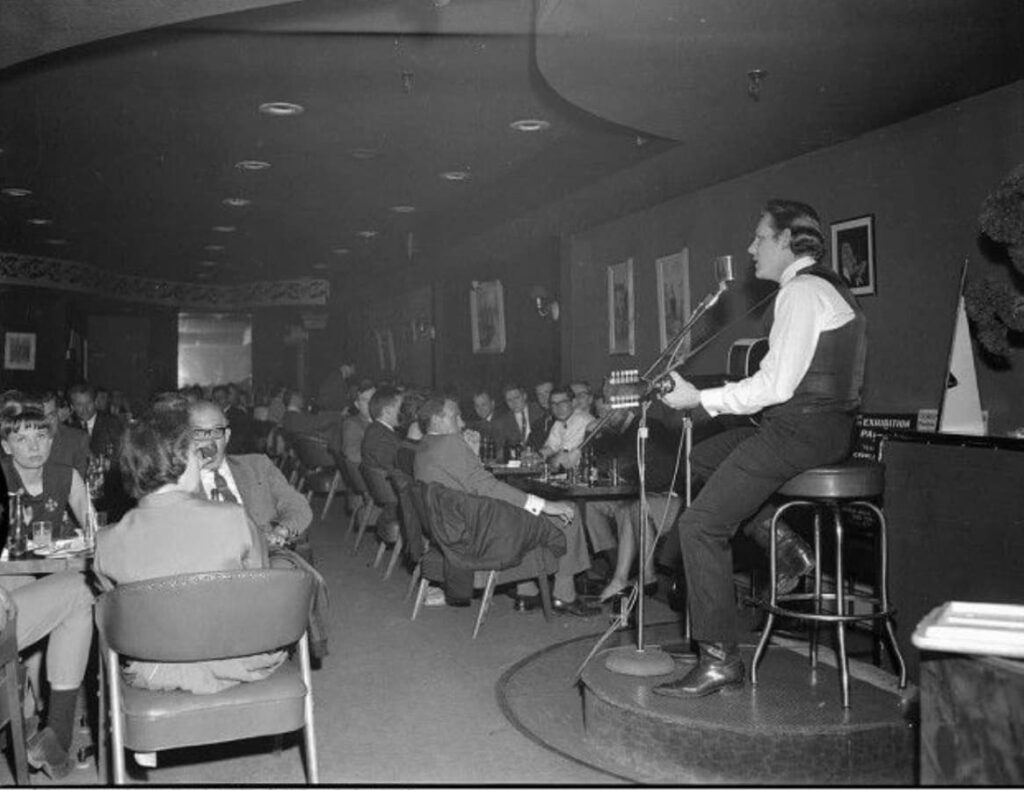
A quiet song about longing, distance, and the kind of love that fades slowly into memory — “Bitter Green” remains one of Gordon Lightfoot’s most haunting reflections on loneliness and emotional exile.
There are songs that announce themselves loudly, demanding attention with grand choruses and dramatic arrangements. And then there are songs like “Bitter Green” — songs that drift in softly like cold wind through an old cabin door, carrying with them the scent of pine trees, winter roads, and memories too painful to speak aloud. Released in 1968 on Gordon Lightfoot’s landmark album Did She Mention My Name?, the song never became one of his major charting singles in the commercial sense, but over the decades it quietly grew into one of the most beloved pieces in his catalog among devoted listeners. It is often remembered not for where it landed on the charts, but for where it landed in the heart.
At the time, Gordon Lightfoot was already becoming recognized as one of Canada’s finest songwriters. The late 1960s were filled with louder movements in music — psychedelic rock, protest anthems, electric experimentation — yet Lightfoot walked a different road. He wrote songs that sounded ancient even when they were new. His music carried the weight of folk traditions, but also the emotional realism of everyday people trying to survive disappointment, distance, and time itself.
“Bitter Green” was never built for radio glamour. It was built for quiet evenings.
The song tells the story of a woman waiting endlessly for someone who may never return. Lightfoot never explains everything directly, and that is precisely what makes the song so powerful. Like the finest folk ballads, it leaves space for the listener to enter the story personally. We do not know exactly who left, why they left, or whether hope still exists. We only feel the passing of seasons and the ache of uncertainty.
That title alone — “Bitter Green” — feels symbolic and elusive. “Green” often suggests life, renewal, or springtime, but here it is paired with bitterness. It becomes a color of emotional coldness, of dreams that once bloomed but have since withered. In Lightfoot’s hands, even simple words seem wrapped in fog and memory.
Musically, the arrangement is sparse and deeply atmospheric. The gentle acoustic guitar, subtle orchestration, and Lightfoot’s restrained vocal delivery create a feeling almost cinematic in its loneliness. He never oversings the emotion. In fact, his calmness makes the sadness even more devastating. That was one of Lightfoot’s greatest gifts as a performer: he trusted silence, understatement, and space. He understood that heartbreak rarely arrives with theatrical explosions. More often, it settles quietly into ordinary life.
Many listeners over the years have interpreted the song as a portrait of isolation in rural Canada — snow-covered landscapes, emotional endurance, and lives shaped by waiting. Whether intentional or not, the imagery feels unmistakably northern. Few artists captured emotional geography the way Gordon Lightfoot did. His songs often sounded tied to rivers, railroads, forests, and lonely highways. Even when he sang about love, there was usually distance involved — physical, emotional, or spiritual.
The album Did She Mention My Name? itself marked an important creative period for Lightfoot. Critics praised his increasingly mature songwriting, and many fans consider this era to be the moment when he evolved from promising folk singer into truly elite storyteller. While later hits like “If You Could Read My Mind”, “Sundown”, and “The Wreck of the Edmund Fitzgerald” would bring him larger international chart success, songs like “Bitter Green” reveal the deeper artistic soul behind those famous records.
Interestingly, the song gained renewed attention years later when it was featured in the 2000 film Wonder Boys, introducing a younger generation to its melancholy beauty. Yet even then, it still felt timeless — untouched by trends, untouched by era. That is the remarkable thing about Gordon Lightfoot’s music: it never sounds trapped in the decade that produced it. His songs feel lived-in, weathered by human experience itself.
There is also something profoundly human about the way Lightfoot writes sorrow. He does not romanticize suffering, nor does he try to solve it neatly. In “Bitter Green,” the sadness simply exists, as it often does in real life. People wait. People drift apart. Seasons change while feelings remain unfinished. The song understands this with painful honesty.
And perhaps that is why it continues to endure.
For many listeners, hearing “Bitter Green” today feels less like listening to a recording and more like opening an old photograph album found in the attic. The faces may have faded slightly, but the emotions remain painfully clear. It reminds us of the years when music did not merely entertain — it accompanied people through loneliness, through heartbreak, through long drives at night and silent kitchens after everyone else had gone to sleep.
In the end, “Bitter Green” is not simply a folk song. It is a meditation on waiting, memory, and emotional endurance. And like so many of Gordon Lightfoot’s finest works, it says more in its quiet moments than many songs ever manage to say out loud.