
WHEN ANNE MURRAY SANG ABOUT DOING “ABSOLUTELY NOTHING,” SHE CAPTURED A FEELING MILLIONS QUIETLY UNDERSTOOD
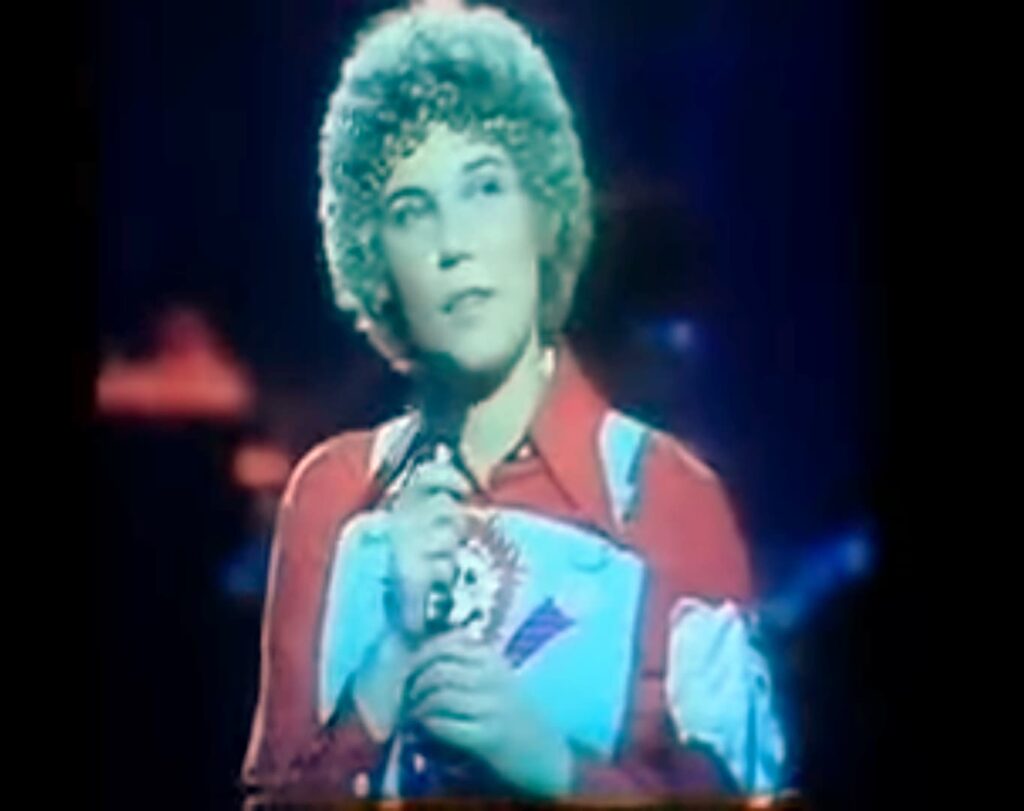
During a warm and wonderfully intimate 1975 concert performance, Anne Murray turned the gentle song “Real Emotions” into something far deeper than a soft pop ballad. In just a few minutes, she gave voice to a kind of exhaustion and quiet longing that many people rarely knew how to explain aloud.
Before singing a single note, Murray smiled at the audience and asked a simple question:
“How many of you have days where you say to yourself, I would like to do absolutely nothing today?”
The crowd laughed immediately. It was the laughter of recognition.
That small spoken introduction became one of the most memorable parts of the performance because it revealed something essential about Anne Murray herself. Unlike many stars of the era, she never tried to appear unreachable or larger than life. Her strength came from sounding honest. She spoke the way ordinary people spoke. She admitted fatigue. She admitted uncertainty. And audiences trusted her because of it.
Released on her 1974 album Love Song, “Real Emotions” was never designed as a dramatic showstopper. It did not rely on vocal fireworks or grand orchestration. Instead, the song drifted gently through reflections about television, loneliness, routine, and the strange comfort of escaping into everyday distractions.
“Nothing much happens to me, I like to watch a lot of TV…”
In lesser hands, lyrics like these might have sounded plain. But Anne Murray understood something many performers missed during the 1970s: simplicity can carry enormous emotional truth.
As she stood beneath the concert lights in 1975, there was no sense of performance for performance’s sake. She looked relaxed, almost conversational, allowing the song to unfold naturally. Her voice carried its trademark warmth, soft yet deeply grounded, with that unmistakable Canadian calm that made listeners feel as though she were sitting beside them rather than performing on a stage.
The beauty of “Real Emotions” lies in how quietly it observes modern life. The narrator spends afternoons watching television, searching for small escapes, trying to avoid the heaviness of reality. Yet beneath those ordinary details sits something much more profound: the desire for peace in a world that constantly demands energy, movement, and answers.
That theme resonated strongly during the mid-1970s. Society was changing quickly. The optimism of earlier decades had faded for many people, replaced by uncertainty, economic struggles, and emotional fatigue. In that atmosphere, songs about vulnerability suddenly felt more important than songs about glamour.
Anne Murray became one of the few artists who could express those feelings without bitterness.
There was comfort in her restraint. She never forced heartbreak. She never exaggerated sadness. Instead, she sang as if she understood that most emotional struggles happen quietly behind closed doors. That subtle approach gave her music extraordinary staying power.
Watching the 1975 live performance today feels almost like opening an old family photo album. The pacing is slower. The atmosphere is softer. The audience listens carefully instead of shouting over the music. Even the lighting and stage design reflect a different era of entertainment, one built around connection rather than spectacle.
And at the center of it all stood Anne Murray, calm and self-aware, singing about the simple wish to disappear from pressure for a little while.
What makes the performance especially moving now is how modern the emotion still feels. Decades before conversations about burnout and emotional exhaustion became common, “Real Emotions” quietly acknowledged those feelings with remarkable honesty. Murray was not trying to make a grand social statement. She was simply describing the human need to step away from noise and breathe.
That sincerity is why the performance continues to resonate.
Many artists from the 1970s were remembered for dramatic moments or larger-than-life personalities. Anne Murray built her legacy differently. She created intimacy. She made audiences feel understood. In songs like “Real Emotions,” she reminded listeners that ordinary thoughts and private struggles were worthy of music too.
The performance may not have featured explosive applause or theatrical production, but it offered something rarer: recognition.
For a few quiet minutes in 1975, Anne Murray transformed everyday exhaustion into art, and in doing so, she made countless listeners feel a little less alone.