
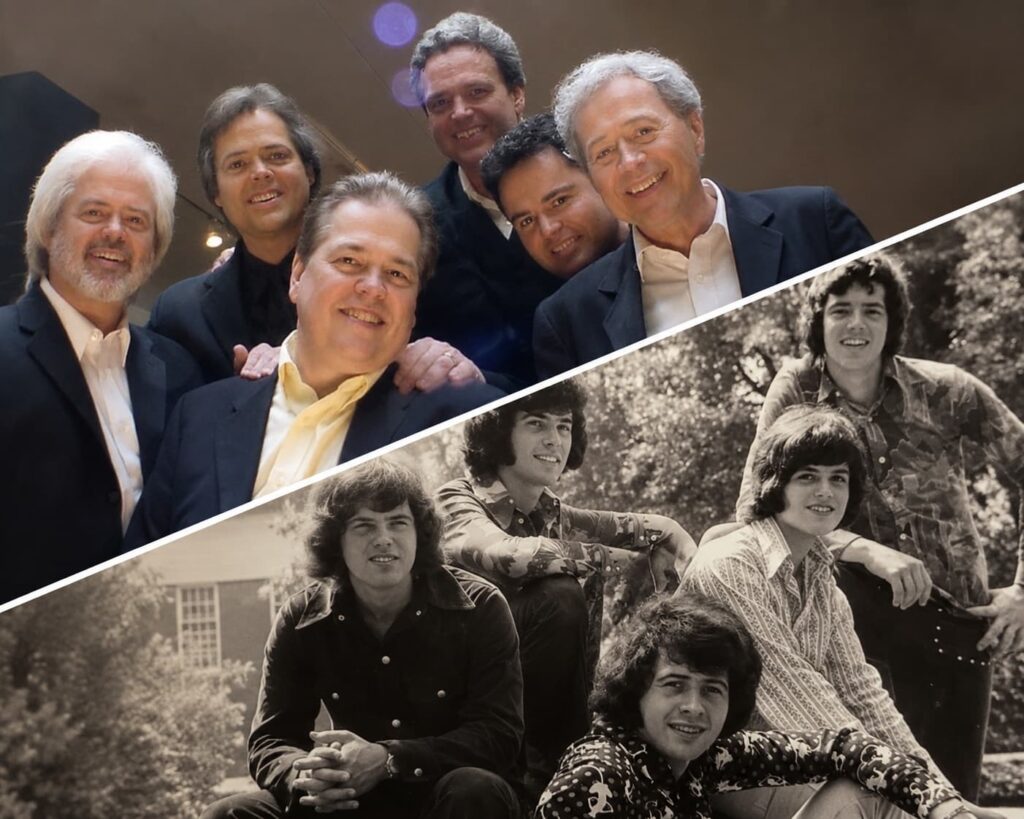
A Christmas Song Wrapped in Harmony, Family Warmth, and the Kind of Joy That Never Really Grows Old
When The Osmonds sang “Winter Wonderland,” they were not simply recording another holiday tune — they were preserving a feeling. A feeling of snowy evenings by the radio, family gatherings filled with laughter, and a softer, more innocent era when Christmas music carried genuine warmth instead of spectacle. Their version of the classic standard became one of those recordings that quietly settled into the hearts of listeners who grew up during the golden age of family vocal groups and television variety specials.
Released during the height of the group’s popularity in the early 1970s, “Winter Wonderland” appeared on The Osmonds’ Christmas recordings during a remarkable period when the family group seemed to be everywhere at once — on television, on concert stages, and across international charts. By that point, The Osmonds had already become one of the most recognizable musical families in the world, with massive hits such as “One Bad Apple,” “Yo-Yo,” and “Crazy Horses.” While their rock-oriented material often surprised critics with its energy and musicianship, their holiday recordings revealed another side entirely: warmth, gentleness, and family harmony rooted deeply in traditional American entertainment.
Unlike many Christmas songs that arrive with heavy orchestration or theatrical drama, “Winter Wonderland” succeeds because of its simplicity. The song itself was originally written in 1934 by lyricist Richard B. Smith and composer Felix Bernard, long before rock music even existed. Interestingly, despite being permanently associated with Christmas, the lyrics never actually mention the holiday itself. Instead, the song paints scenes of snow-covered walks, sleigh bells, scarves, and companionship during wintertime. Over the decades, it became inseparable from the Christmas season because it captured the emotional atmosphere people longed for every December.
What made The Osmonds’ interpretation special was the unmistakable family chemistry. Their harmonies sounded natural rather than polished to perfection, which gave the performance a comforting sincerity. You could hear the closeness between brothers in every chorus. At a time when many pop acts were chasing harder rock sounds or experimenting with increasingly complicated production, The Osmonds still understood the emotional power of togetherness. That quality became central to their image and helped distinguish them from countless other teen acts of the era.
Commercially, holiday recordings rarely climbed mainstream charts in the same dramatic way as standard pop singles, but The Osmonds were already chart giants by the time they embraced Christmas material. During the early 1970s, they consistently appeared on the Billboard Hot 100 and international charts, especially in the United States and the United Kingdom. Their popularity was enormous among family audiences, and their seasonal performances became recurring television favorites during the Christmas period. For many listeners, hearing The Osmonds sing holiday music became as much a seasonal tradition as decorating a tree or watching classic holiday specials.
There is also something deeply nostalgic about hearing their voices today. The recording now carries more than melody — it carries time itself. Listening decades later, one does not simply hear a Christmas standard. One hears echoes of an era when families gathered around television sets together, when variety shows dominated evening entertainment, and when harmony groups still held a special place in popular culture. That emotional weight has only grown stronger as years have passed.
Another fascinating aspect of The Osmonds was their ability to balance youthful excitement with old-fashioned wholesomeness. In some ways, they stood between generations. Older listeners appreciated their clean-cut presentation and rich harmonies, while younger audiences connected with their pop energy and charisma. “Winter Wonderland” captures that balance beautifully. It feels youthful without becoming childish, traditional without sounding outdated.
The arrangement itself deserves appreciation as well. Rather than radically reinventing the song, The Osmonds approached it with respect for the melody. Their version leans into warmth and vocal texture rather than flashy experimentation. That restraint was wise. Christmas music often survives longest when artists understand that listeners are not only hearing a song — they are revisiting memories attached to it. The group seemed to understand that instinctively.
And perhaps that is why recordings like this continue to endure. Long after chart positions fade and musical trends disappear, songs tied to memory remain alive. “Winter Wonderland” by The Osmonds still evokes images of glowing lights reflected on windows, snow outside the house, and voices singing together somewhere in the next room. It reminds listeners of a period when music often felt more personal, less hurried, and more connected to family life.
In today’s world, where holiday music is frequently overproduced or treated as background noise, revisiting The Osmonds’ “Winter Wonderland” can feel unexpectedly emotional. It is not merely nostalgia for youth — it is nostalgia for a gentler pace of life, for harmony in both music and human connection.
And that may be the true magic hidden inside this song. Beneath the sleigh bells and winter imagery lies something timeless: the simple comfort of hearing familiar voices return every December, as dependable and warm as an old family photograph pulled carefully from a drawer.