
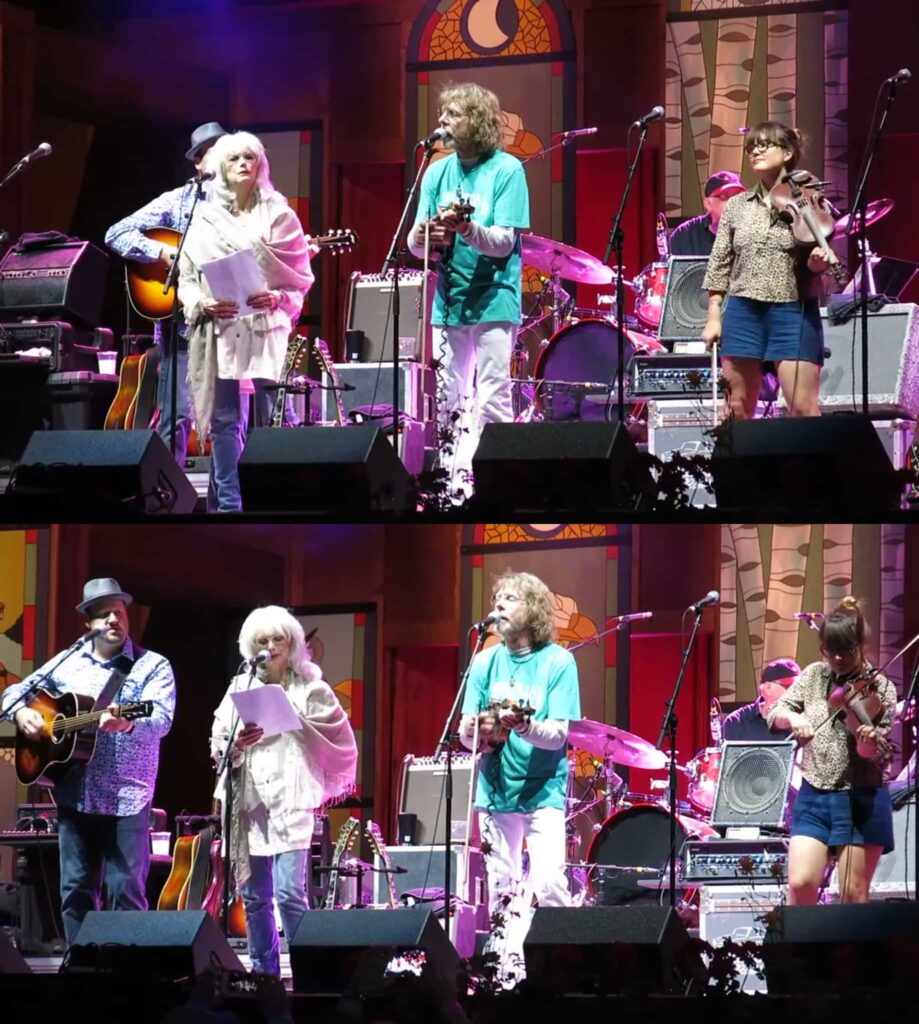
A Funny Song Turned Into A Heartfelt Farewell To The Country Music So Many People Once Loved
At the 2016 Telluride Bluegrass Festival, the audience expected charm, humor, and masterful musicianship from Sam Bush. What they may not have expected was a song that would quietly strike such an emotional nerve.
Standing beside Bush were two artists deeply connected to the soul of American roots music, Emmylou Harris and Sara Watkins. Together, they introduced a new song with a title so funny the crowd immediately laughed:
“Hand Held Mics Killed Country Music, and That’s What’s Killing Me.”
At first, it sounded like satire.
But as the verses unfolded beneath the mountain air of Telluride, the performance slowly became something far more reflective. Hidden beneath the humor was grief. Not bitterness exactly, but the sadness of musicians watching an art form drift away from the traditions that once gave it life.
From the opening lyrics about listening to the Grand Ole Opry as a child, Bush painted a vivid portrait of classic country music’s golden years. He sang about Lester Flatt, Hank Williams, Ernest Tubb, and the old Gibson guitars they carried onto stages long before television transformed music into polished entertainment.
The details mattered because Sam Bush understood that country music was once deeply physical. Artists held instruments. Bands stood close together around shared microphones. Songs were shaped through live performance rather than manufactured presentation. The music felt lived in.
That is why the famous line about “hand held mics” resonated so strongly.
The microphone itself was never truly the point.
What Bush mourned was authenticity slowly disappearing beneath image, television production, and celebrity culture. His lyrics described a turning point when performers no longer needed to hold guitars to look like country stars. The visual language of country music changed, and with it, something emotional seemed to vanish too.
As Bush sang, Emmylou Harris entered gently with harmony vocals that immediately deepened the emotional impact. Her voice carried decades of roots music history inside it. Suddenly the song no longer felt merely humorous. It sounded like testimony from artists who had personally witnessed the transformation of country music across generations.
Then came Sara Watkins, adding another layer of warmth and musicianship. Representing a younger generation deeply connected to bluegrass and Americana traditions, Watkins helped bridge past and present inside the performance itself.
That balance became one of the song’s greatest strengths.
Though nostalgic, the performance never sounded angry or hopeless. Instead, it felt like musicians reminding audiences what made country music meaningful in the first place: storytelling, instruments played by human hands, imperfections, and emotional truth.
Watching the performance today feels especially poignant because the concerns inside the song only grew stronger in the years that followed. Commercial country music increasingly embraced polished production, arena spectacle, and pop influences, while many listeners quietly longed for the intimacy and sincerity found in older traditions.
Sam Bush has spent much of his career protecting exactly those traditions. Often called the father of newgrass music, Bush helped modernize bluegrass without abandoning its heart. His musicianship always celebrated community, craftsmanship, and live musical interaction rather than image alone.
At Telluride in 2016, that philosophy echoed through every verse.
The crowd laughed again during parts of the chorus, but there was recognition inside the laughter now. Many listeners understood precisely what Bush meant. They remembered the old dance hall songs. The family radios. The television performances where singers still stood behind guitars instead of choreography.
And when Emmylou Harris harmonized behind the line “that’s what’s killing me,” the song suddenly carried the weight of memory itself.
Not simply mourning what country music became.
But honoring what it once was.