
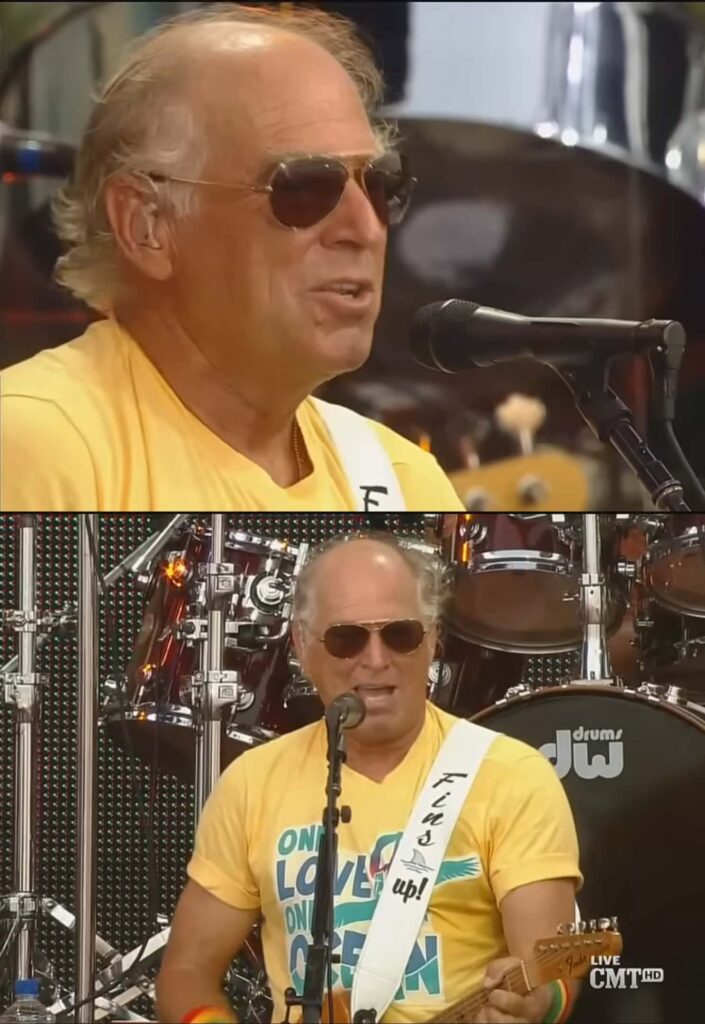
On A Wounded Beach Still Reeling From Disaster, Jimmy Buffett Used Music To Remind Thousands Of People That Hope Had Not Washed Away
On July 11, 2010, the white sands of Gulf Shores Public Beach in Alabama became something far greater than a concert venue.
Only weeks earlier, the Gulf Coast had been devastated by the Deepwater Horizon oil spill, one of the worst environmental disasters in American history. Businesses were suffering, tourism had collapsed, fishing communities faced uncertainty, and fear hung heavily across the coastline. For many people living along the Gulf, the future suddenly felt fragile.
Then Jimmy Buffett came home.
Standing before more than 35,000 emotional fans during the free benefit event “Live From the Gulf Coast,” Buffett walked onto a stage built directly on the sand and greeted the crowd with the relaxed warmth that had made him beloved for generations.
“We’re going to change a few latitudes and attitudes right now,” he smiled.
And for a few precious hours, that is exactly what happened.
As Buffett launched into “Changes in Latitudes, Changes in Attitudes,” the atmosphere transformed almost instantly. The song, originally released in 1977 on the album of the same name, had always carried Buffett’s signature philosophy of escape, optimism, and finding peace through perspective. But on this night, the lyrics carried a completely different emotional weight.
This was no longer simply a tropical anthem.
It became medicine.
The crowd sang every word loudly, many smiling through visible emotion. Some danced barefoot in the sand while others simply stood quietly, absorbing the rare feeling of relief after months of anxiety and heartbreaking news coverage. Buffett understood the Gulf Coast not as a tourist fantasy, but as a living community filled with hardworking people whose lives depended on the water.
That connection made the concert deeply personal.
Born in Mississippi and long associated with Gulf Coast culture, Jimmy Buffett always wrote songs that celebrated coastal life with affection and authenticity. The beaches, bars, fishing towns, and sunsets inside his music were not imaginary places created for marketing. They came from real experience and deep emotional attachment to the region.
During the performance, Buffett appeared less like a distant celebrity and more like a trusted neighbor trying to lift the spirits of exhausted friends.
Backed by his legendary Coral Reefer Band, he delivered the song with joyful energy while allowing its message to settle naturally over the crowd. Lines about changing perspectives and laughing through life’s uncertainty suddenly felt profoundly meaningful beneath the shadow of the disaster.
One of the most touching moments came near the end when Buffett reminded the audience, “Yesterdays are over our shoulder… these things will pass and we’ll be cruising along here.”
The crowd erupted.
Not because anyone believed the Gulf’s problems had disappeared overnight, but because Buffett gave people permission to believe recovery was still possible. Music could not clean the beaches or restore lost businesses, but it could restore morale. And sometimes communities need emotional healing before anything else can begin.
Watching the performance today feels especially powerful because it captures Jimmy Buffett at his absolute best. Beyond the tropical image, the margaritas, and the carefree lifestyle branding was a performer who genuinely understood how music could comfort people during difficult moments.
That humanity always lived beneath Buffett’s songs.
He knew that listeners were not merely escaping reality when they came to his concerts. Often, they were trying to survive it. His music offered temporary relief, optimism, humor, and the comforting idea that even after heartbreak or disaster, life could still contain sunshine somewhere ahead.
As thousands of voices joined together on the Gulf Shores beach singing “Changes in Latitudes, Changes in Attitudes,” the moment became larger than entertainment.
It became a wounded coastline breathing again.
 Oldies Songs