
Twenty Years After Changing Popular Music Forever, Paul Simon Returned To “Graceland” And Somehow Made It Feel Even More Human
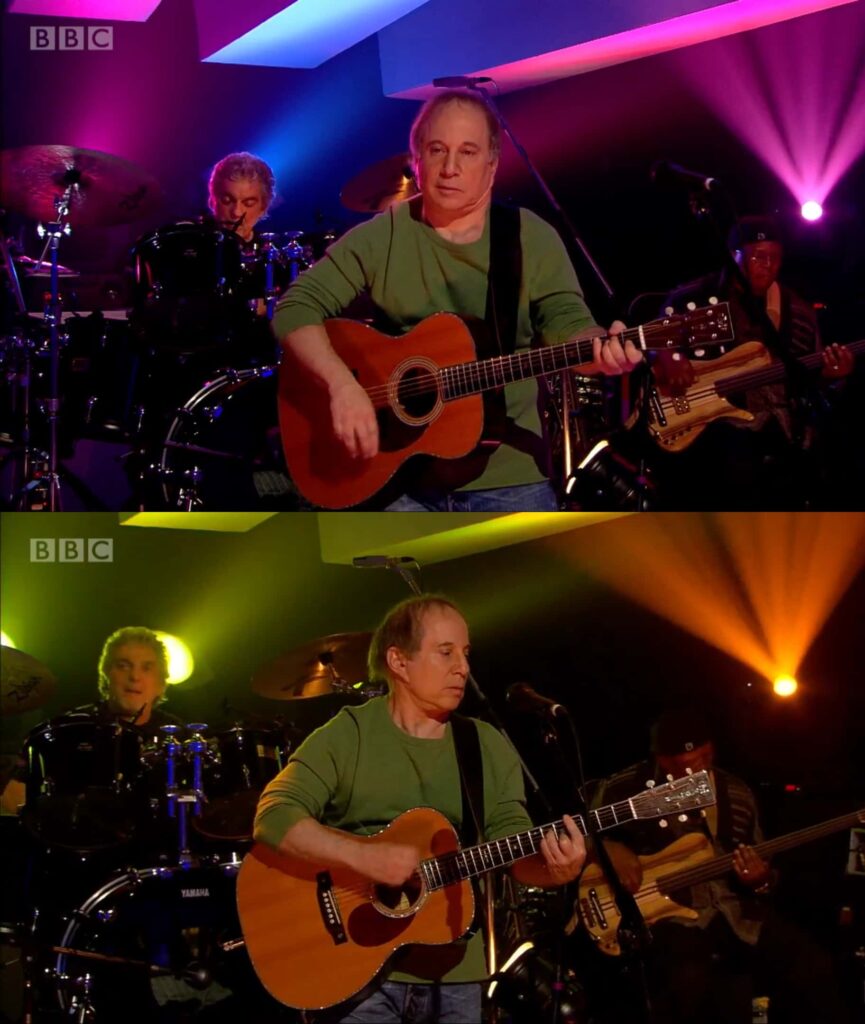
In 2006, when Paul Simon stepped onto the stage of Later… with Jools Holland to perform “Graceland,” it no longer felt like a pop hit.
It felt like memory itself.
The song had already become one of the defining recordings of modern American music. First released in 1986 on the landmark album Graceland, it blended folk songwriting with South African rhythms in a way audiences had never truly heard before. Over the years, the album transformed from a bold musical experiment into something far larger: a deeply emotional soundtrack for people trying to survive heartbreak, regret, and the long journey toward acceptance.
Yet in this intimate television performance, Simon stripped away all mythology.
Standing beneath soft studio lights with a remarkably tight band behind him, he delivered the song not as a global icon revisiting a classic, but almost like an older man quietly reopening an old photograph album.
From the opening line, the power of the writing remained undeniable.
“The Mississippi Delta was shining like a National guitar…”
Only Paul Simon could write a lyric that cinematic and make it sound conversational. The song unfolds like a wandering American road trip through heartbreak, geography, memory, and spiritual searching. Traveling toward Graceland, Elvis Presley’s legendary home in Memphis, becomes less about reaching a physical destination and more about searching for emotional peace after personal collapse.
By 2006, those lyrics carried even more weight.
When Simon softly sang, “Losing love is like a window in your heart,” the room seemed to pause. It remains one of the most devastating lines ever written about heartbreak because it captures something painfully true: grief is never entirely private. People see it on your face. Hear it in your voice. Feel it in the silence around you.
And Simon sang it with complete emotional restraint.
There was no dramatic vocal performance, no attempt to oversell the sadness. That quietness made the song hit even harder. His voice had aged naturally over the decades, gaining texture and fragility, which somehow deepened the emotional honesty already living inside the lyrics.
Meanwhile, the band recreated the rhythmic pulse that made Graceland revolutionary in the first place.
The rolling basslines, intricate guitar rhythms, and unmistakable South African musical influence still sounded vibrant and alive twenty years later. What once seemed daring and unconventional in the 1980s now felt timeless. The groove carried warmth, movement, and life even while the lyrics wrestled with loneliness and emotional wreckage.
That contrast became the genius of the performance.
“Graceland” has always balanced sorrow against motion. The narrator is heartbroken, confused, emotionally exposed, yet the music keeps moving forward. It refuses to collapse under sadness. In many ways, the song understands that healing rarely happens dramatically. Sometimes people simply keep driving, keep singing, keep waking up every morning until life slowly becomes bearable again.
Watching the 2006 performance today feels strangely intimate because Simon never performs like someone chasing applause. He performs like a storyteller sharing hard-earned truths. Every glance, every understated phrase, every gentle vocal inflection suggests someone who fully understands the emotional terrain of the song after living with it for decades.
And perhaps that is why audiences still connect so deeply with it.
People do not merely listen to “Graceland.”
They travel through it.
The song contains broken marriages, old highways, ghosts, humor, regret, spiritual exhaustion, and tiny flashes of hope all existing together at once, much like real life itself.
By the final chorus, the studio audience erupted into applause, but the loudest reaction seemed to happen internally. You could feel listeners holding onto certain lines, certain memories, certain losses the song quietly reopened.
Twenty years after its release, Paul Simon proved that “Graceland” was never simply about a destination in Tennessee.
It was about the long road people travel trying to find themselves again after love falls apart.
 Oldies Songs