
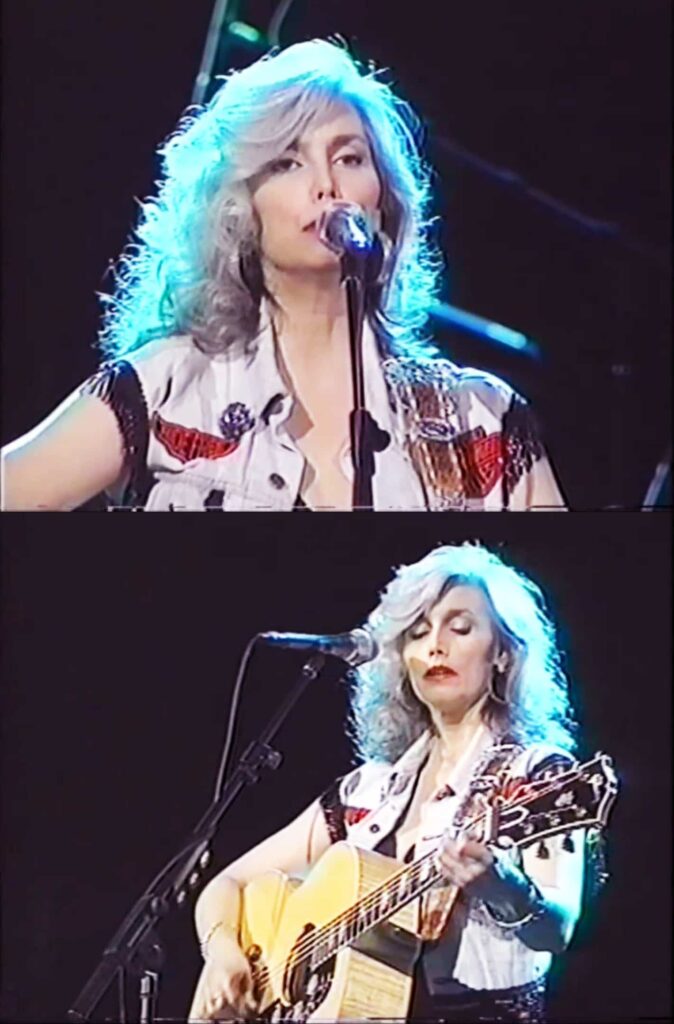
DID EMMYLOU HARRIS SING “TOO FAR GONE” DIFFERENTLY AFTER EXPERIENCING REAL HEARTBREAK?
On a February night in 1995 at Nashville’s historic Ryman Auditorium, Emmylou Harris stood alongside the Nash Ramblers and revisited a song she had carried with her for two decades. To casual listeners, “Too Far Gone” was simply another beautifully performed country ballad. To longtime fans, it felt like something much deeper.
When Emmylou first recorded the song for Pieces of the Sky in 1975, she was a rising young artist whose career was only beginning to unfold. Twenty years later, she returned to it as a woman who had lived through triumphs, losses, love, divorce, and reinvention. The lyrics about a relationship that has drifted beyond repair seemed to carry a different weight coming from the 48-year-old Emmylou than they had from the 28-year-old singer who first introduced them to the world.
That question still fascinates listeners today: was she singing the same song, or had life quietly rewritten its meaning?
The timing of the performance makes it even more compelling. In many ways, this concert captures the final chapter of what fans often think of as “classic Emmylou.” Within months, she would release Wrecking Ball, the groundbreaking record that transformed her artistic identity and helped define modern Americana. Looking back now, this performance feels like a farewell to one era just before another began.
There is also a powerful story behind the stage itself.
The Ryman was not merely a venue for Emmylou. During the early 1990s, her celebrated performances with the Nash Ramblers helped renew interest in the aging building and played an important role in its revival. By 1995, she was not simply appearing at the Ryman. She was returning to a place she had helped bring back to life.
That creates a beautiful contradiction at the heart of this performance.
“Too Far Gone” is a song about something lost beyond recovery. A song about endings, distance, and resignation.
Yet behind Emmylou stood one of the greatest comeback stories in American music history. The Ryman itself had been rescued from decline and restored to relevance. The song mourned what could not be saved, while the stage beneath her feet represented something that had been saved.
Three decades later, the performance carries an even deeper sense of nostalgia. We now know what the audience that night could not know. Wrecking Ball was about to redefine Emmylou’s career. The Ryman would become one of America’s most revered music venues. And Emmylou herself would evolve from country star into one of the most respected figures in roots music.
Perhaps that is why this performance continues to resonate.
It is not merely a song about heartbreak.
It is a snapshot of an artist standing at a crossroads, singing about things that are gone forever, while unknowingly stepping toward one of the most remarkable new chapters of her life.