
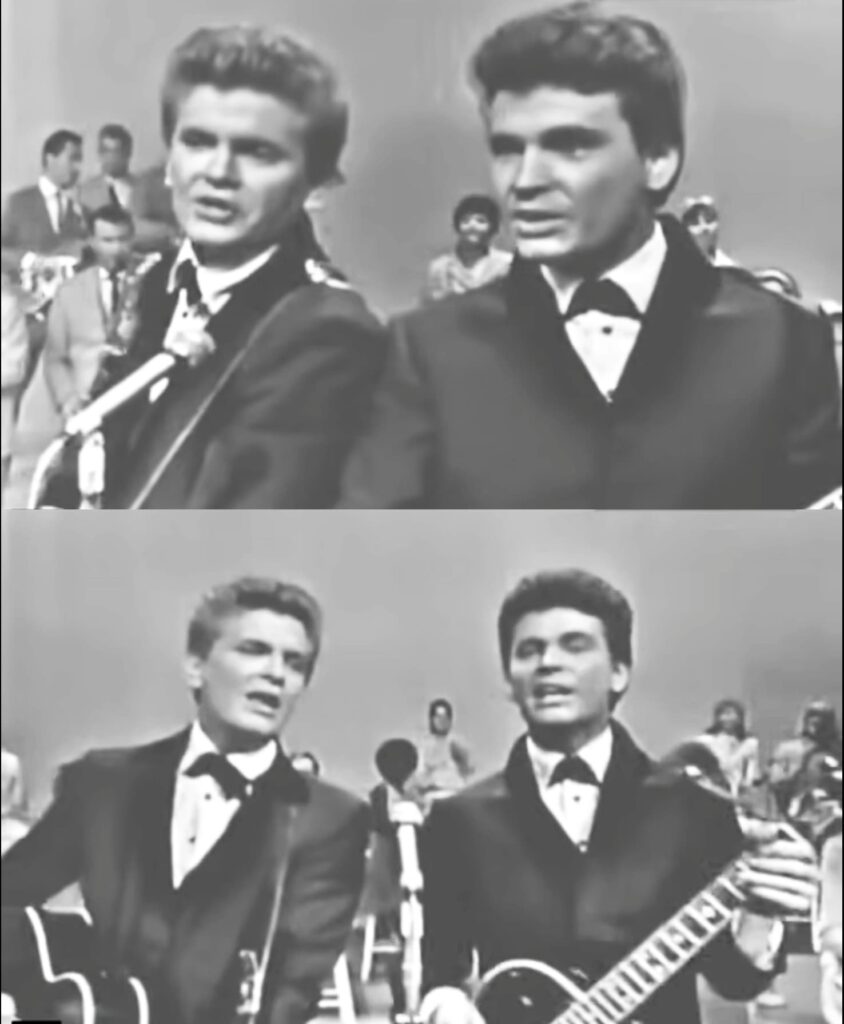
As Beatlemania Swept the World, The Everly Brothers Returned to the Song That Had Inspired Many of the Artists Replacing Them on the Charts
On November 18, 1964, The Everly Brothers stepped onto the stage of Shindig! and performed the song that had changed their lives forever.
The song was “Bye Bye Love.”
To the audience watching at home, it may have seemed like a familiar television performance. But viewed through the lens of history, the moment carried a fascinating significance.
The music world of late 1964 looked very different from the one that had greeted Don and Phil Everly seven years earlier. The British Invasion was in full force. The charts were crowded with young groups from across the Atlantic. Everywhere people looked, it seemed as though The Beatles, The Rolling Stones, and a new generation of artists were reshaping popular music.
Yet standing beneath the television lights that evening were two musicians whose influence could be heard throughout nearly every harmony group dominating the era.
And they were singing the song that started it all.
Released in 1957, “Bye Bye Love” transformed the Everly Brothers from promising young performers into international stars. The song’s combination of country roots, rock-and-roll energy, and breathtaking vocal harmony created a sound unlike anything listeners had heard before. It became a massive hit and launched the brothers on a path that would eventually make them one of the most successful vocal duos in music history.
What makes this 1964 performance so compelling is the timing.
By then, musical fashions had changed. New faces dominated magazine covers. New voices filled the radio. Yet when Don and Phil began singing those instantly recognizable opening lines, it became clear that truly great songs never lose their power.
The harmonies remained astonishing.
The chemistry remained effortless.
The emotion remained intact.
There was no need for elaborate production or fashionable trends. The brothers possessed something far more enduring: a sound that could not be mistaken for anyone else’s.
The irony, of course, is that many of the artists leading the British Invasion had grown up listening to records by the Everly Brothers.
Among the most famous admirers were John Lennon and Paul McCartney, who openly acknowledged the influence of the Everlys’ close harmony style on their own early recordings. The vocal blend that helped define The Beatles was, in many ways, built upon foundations Don and Phil had helped establish years earlier.
That reality gives the performance an almost poetic quality.
While the world celebrated the newest musical revolution, the architects of an earlier one were standing center stage, reminding everyone where some of those ideas began.
The song itself remains remarkably effective.
At its heart, “Bye Bye Love” tells a familiar story of heartbreak. The narrator watches love disappear and finds himself left with loneliness and regret. Yet the song never feels defeated. The driving rhythm and soaring harmonies transform sadness into something exhilarating. Listeners may be hearing a broken heart, but they are also hearing the joy of extraordinary musicianship.
That balance became one of the Everly Brothers’ greatest gifts.
They could make sorrow sound beautiful.
They could make heartbreak sing.
Looking back now, the performance captures a unique crossroads in popular music history. It preserves two legendary artists at a moment when the industry was changing rapidly around them. Many performers from the 1950s struggled to adapt to the new decade. The Everlys, however, possessed something stronger than trends.
They had songs.
They had harmonies.
And they had a legacy already woven into the fabric of modern popular music.
More than sixty years later, this appearance feels like far more than a nostalgic television clip.
It is a reminder that before the British Invasion conquered America, before countless harmony groups filled the airwaves, and before a new generation of stars emerged, two brothers from Kentucky had already shown the world what was possible when two voices blended as one.
And on that November night in 1964, they returned to the song that started the journey, proving that some sounds never grow old.