
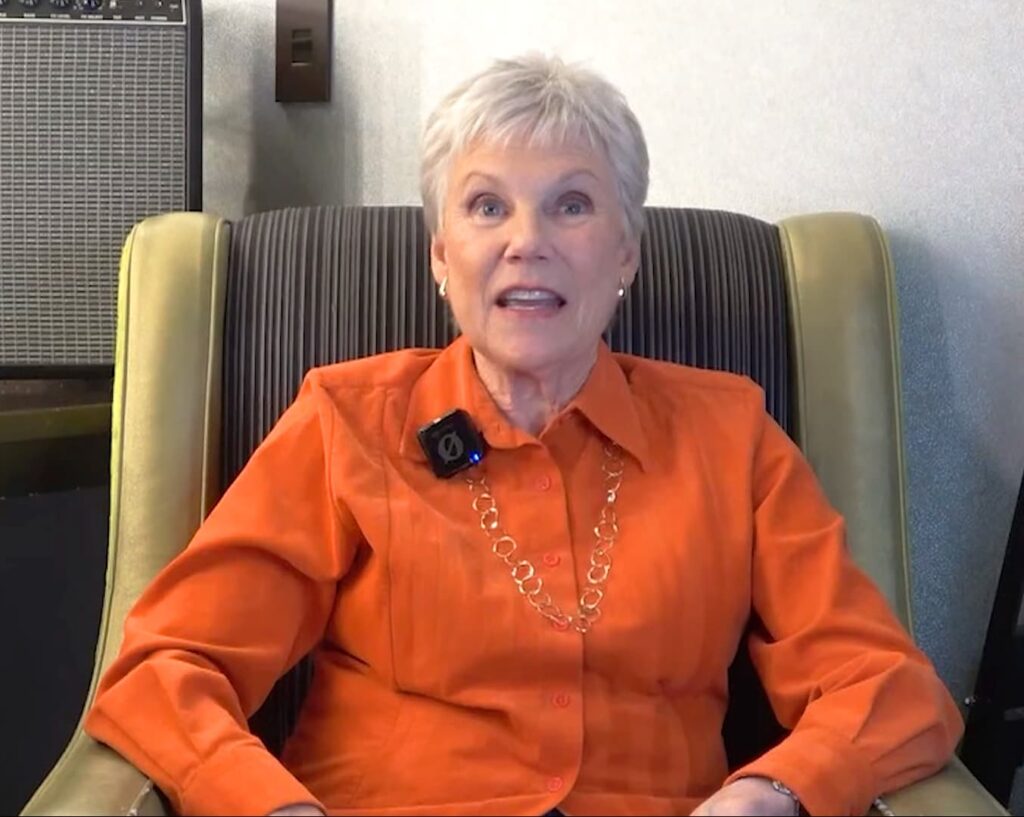
After a lifetime of records, awards, and sold-out concerts, Anne Murray says her greatest regret was working too much and her greatest hope is simply to be remembered for kindness
Few artists spend more than half a century at the top of their profession. Even fewer emerge from that journey with such a clear understanding of what truly mattered.
In a recent reflection on her remarkable career, Anne Murray spoke candidly about success, retirement, family, and the lessons she learned after becoming one of the most influential voices in Canadian music history. Surprisingly, the conversation was not centered on her countless awards, record sales, or chart achievements. Instead, it focused on something far more personal.
Regret.
And gratitude.
The discussion came as Murray introduced “Here You Are,” her 33rd studio album, a collection of previously unreleased recordings that unexpectedly surfaced years after she had stepped away from the spotlight. Initially, she was skeptical.
“If those songs didn’t make it the first time around, why would I bother putting out an album now?” she recalled thinking.
What changed her mind was not ambition. It was joy.
The project became a family collaboration. Her daughter contributed background vocals. Her nephew, musician Dale Murray, helped complete the recordings in Nova Scotia. What began as an archival release evolved into something deeply meaningful.
“It was an all-family affair,” Murray said.
For an artist who spent decades traveling, recording, and performing at an almost relentless pace, that detail feels especially significant.
Because when Murray looks back on her career, the thing she wishes she had done differently has nothing to do with music itself.
Her biggest regret, she admitted, was not putting her foot down when it came to workload.
She believes she recorded too many albums.
Too many schedules.
Too many commitments.
The pressure to keep producing eventually diluted what might have been an even more focused body of work. Looking back, she feels she could have made half as many records and still left an equally powerful legacy.
It is a remarkably honest admission from someone whose career would be considered extraordinary by any measure.
Murray also reflected on the physical and emotional cost of success. During her busiest years, touring often left little time for vocal recovery. She described spending weeks on the road and feeling satisfied with her voice only a handful of times during an entire tour.
Eventually, she realized something important.
Her career had begun controlling her instead of the other way around.
So she walked away.
Not because audiences disappeared.
Not because success faded.
But because she knew it was time.
There is a quiet wisdom in that decision that becomes more apparent with age.
Throughout the interview, Murray remained characteristically humble about her accomplishments. She acknowledged her distinctive voice, a sound that helped make her instantly recognizable on radio. She spoke proudly of singing naturally without relying on modern tuning technology. Yet there was no sense of self-congratulation.
Instead, there was reflection.
The kind that comes only after decades of perspective.
Perhaps the most moving moment arrived near the end of the conversation when she was asked how she hoped to be remembered.
Many artists might have pointed to awards.
Others might have mentioned hit records.
Murray chose something much simpler.
She wanted people to remember how she treated those around her.
The musicians.
The crew members.
The employees.
The friends and colleagues who shared the journey.
“Was I good to them?” she asked.
Then she answered her own question.
“Yes, I was.”
For someone whose career helped reshape the international perception of Canadian music, that response speaks volumes. After all the platinum records, television appearances, sold-out arenas, and Grammy victories, Murray’s final measure of success is not found in a trophy case.
It is found in relationships.
More than fifty years after her rise to fame, Anne Murray seems less concerned with what she achieved than with how she lived. And perhaps that is the most meaningful achievement of all.
The records will always remain.
The voice will always endure.
But in the end, the legacy she values most is far simpler: being remembered as someone who treated people well.