
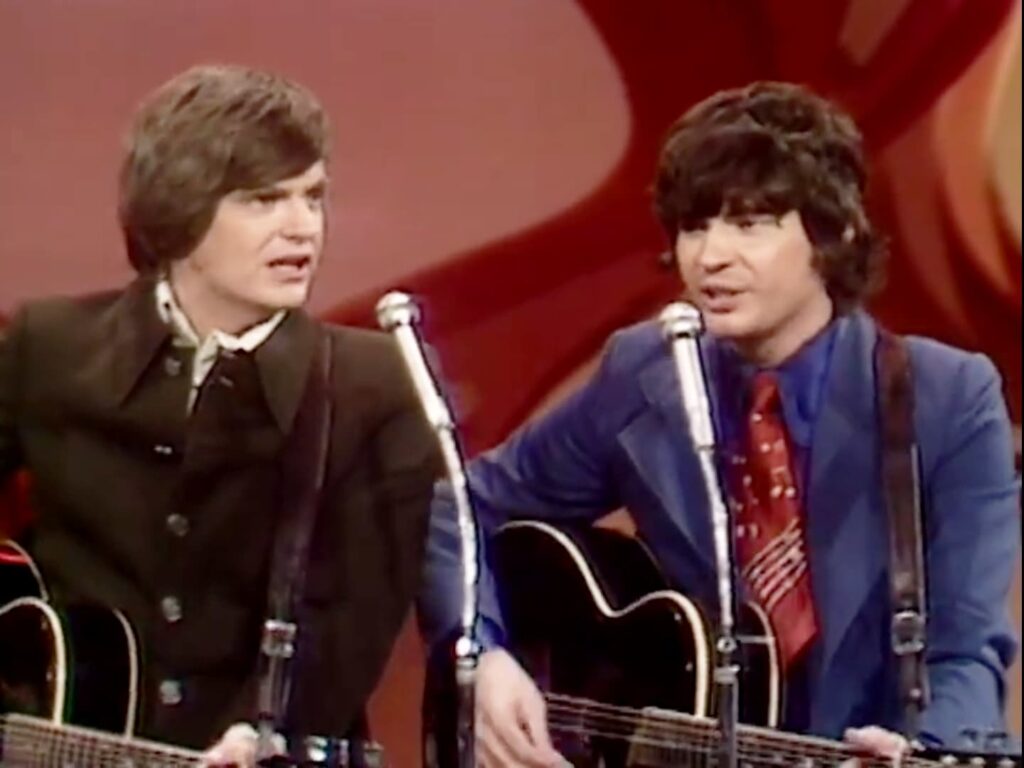
In the final months of a television institution, The Everly Brothers sang a song about regret, redemption, and motherhood, creating a performance that feels even more meaningful with the passing of time.
On February 28, 1971, The Everly Brothers stepped onto the stage of The Ed Sullivan Show and delivered a brief but unforgettable rendition of “Mama Tried.” Lasting less than two minutes, the performance seemed modest by television standards. Yet viewed today, it stands as a remarkable intersection of musical history, family legacy, and the closing chapter of one of America’s most beloved television programs.
For many viewers at the time, the song choice itself may have come as a surprise.
After all, “Mama Tried” was already closely associated with country legend Merle Haggard. The song had become one of Haggard’s signature recordings, telling the story of a rebellious son who ignored his mother’s guidance and ultimately paid a heavy price for his mistakes.
Fans tuning in to see The Everly Brothers might reasonably have expected familiar classics such as Bye Bye Love, Wake Up Little Susie, or All I Have to Do Is Dream. Instead, Don and Phil Everly chose a hard-edged country confession about regret, prison, and personal responsibility.
The decision revealed something important about who they were as artists.
By 1971, rock music dominated popular culture. Psychedelia, hard rock, and singer-songwriters were reshaping the musical landscape. Yet The Everly Brothers had never forgotten their roots. Long before they became international pop stars, they were raised on country music. Their father, Ike Everly, was a respected musician, and their family life revolved around songs, harmonies, and radio performances.
That background gives “Mama Tried” an added emotional dimension.
The song centers on a son reflecting on how hard his mother worked to guide him toward a better life. As Don and Phil sang those words, listeners could not help but think about their own upbringing. Their parents had played a crucial role in shaping their musical careers from childhood. Because of that connection, the performance never feels like a simple cover version. Instead, it carries the warmth of artists who understood the song’s emotional core from personal experience.
Another reason the clip resonates today is its place in television history.
When this performance aired, The Ed Sullivan Show was approaching the end of its legendary run. After more than two decades on American television, the program would leave the air later that year. Generations of viewers had gathered around their televisions to watch artists who would become cultural icons.
The stage had welcomed Elvis Presley, The Beatles, The Supremes, comedians, actors, and performers from every corner of entertainment. By February 1971, the show itself had become part of American history.
Watching The Everly Brothers perform during those final months feels like witnessing the closing pages of an era.
The brothers themselves were also entering a new phase of life.
Gone were the fresh-faced teenage idols of the late 1950s. In their place stood two mature performers whose voices carried greater depth and experience. Their harmonies remained astonishingly precise, but there was a richness in the sound that only years of performing together could create.
That harmony remains one of the most fascinating aspects of the performance.
There are no elaborate arrangements. No flashy instrumental breaks. No theatrical production. The focus rests entirely on two voices intertwining with extraordinary precision. It is the kind of musical partnership that influenced generations of artists, from Simon & Garfunkel to The Beatles and Crosby, Stills, Nash & Young.
Many music historians continue to debate whether The Everly Brothers represent the greatest vocal harmony duo in popular music history. Performances like this explain why that conversation never disappears.
Perhaps the most striking aspect of the song is the contrast between its subject matter and its atmosphere.
On paper, “Mama Tried” is undeniably tragic. The narrator ignores his mother’s advice, falls into trouble, and ultimately accepts responsibility for his failures. Yet when The Everly Brothers perform it, the song feels less like a story of punishment and more like a story of understanding.
There is sadness in the lyrics, but there is also compassion.
Regret, but also forgiveness.
Loss, but also love.
More than fifty years later, that balance remains the secret of the song’s enduring power. And in this brief appearance on The Ed Sullivan Show, The Everly Brothers captured it beautifully, reminding audiences that some of the greatest country songs are not about blame at all.
They are about finally understanding the sacrifices made by those who loved us all along.