
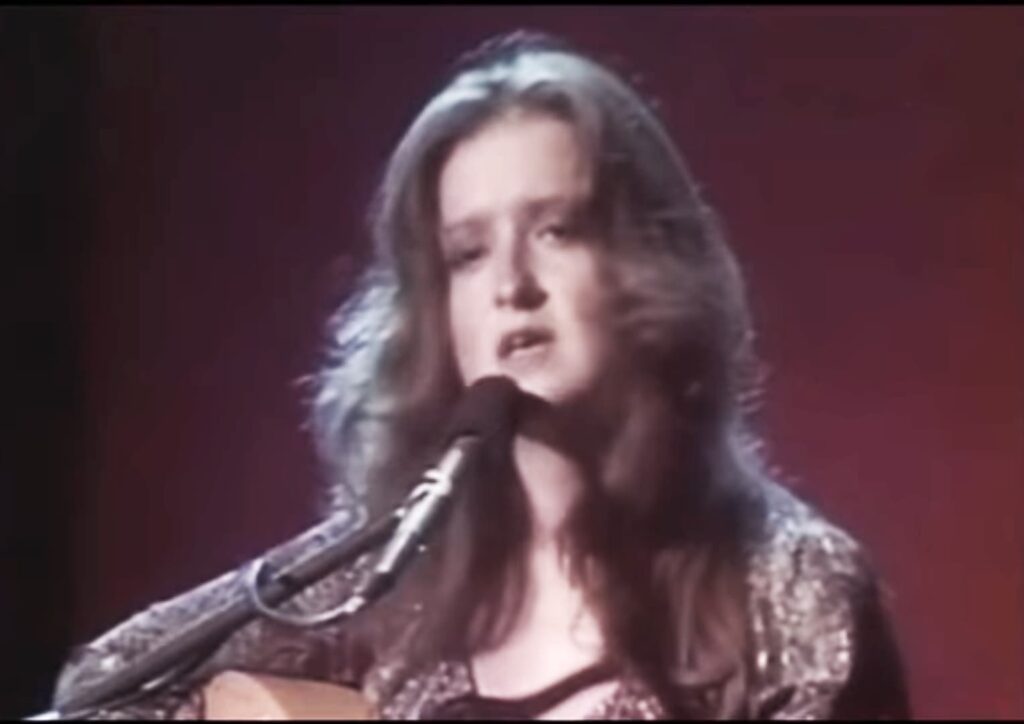
Before the Grammys and the Hall of Fame, “Nothing Seems To Matter” captured a young Bonnie Raitt singing about the quiet loneliness that follows love down an endless highway.
In 1977, Bonnie Raitt was only 27 years old.
She had not yet won a Grammy. She had not yet released the multi-platinum albums that would make her a household name. The worldwide success of Nick of Time was still more than a decade away. Yet among musicians, songwriters, and devoted music fans, Raitt had already earned a reputation as one of America’s most emotionally authentic voices.
That early artistry is beautifully preserved in a live performance of “Nothing Seems To Matter,” a song that now feels like a snapshot of a future legend long before the rest of the world fully discovered her.
Listening today, it is striking how different this young Bonnie sounds from the confident Grammy-winning artist many people remember. The trademark red hair is there, and so is the unmistakable sincerity, but the performance reveals a softer, more vulnerable side. Rather than overwhelming listeners with dramatic vocal power, Raitt approaches the song almost like a private conversation.
The lyrics tell the story of someone separated from the person they love. There is no bitterness, no betrayal, and no angry farewell. Instead, the song focuses on something far more familiar and often more painful: distance.
As Raitt sings about being “out here on the road,” the song becomes more than a love ballad. It feels like a diary entry from a touring musician. Behind the applause, the lights, and the excitement of performing lies another reality that many artists know well: lonely hotel rooms, unfamiliar cities, and long nights spent thinking about the people left behind.
One of the song’s most memorable moments arrives with a simple line: “Mexico will never be the same.”
It is a small detail, but it transforms the song. Suddenly, the listener is not hearing a generic story about missing someone. There is a specific place, a specific memory, and a specific goodbye. The image gives the song a cinematic quality, making it feel less like fiction and more like a recollection from real life.
What makes “Nothing Seems To Matter” especially moving is that it is not truly a breakup song. The relationship remains alive. Love still exists. The sadness comes from circumstances rather than conflict. Two people care deeply for one another, but life has placed miles between them.
Raitt’s performance understands that kind of heartbreak perfectly. She never pushes the emotion too hard. She almost whispers certain phrases, allowing the loneliness to speak for itself. That restraint would later become one of the defining characteristics of her greatest recordings.
Today, many listeners immediately associate Bonnie Raitt with classics such as “Something To Talk About,” “Love Sneakin’ Up On You,” and “I Can’t Make You Love Me.” Yet “Nothing Seems To Matter” remains one of the lesser-known treasures from her early years.
Looking back nearly five decades later, the performance carries an additional layer of meaning. We now know what the young singer on that stage could not know in 1977. She would become one of the most respected artists in American music, win multiple Grammy Awards, and secure her place among the most admired singer-songwriters of her generation.
That knowledge makes this performance feel almost like a photograph from another era. It captures a gifted young artist standing at the beginning of a remarkable journey, singing about distance, memory, and longing while her own future remained unwritten.
Long before the awards, the acclaim, and the recognition, Bonnie Raitt was already doing what she would spend a lifetime doing better than almost anyone else: telling the truth through a song.