
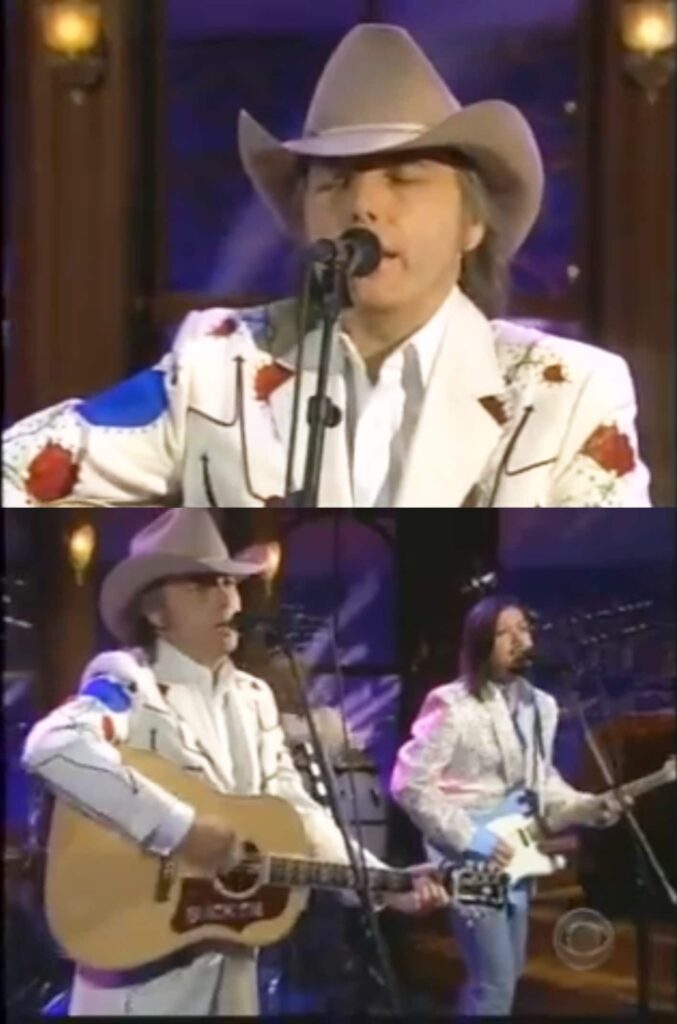
A Year After Buck Owens’ Passing, Dwight Yoakam Sang “Close Up the Honky Tonks” Like a Promise to Keep Bakersfield Alive
When Dwight Yoakam performed “Close Up the Honky Tonks” in 2007, he was singing a classic country song. But he was also doing something more profound.
The song had long been associated with Buck Owens and the unmistakable sound of Bakersfield, California. Its lyrics tell the story of a heartbroken man who wishes the honky-tonks would close because they only deepen loneliness and keep old wounds alive. On the surface, it is a familiar country theme. Yet in Dwight’s hands, especially at that moment in time, the song seemed to carry an entirely different meaning.
By 2007, many of the old honky-tonks that had shaped country music culture were disappearing. Country radio had changed dramatically. Nashville was moving toward bigger productions and a more contemporary sound. The rough-edged bars, dance halls, and roadside venues that once nurtured generations of musicians felt increasingly like memories from another era.
That reality gave Yoakam’s performance a quiet emotional weight.
Only a year earlier, Buck Owens had passed away. For decades, Yoakam had been regarded as one of the clearest heirs to Owens’ musical legacy. The connection went beyond song choices. It could be heard in the sharp Telecaster twang, the Bakersfield-inspired arrangements, and the determination to preserve a style of country music that many believed was being left behind.
As a result, watching Yoakam perform “Close Up the Honky Tonks” in 2007 feels almost like witnessing a conversation between student and mentor, even though only one of them is standing on the stage.
For longtime country fans, that context changes everything.
The performance arrives at a fascinating point in Yoakam’s life. During the 1980s, he had been viewed as a rebel, an artist who challenged Nashville trends by embracing traditional country music when much of the industry was moving elsewhere. His tight jeans, distinctive voice, and Bakersfield influences helped make him one of the defining figures of the neo-traditional movement.
By 2007, however, Yoakam was no longer the young outsider fighting for recognition. At 51, he had become part of country music history himself. The artist who once defended tradition had become one of its most important guardians.
That transformation makes the performance especially meaningful. He is not simply revisiting an old song. He is protecting a legacy.
One reason “Close Up the Honky Tonks” has endured for so many decades is that it is not really about drinking or nightlife. The honky-tonk serves as a symbol for temptation, loneliness, and memories that refuse to fade. The song speaks to anyone who has struggled to let go of the past, which is why each generation finds its own meaning within the lyrics.
Yoakam understands that perfectly. Rather than treating the song as a museum piece, he performs it as if it still belongs to the present. Every note suggests that these stories are not relics of country music history. They are living experiences that continue to resonate.
Looking back today, the performance feels even more significant. What appeared to be a simple rendition of a Buck Owens favorite now resembles a pledge to preserve a disappearing world. The dance halls may change. The radio may evolve. Generations may come and go.
Yet for a few minutes on that stage in 2007, Dwight Yoakam reminded audiences that the Bakersfield sound, and the spirit behind it, would not disappear with the people who created it.
It was not merely a cover song.
It was a tribute, a thank you, and perhaps most of all, a promise that the music would endure long after the lights of the old honky-tonks had dimmed.