
Before Willie Nelson and Merle Haggard Made It a No. 1 Hit, Townes Van Zandt Sat Alone and Told the Story of “Pancho & Lefty.”
Few songs in country music have traveled a more remarkable journey than “Pancho & Lefty.” Today, many listeners associate it with the chart-topping duet by Willie Nelson and Merle Haggard, whose 1983 recording became a No. 1 country hit. Yet years before the song reached radio audiences across America, Townes Van Zandt was quietly performing it alone, armed with nothing more than an acoustic guitar and one of the most extraordinary songwriting voices of his generation.
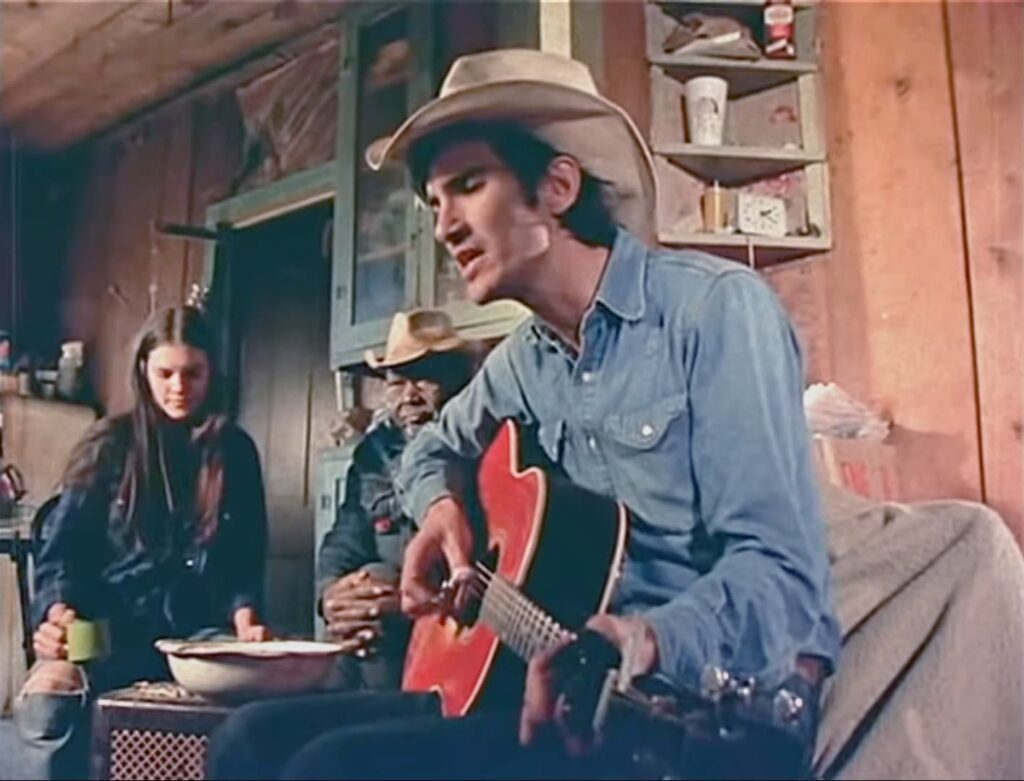
The iconic 1975 performance, filmed at a ranch near Austin, Texas, captures Van Zandt at his most compelling. There are no elaborate stage lights, no full band, and no theatrical gestures. Instead, the camera simply watches as he tells a story that unfolds somewhere between history, folklore, and personal reflection. His fragile voice and understated delivery demand complete attention, proving that great storytelling rarely needs grand production.
Although the song appears to recount the lives of two men, Pancho and Lefty, Van Zandt never explained exactly who they were meant to be. Some listeners have connected Pancho to the Mexican revolutionary Pancho Villa, while others hear the song as a timeless tale of friendship, betrayal, loyalty, and survival. Van Zandt himself preferred to leave the mystery intact, allowing every listener to discover a different meaning within the lyrics.
That ambiguity is one reason the song has endured for decades. Rather than offering clear heroes and villains, “Pancho & Lefty” asks difficult questions about courage, regret, and the choices people make when faced with impossible circumstances. Even after the final verse, listeners are left wondering whether Lefty betrayed his friend, escaped his own fate, or simply became another victim of life’s cruel uncertainties.
The intimate setting of the 1975 performance makes those questions feel even more personal. Without distraction, Van Zandt’s voice carries every emotional nuance. He never rushes the story or tries to emphasize its most dramatic moments. Instead, he trusts the words to find their own rhythm, revealing the confidence of a songwriter who understood that silence can be just as powerful as melody.
Looking back, the performance also highlights the fascinating contrast between Van Zandt’s career and the success of his songs. While he earned immense admiration from fellow musicians and dedicated fans, widespread commercial recognition often arrived only after other artists recorded his work. “Pancho & Lefty” became the most famous example. When Willie Nelson and Merle Haggard released their version in 1983, the song introduced millions of listeners to a masterpiece that had already been quietly celebrated within songwriting circles for years.
Rather than diminishing Van Zandt’s achievement, that success confirmed the extraordinary strength of his writing. Few songwriters create works that can thrive in such different interpretations. His original recording is sparse, intimate, and haunting, while the Nelson and Haggard version carries the confidence of two country legends. Both succeed because the foundation is an exceptional song.
Many musicians have since described Townes Van Zandt as one of America’s greatest lyricists. Artists ranging from Steve Earle to Emmylou Harris have praised his ability to combine poetic imagery with emotional honesty, creating songs that reveal new meanings each time they are heard. “Pancho & Lefty” remains perhaps the finest example of that rare gift.
Watching this 1975 performance today is more than revisiting an early version of a famous hit. It is witnessing a songwriter before the world fully understood what he had created. Alone in the Texas countryside, Townes Van Zandt was not chasing chart success or commercial recognition. He was simply telling a story the only way he knew how.
Half a century later, that quiet performance still feels timeless. Long before “Pancho & Lefty” became one of country music’s most celebrated recordings, it was already something even more enduring: a beautifully written piece of American storytelling that continues to captivate anyone willing to sit quietly and listen.
 Oldies Songs