
A voice shaped by time and truth, where Anne Murray reflects on a lifetime of songs that quietly carried love, loss, and healing
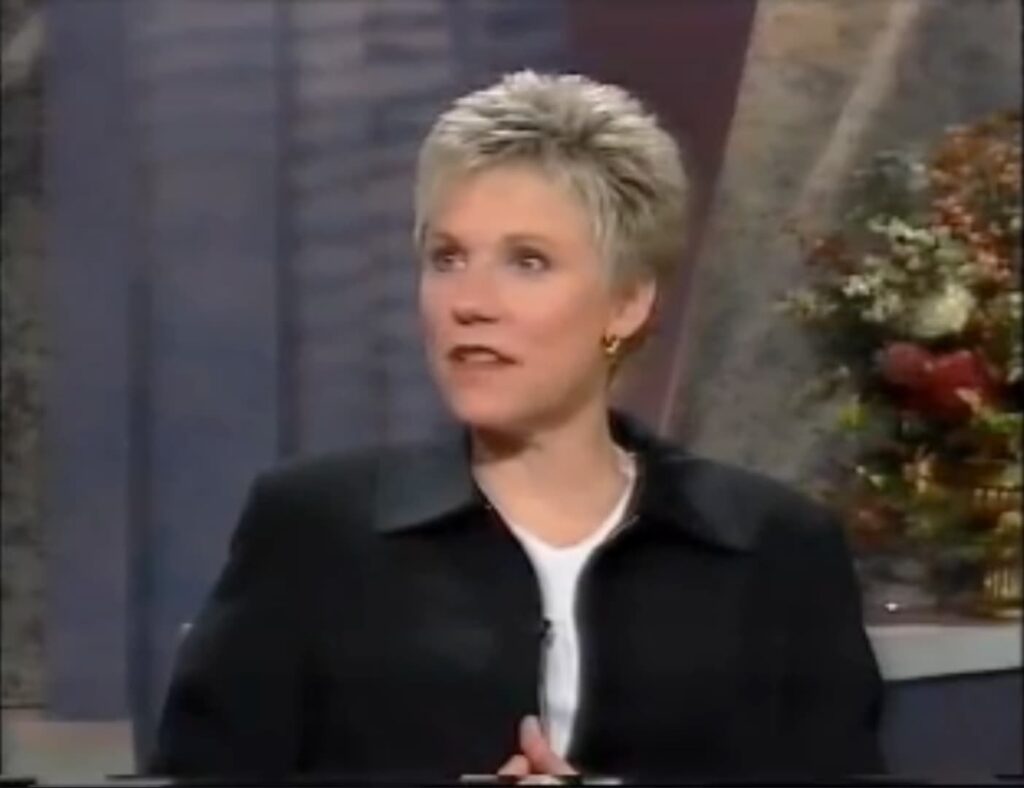
In April 1997, during her Australian tour, Anne Murray appeared on the television program “Midday with Kerrie-Anne”, offering both a live performance of her then-new single “What Would It Take” and a rare, deeply personal conversation. At that point, she had already released her 30th album, “Anne Murray”, marking nearly three decades since her breakthrough with “Snowbird” in 1970.
From the outset, Murray’s presence felt grounded and unpretentious. When asked about her catalog, she singled out “You Needed Me” as perhaps her finest recording, not for its chart success alone, but because it had endured. Time, in her view, was the only true measure of a song’s worth. That quiet confidence defined the entire interview.
What emerged most clearly was her understanding of music’s role beyond entertainment. She spoke of letters from listeners who found comfort in her songs during moments of grief, illness, and uncertainty. One story lingered in particular: a widower and a widow who met, fell in love, and married to the sound of “Could I Have This Dance”, their twelve children singing it at the ceremony. It was not told as a grand achievement, but as a gentle reminder that songs can live inside people’s lives in ways no artist can fully predict.
Her discussion of contemporary voices like Celine Dion and Mariah Carey revealed both admiration and restraint. While acknowledging their extraordinary vocal ability, Murray emphasized her own enduring belief that melody and lyric should remain at the heart of a song. For her, clarity of emotion mattered more than technical display.
There was also a sense of quiet legacy. Reflecting on the growth of Canadian music, she spoke with pride about artists who followed, while subtly recognizing her own role in opening that path. Yet even with decades of success behind her, she returned to something simple. The need to feel that the music still mattered.
By the end of the interview, what remained was not the scale of her career, but its sincerity. Anne Murray did not present herself as a legend. She spoke as someone who had spent a lifetime singing songs that stayed with people, long after the final note had faded.