
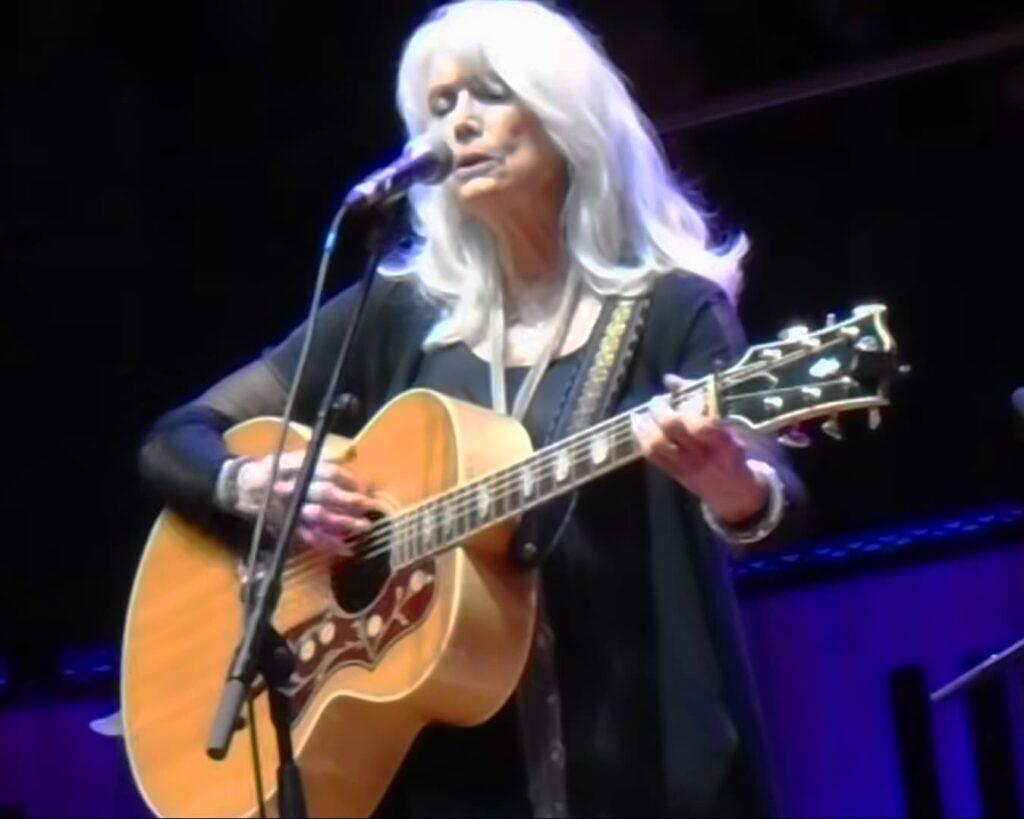
In 2026, Emmylou Harris Returned to “Boulder to Birmingham” and Sang It Like a Letter Written Across Fifty Years of Memory
On May 15, 2026, inside Bristol’s newly restored Beacon Hall at the Bristol Beacon, Emmylou Harris performed “Boulder to Birmingham” with the same fragile emotional honesty that first made the song legendary half a century earlier. Part of her widely announced European farewell tour, the concert carried an atmosphere of gratitude, reflection, and quiet finality.
When Harris originally wrote “Boulder to Birmingham” in 1975 with Bill Danoff, she was grieving the devastating loss of Gram Parsons, the musical partner whose influence changed the direction of her entire career. Released on her landmark album Pieces of the Sky, the song became one of the most haunting elegies in country and folk music history.
But hearing her sing it in 2026 gave the song an entirely different emotional weight.
Gone was the youthful sorrow of the original recording. In its place stood something deeper: the sound of a woman carrying decades of memories, triumphs, heartbreaks, friendships, and losses through a voice that still retained extraordinary emotional clarity. Harris no longer sang the song as someone standing inside fresh grief. She sang it as someone who had spent a lifetime learning how grief quietly stays with us.
The audience inside Bristol Beacon seemed to understand that immediately. The room reportedly remained almost reverently silent as Harris moved through the song’s imagery of longing and spiritual devotion. Her voice, softer now and weathered by time, floated gently across the hall with remarkable tenderness.
What made the performance especially moving was its simplicity.
There were no grand reinventions of the arrangement. No attempt to modernize the song. Harris trusted the composition exactly as she always had. Acoustic textures, subtle accompaniment, and emotional restraint allowed every lyric to breathe naturally. That understated honesty has long defined her artistry.
By 2026, Emmylou Harris represented far more than a country music icon. She had become one of the last living bridges to an earlier era of American songwriting, one rooted in storytelling, vulnerability, and emotional truth rather than spectacle. Performances like this reminded audiences why generations of musicians, from Linda Ronstadt to Lucinda Williams, viewed her with such admiration.
There was also something quietly heartbreaking about the context surrounding the concert itself. Promotional materials for the tour openly described it as Harris’ “final opportunity” for European audiences to witness her live in concert. That knowledge hung gently over the evening, giving songs like “Boulder to Birmingham” an even greater sense of reflection and farewell.
Watching Harris perform the song now feels almost like looking through layers of musical history at once. The young woman devastated by Gram Parsons’ death still exists inside the performance, but so does the older artist who survived decades beyond that heartbreak and transformed it into enduring art.
That is why “Boulder to Birmingham” continues to resonate across generations. It was never merely a song about losing one person. It became a meditation on love, memory, absence, and the impossible human wish to follow those we miss anywhere, even “from Boulder to Birmingham.”
And in Bristol in 2026, Emmylou Harris sang it with the wisdom of someone who had carried that wish in her heart for fifty years.