
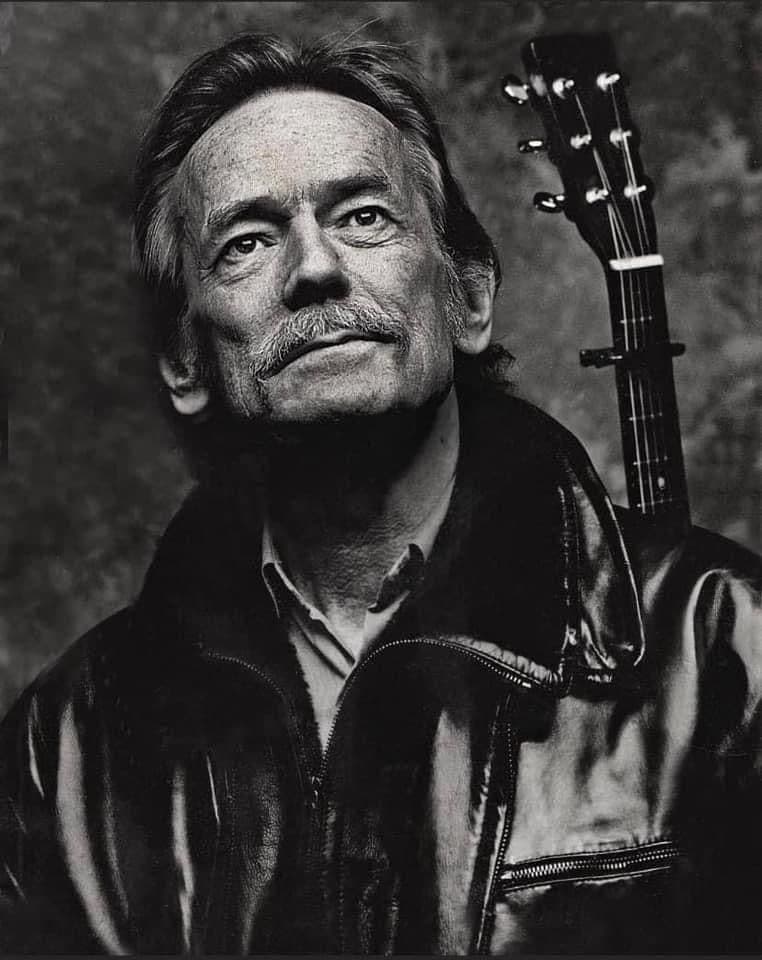
A quiet folk ballad about love, uncertainty, and the painful beauty of growing apart — “Wherefore and Why” captures the fragile emotions that often arrive before goodbye is ever spoken aloud.
There was always something deeply human about Gordon Lightfoot. Long before the world celebrated him as one of Canada’s greatest songwriters, he already possessed that rare ability to make a listener feel as though he were sitting alone in a dimly lit room, singing directly to the heart. And among the many reflective songs that shaped his early career, “Wherefore and Why” remains one of his most delicate and emotionally revealing works.
Originally released in 1968 on the album Did She Mention My Name?, the song arrived during a period when folk music was becoming increasingly introspective. While many artists of the late 1960s leaned toward protest anthems or psychedelic experimentation, Lightfoot chose another path entirely — one built on quiet reflection, emotional honesty, and storytelling rooted in ordinary human experiences. That choice would eventually become his trademark.
Although “Wherefore and Why” was never one of his major chart-dominating singles like “If You Could Read My Mind”, “Sundown”, or “The Wreck of the Edmund Fitzgerald,” the song earned lasting admiration among devoted listeners and folk enthusiasts. The album itself performed respectably in Canada and further strengthened Lightfoot’s reputation as a songwriter of uncommon sensitivity. In many ways, this song represents the emotional foundation upon which his later commercial success would be built.
What makes “Wherefore and Why” so unforgettable is not grand drama, but restraint. The lyrics speak softly, almost cautiously, about emotional distance slowly growing between two people. There is no anger here. No explosive heartbreak. Instead, the song lives in that painful middle ground where affection still exists, yet something essential has quietly begun slipping away.
Lightfoot sings with remarkable tenderness:
“Wherefore and why, why did you go…”
Even the title itself feels old-fashioned and poetic. The word “wherefore” — rarely used in modern conversation — gives the song an almost timeless sadness, as though these questions about love and loss have echoed through generations. And perhaps they have.
Musically, the arrangement is sparse and gentle, allowing the emotional weight of the lyrics to breathe naturally. The acoustic guitar work, one of Lightfoot’s defining strengths, carries the song forward like a lonely walk through memory. There are no unnecessary embellishments. Every note serves the feeling. That simplicity is exactly why the song still resonates decades later.
By the late 1960s, Gordon Lightfoot had already become highly respected within songwriting circles. Artists such as Ian and Sylvia, Peter, Paul and Mary, and even Elvis Presley had shown interest in his compositions. Yet unlike many songwriters who relied on elaborate metaphors or fashionable trends, Lightfoot wrote with remarkable clarity. His songs often sounded less like performances and more like confessions quietly shared after midnight.
That authenticity became especially important in “Wherefore and Why.” Many listeners over the years have interpreted the song as capturing the emotional uncertainty that exists before a relationship fully collapses — the stage where two people still care deeply, but no longer understand one another. It is a feeling difficult to describe in ordinary conversation, yet Lightfoot somehow translated it into melody and verse with heartbreaking precision.
There is also something unmistakably Canadian about the atmosphere of the recording. Much like the landscapes that inspired so much of Lightfoot’s work, the song feels spacious, reflective, and slightly cold around the edges. Silence plays an important role in his music. He understood that emotion often lives not only in words, but in pauses.
Looking back now, “Wherefore and Why” feels like a bridge between traditional folk music and the more personal singer-songwriter movement that would soon dominate the 1970s. Before artists like James Taylor, Jackson Browne, and Dan Fogelberg fully defined that introspective style for mainstream audiences, Gordon Lightfoot was already exploring similar emotional territory with extraordinary grace.
And perhaps that is why the song continues to endure.
Not because it was loud.
Not because it topped charts around the world.
But because it understood something timeless about human relationships: sometimes the deepest sadness comes not from hatred or betrayal, but from quiet emotional drifting — from realizing that love alone cannot always keep two people together.
Decades later, “Wherefore and Why” still sounds intimate and sincere, untouched by changing musical fashions. It remains one of those songs that seem to grow older alongside the listener, revealing new meanings with time. In an era increasingly filled with noise, Gordon Lightfoot gave the world something far more difficult to create:
silence filled with feeling.