
A Song of Labor and Laughter, Where Two Friends Turn Hard Times into Music That Endures
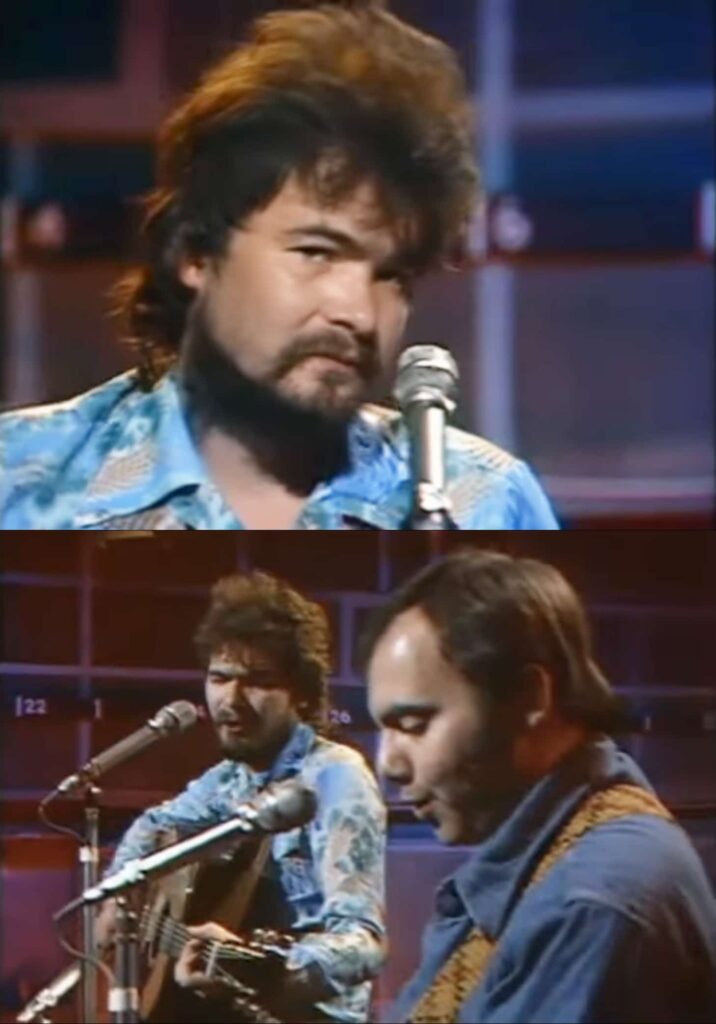
In a 1973 BBC session, John Prine and Steve Goodman came together to perform Nine Pound Hammer, breathing fresh life into a piece deeply rooted in American working class tradition. What could have been a straightforward folk rendition instead became a vivid snapshot of friendship, humor, and shared musical instinct.
From the opening strum, there is an immediacy to the performance. The rhythm moves with a steady, almost work song pulse, echoing the labor it was born from. Yet in the hands of Prine and Goodman, the song never feels heavy. Instead, it carries a buoyant energy, shaped by the easy chemistry between two artists who understood each other instinctively.
Their voices intertwine with a natural looseness. Prine’s grounded, conversational tone meets Goodman’s brighter, more agile phrasing, creating a contrast that feels both spontaneous and perfectly balanced. They do not simply sing the song. They play with it, leaning into its phrasing, stretching lines, and allowing moments of humor to surface without ever losing its core identity.
“ Nine Pound Hammer ” has long stood as a symbol of toil, of physical effort and endurance. Its lyrics speak of weight, distance, and the desire to move beyond hardship. Yet here, that struggle is softened by camaraderie. The repeated lines about rolling on, about pushing forward, feel less like burden and more like shared resilience.
Musically, the arrangement is stripped down to its essentials. Acoustic guitar drives the tempo, with no unnecessary embellishment. This simplicity allows the performance to breathe, giving space for subtle shifts in timing and tone. It also reflects the roots of the song itself, grounded in tradition, passed from voice to voice long before it reached a studio or a stage.
There is also a quiet historical significance in this moment. Both John Prine and Steve Goodman were central figures in the Chicago folk scene of the early 1970s, artists who brought storytelling and authenticity back into focus. Hearing them together in this setting captures that era in its purest form, before time would alter their paths.
As the song rolls toward its final refrain, there is a sense of momentum that never quite resolves. It simply continues, echoing the endless motion the lyrics describe. When the music fades, what remains is not just the sound, but the feeling of having witnessed something genuine.
In that 1973 session, John Prine and Steve Goodman did more than perform a traditional song. They reminded us that even the heaviest burdens can feel lighter when carried together, and that music, at its best, turns hardship into something worth remembering.