
At Farm Aid 1990, John Prine Turned a Concert Into a Tribute to the America That Was Slipping Away
INDIANAPOLIS, April 7, 1990 — Some performances entertain a crowd. Others preserve a piece of history.
When John Prine stepped onto the stage at Farm Aid IV inside the Hoosier Dome, he was not there to deliver a parade of hits. He came as a storyteller, carrying the voices of people whose stories rarely made headlines. Before singing a single note, Prine offered a simple dedication that instantly set the tone for the evening.
“For everybody who ever lost everything.”
Those words hung in the air. At an event created to support struggling American farmers, the message resonated far beyond music. It spoke to people who had lost jobs, family farms, homes, and even the communities they once called home.
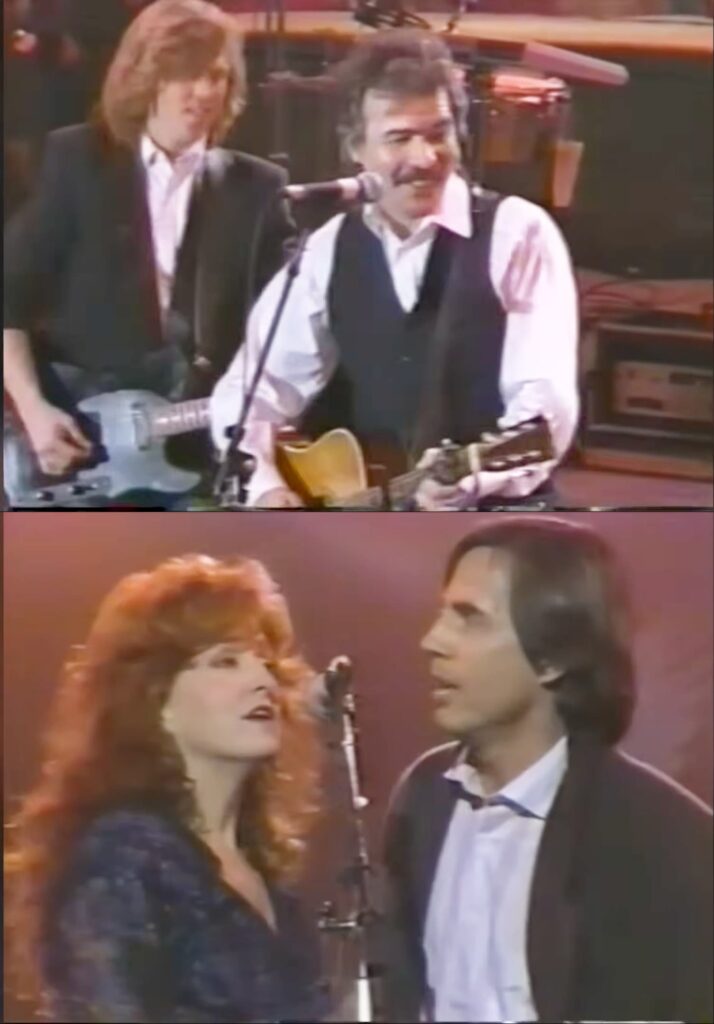
Rather than opening with one of his best-known songs, Prine chose “Third of July,” a little-known gem that reflected the qualities his most devoted fans admired. Accompanied by violinist Lisa Germano and guitarist Larry Crane, both members of John Mellencamp’s acclaimed touring band, Prine delivered a quiet meditation on memory, loss, and the passage of time.
The song’s references to the approaching Independence Day celebration carried an unmistakable bittersweetness. While America traditionally celebrates July Fourth with fireworks and festivities, Prine used the holiday as a backdrop for reflection. His lyrics focused not on celebration, but on vanished years, fading memories, and the shadows left behind by time. It was songwriting of remarkable subtlety, the kind that made Prine one of the most respected lyricists of his generation.
The appearance of Lisa Germano is particularly fascinating in retrospect. At the time, she was known primarily as a member of Mellencamp’s band. Within a few years, she would emerge as one of the most acclaimed alternative folk artists of the 1990s. This performance inadvertently captured an important early chapter of her musical journey.
Then came the evening’s most unforgettable moment.
After finishing “Third of July,” Prine introduced “Paradise”, dedicating it to the people of Muhlenberg County, Kentucky, the region forever immortalized in the song. But before beginning, he welcomed two special guests to the stage: Bonnie Raitt and Jackson Browne. The audience erupted.
Suddenly, three of America’s most compassionate and thoughtful musical voices stood side by side.
What followed felt less like a performance and more like a collective act of remembrance.
Originally written by Prine about the town of Paradise, Kentucky, “Paradise” tells the story of a community transformed and damaged by industrial development. While the song is often described as an environmental anthem, it is equally a song about memory, belonging, and the heartbreak of watching a beloved hometown disappear.
That theme made it a perfect fit for Farm Aid.
Although Farm Aid focused on protecting family farms rather than coal-mining communities, both stories shared the same emotional core: ordinary people struggling to preserve the places that shaped their lives. In many ways, “Paradise” embodied everything Farm Aid sought to defend, including land, community, heritage, and identity.
The performance gained even greater significance with time. Watching it today feels like opening a musical time capsule. John Prine is gone. Kris Kristofferson, who also joined during the performance, is gone. Many of the songwriters who defined this remarkable era of American music are no longer here.
Yet for a few minutes on that April evening in 1990, they stood together on one stage, singing about a place worth remembering.
More than three decades later, the performance remains a powerful reminder of why John Prine mattered. He never needed spectacle. He simply told stories about ordinary people, forgotten towns, and fragile memories.
And on that night at Farm Aid, those stories felt more important than ever.