
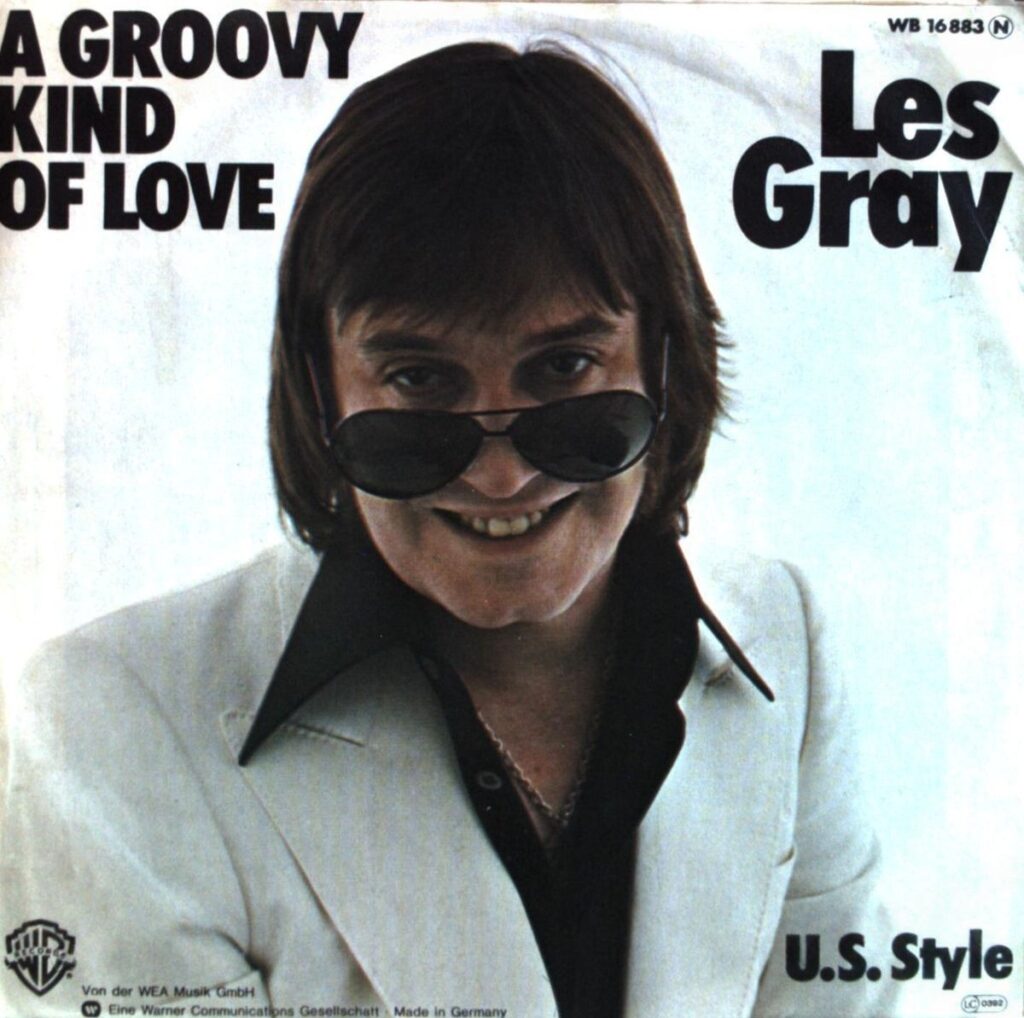
A gentle love song that carried the warmth of youth, longing, and quiet devotion — “Groovy Kind of Love” remains one of those rare melodies that can instantly return listeners to another time, another room, another memory.
There are songs that become hits for a season, and then there are songs that seem to drift through the decades like familiar voices from an old radio at dusk. “Groovy Kind of Love” belongs to the second kind. Soft, tender, and disarmingly sincere, the song has survived generations not because it was fashionable, but because it spoke a simple emotional truth that never grows old.
When Les Gray, best known as the unmistakable voice of the British glam-pop group Mud, recorded his version of “Groovy Kind of Love”, he approached the song with maturity rather than youthful innocence. By then, the world already knew the composition through earlier renditions, especially the famous 1965 hit by The Mindbenders. That original version had climbed all the way to No. 2 on the UK Singles Chart and later reached No. 2 on the Billboard Hot 100 in America — an extraordinary achievement during one of the most competitive eras in pop music. The song itself was written by songwriting duo Carole Bayer Sager and Toni Wine when they were still teenagers, which makes its emotional clarity even more remarkable.
But what makes the Les Gray interpretation fascinating is the contrast between the singer’s musical past and the softness of the material. During the 1970s, Mud became associated with catchy glam-rock hits, playful stage energy, and chart-friendly pop. Songs like “Tiger Feet” and “Lonely This Christmas” made the band household names across Britain. Yet beneath the commercial shine, Les Gray always possessed a warm, expressive voice capable of carrying vulnerability. In “Groovy Kind of Love,” that tenderness comes fully into focus.


6
The beauty of the song lies in its simplicity. There are no grand declarations, no poetic acrobatics, no complicated metaphors. The lyrics merely describe the comfort of being near someone who changes the emotional atmosphere of life itself. In many ways, the song reflects a quieter era of songwriting — a time when sincerity mattered more than cleverness. The phrase “groovy kind of love” may sound unmistakably tied to the 1960s, but the feeling behind it remains timeless. It is not really about trend or slang. It is about emotional safety. About that rare presence in life that makes the world feel softer and less lonely.
That emotional honesty is likely why the song continued to return across generations. In 1988, Phil Collins famously revived the track for the soundtrack of the film Buster, taking it to No. 1 in both the United States and the United Kingdom. Yet even with Collins’ enormous success, many listeners still cherish the earlier renditions because they carry the innocence of a different musical age — an era when love songs often sounded personal rather than manufactured.
For listeners who grew up hearing these melodies on vinyl records, transistor radios, or late-night television performances, “Groovy Kind of Love” often feels tied to memories beyond the song itself. First dances. Long drives. Quiet evenings. Faces now gone. Voices remembered only through music. Songs like this become emotional landmarks more than recordings. They accompany life silently, waiting years before suddenly returning and reopening entire chapters of memory.
What also deserves appreciation is how understated the arrangement usually remains in most versions. Unlike the heavily produced ballads that would dominate later decades, “Groovy Kind of Love” leaves room for emotion to breathe. The melody moves gently, never rushing itself. That restraint is part of its power. It trusts the listener to feel rather than instructing them how to feel.
In the case of Les Gray, there is an added poignancy. By the time audiences revisited his solo interpretations and later performances, there was already a sense of nostalgia surrounding his voice. He represented a generation of British pop musicians who emerged during a period when melody, personality, and emotional directness still shaped mainstream music. Listening now, one can hear not merely a singer performing a love song, but an artist carrying echoes of an entire musical era that slowly faded from the spotlight.
And perhaps that is why “Groovy Kind of Love” still matters. Not because it changed music history dramatically, nor because it was revolutionary, but because it captured something deeply human with extraordinary gentleness. In a noisy world, it remained soft. In an age of changing styles, it remained sincere. And decades later, sincerity still has a way of finding its audience.