
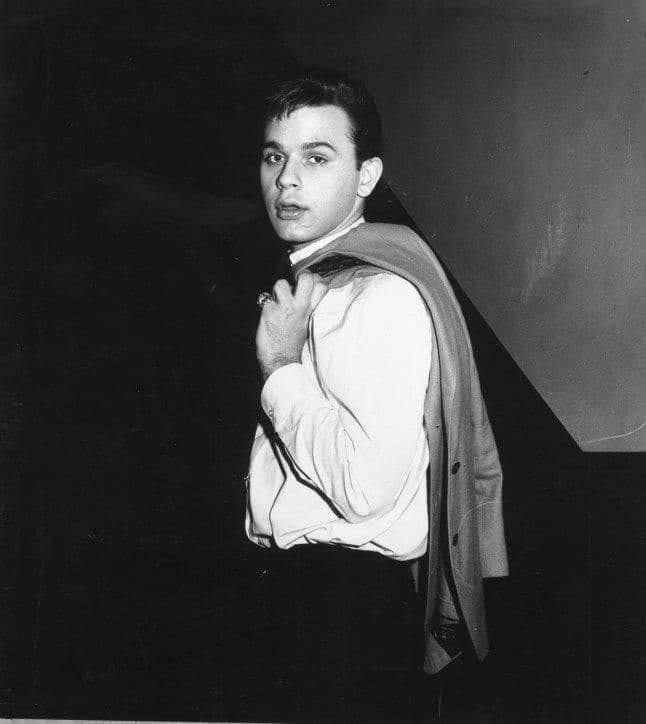
“Two Faces Have I” — a heartbreak song hidden behind a smiling mask
When Two Faces Have I by Lou Christie first emerged in 1963, it soared to #6 on the US Billboard Hot 100, and also hit #11 on the US R&B chart — a remarkable achievement for a pop song led by a falsetto crooner. This song was not just a fleeting hit — it sold over a million copies, firmly establishing Christie as a serious name in the early‑’60s pop scene.
In the early 1960s, just after the success of “The Gypsy Cried,” Lou Christie released Two Faces Have I in March 1963. Unlike many teen‑idol pop songs of its time, the track carried a bittersweet emotional weight. From the very first lines — “I don’t want the world to know / I don’t want my heart to show” — the narrator bares his sorrow, admitting he wears a mask of happiness while inside, he is “Mr. blue.”
That contrast — the public face smiling, the private soul weeping — is the heart of the song. The refrain “Two faces have I — one to laugh and one to cry” becomes not just a clever lyrical turn, but a deeply human confession: the universal pain of heartbreak disguised under everyday smiles.
Behind that evocative lyric stood not only Christie’s signature falsetto, but also the creative synergy between Christie and longtime collaborator Twyla Herbert, who co‑wrote the song with him. Their collaboration had begun with “The Gypsy Cried,” and Two Faces Have I was arguably their first major leap — a song that married melancholic lyricism with a pop melody that lingered in the air.
The recording session took place at Gateway Studios in Pittsburgh on February 6, 1963. A young local guitarist named Ronnie Cochrane contributed the guitar lines, while a local band (Johnny Wilson’s Debonaires) provided the instrumental backbone; Herbert herself played piano on the track.
What made Two Faces Have I stand out was this mixture: a heartfelt, introspective lyric; a soaring falsetto that carried vulnerability and longing; and a melody both plaintive and beautiful. For many listeners back then — and even now — it was more than a danceable pop tune. It was a confession: of pain, of denial, of the inner conflict of wanting to appear strong while being broken inside.
Beyond its immediate success, Two Faces Have I carried a legacy: decades later, one of the titans of rock songwriting, Bruce Springsteen, found inspiration in that very notion of duality. When he penned his song “Two Faces” in 1987, that haunting line — “two faces have I” — echoed in his mind. Springsteen’s song explores self‑doubt, inner conflict, and the darker side of love and loyalty — much deeper, perhaps, but the seed was planted by Christie’s simple yet powerful lyric from 1963.
For a generation of listeners now well into their later years, Two Faces Have I may evoke more than a chart‑topping hit — it becomes memory. Perhaps it brings back the quiet evenings of their youth, when the radio played soft ballads, and heartbreak felt universal. The song doesn’t shout; it whispers. It doesn’t demand; it aches.
Listening to it today, one can’t help but feel a wistful nostalgia — for innocence lost, for young hearts breaking in secret, for the bittersweet ache of love remembered. It stands as a testament to a time when pop music could carry sorrow and longing, wrapped in falsetto notes and melancholy piano.
In the end, Two Faces Have I is more than a hit from 1963. It is a small monument to emotional honesty — a timeless confession that behind many faces we show the world, there may lie another face, unseen, bearing quiet pain. And that — perhaps — is the greatest power of music: to reflect not only our smiles, but our hidden tears.