
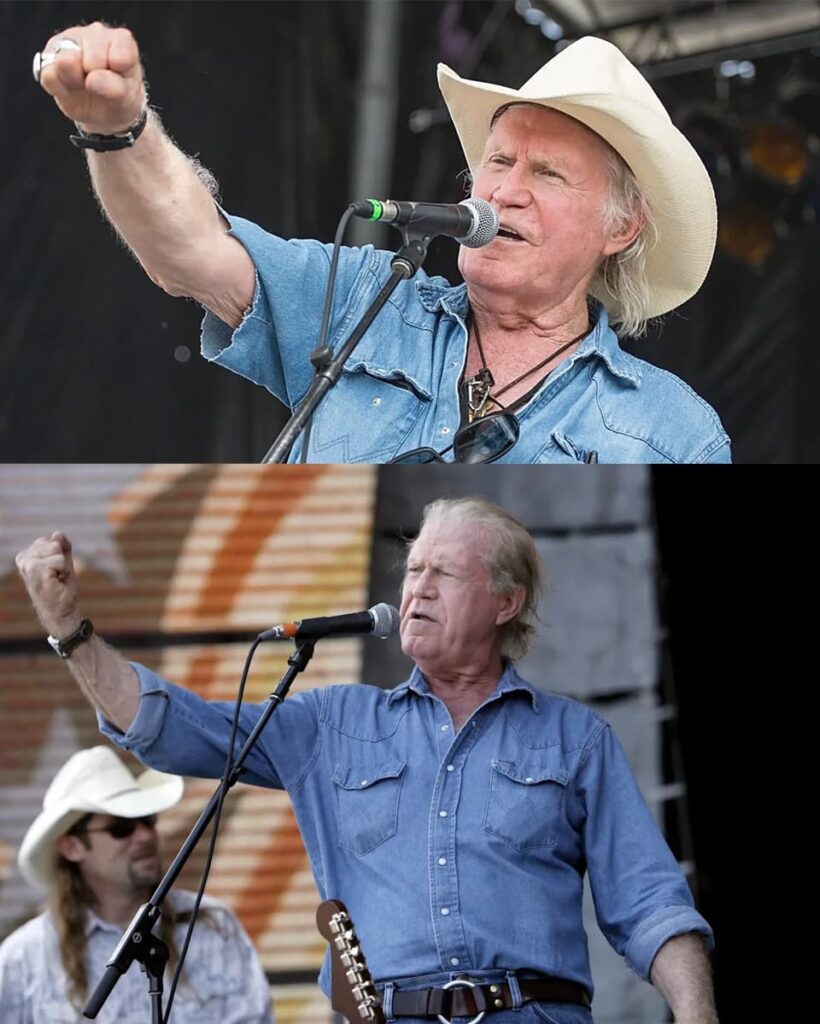
He Lost Two Fingers in a Sawmill Accident. The Music He Made Afterwards Helped Define Outlaw Country.
Long before audiences embraced Billy Joe Shaver as one of the essential voices behind outlaw country, he had already survived the kind of hardships that shape a lifetime.
The accident happened in a Texas sawmill. His right hand became caught in the machinery, taking most of two fingers with it. For many young men trying to earn an honest living, such an injury would have narrowed every dream that remained. For Shaver, it became another obstacle to work around.
He taught his damaged hand how to play the guitar anyway.
Before songwriting and recording studios entered the picture, life had demanded practicality. Shaver had worked rodeos. He enlisted in the Navy at just seventeen years old. He moved through physically demanding jobs that offered little security beyond the next paycheck. Music was not yet a career plan. It was simply something that remained within reach.
The determination that would later echo through his lyrics had already been forged long before Nashville knew his name.
At one point, Shaver set out intending to leave Texas for Los Angeles. Standing beside the road, he waited for someone willing to offer a ride west. None came. Eventually, he crossed to the other side of the highway and headed east instead.
That unexpected turn changed the course of country music history.
Memphis came first.
Then Nashville.
In Tennessee, Shaver secured a songwriting position that paid fifty dollars a week. The salary was modest, but the opportunity proved invaluable. Quietly and without fanfare, he began writing songs rooted in experience rather than imagination. The people in those songs struggled, persevered, laughed through disappointment, and carried on because there was little alternative.
Years later, listeners would embrace compositions such as “I Been to Georgia on a Fast Train”, hearing in them the unmistakable voice of an authentic storyteller. Yet what made Billy Joe Shaver different was that much of what sounded like remarkable songwriting had first been lived.
He understood hard labor because he had done it.
He understood disappointment because he had endured it.
He understood resilience because necessity had taught him no other choice.
The missing fingers never disappeared from his story. Neither did the years spent working jobs far removed from recording studios and concert stages. Instead, those experiences became inseparable from the honesty that defined his work.
When the outlaw country movement emerged in the 1970s, authenticity mattered. Audiences recognized the difference between songs created to fit an image and songs born from real experience. Shaver’s writing carried the unmistakable weight of lived truth.
Perhaps that is why his music continues to resonate so deeply.
Behind every lyric was a man who adapted when life demanded adaptation. A man who changed direction when the original route closed before him. A man who picked up a guitar with an injured hand and refused to surrender the possibility of what might still be ahead.
The sawmill took two fingers from Billy Joe Shaver’s right hand.
It did not take away his determination.
And the songs that followed ensured that one of country music’s most enduring voices would never be forgotten.
 Oldies Songs