
A Patchwork of Memory and Mystery Where Love, Violence, and Time Refuse to Stay Separate
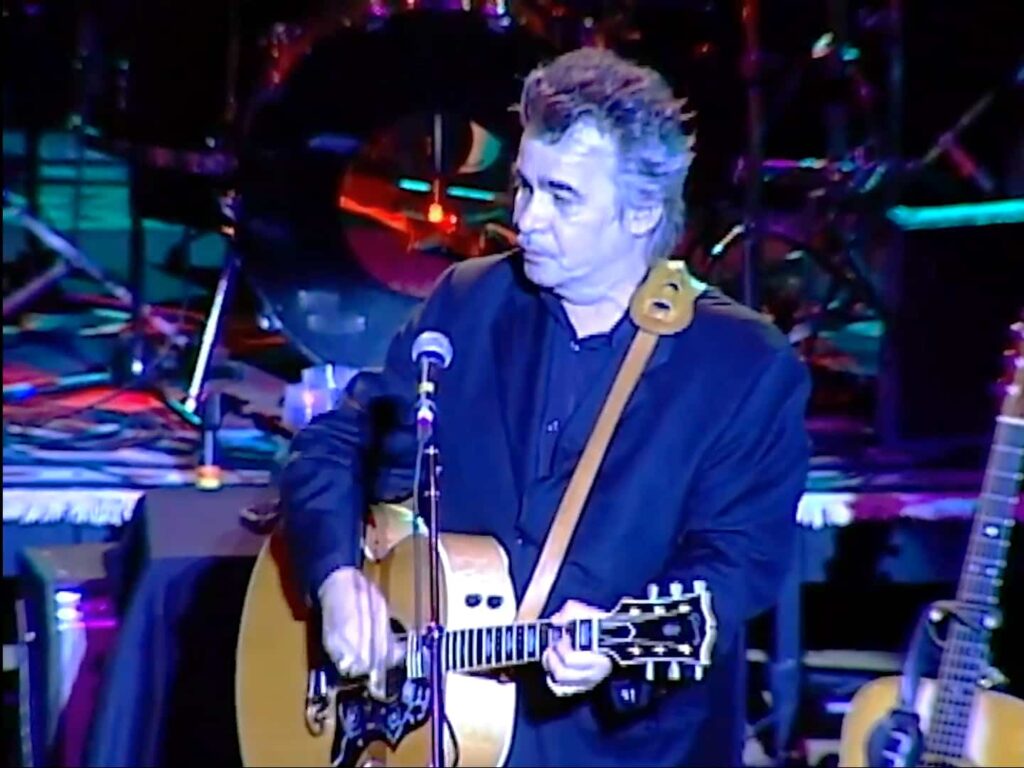
In 1997, during the Jimmie Rodgers American Music Masters Tribute, John Prine performed “Lake Marie” in a way that blurred the line between storytelling and lived experience. By this point in his career, Prine was widely regarded as one of America’s most distinctive songwriters, and this performance stands as a masterclass in his ability to weave humor, tragedy, and everyday detail into something quietly profound.
Drawn from his 1995 album Lost Dogs and Mixed Blessings, “Lake Marie” is not structured like a conventional song. Instead, it unfolds in fragments, shifting between timelines and tones with deliberate unpredictability. Prine opens with a folkloric tale set along the Illinois–Wisconsin border, describing two lakes named after children found in the woods. The story feels distant, almost mythical, yet it sets the emotional landscape for what follows.
As the performance progresses, the narrative moves into personal memory. A relationship appears in small, vivid details. A woman standing by the water, sausages sizzling on a grill, a quiet attempt to hold something together. These moments feel ordinary, even light, yet they carry an undercurrent of tension. Prine’s delivery, relaxed and conversational, allows the listener to settle into these scenes without realizing how much they are being drawn in.
Then, without warning, the tone shifts. A crime scene emerges. Two bodies discovered, described with stark clarity. The intrusion of violence feels jarring, almost out of place, yet it mirrors the unpredictability of real life, where joy and tragedy often exist side by side.
Throughout it all, the recurring refrain about “peaceful waters” returns like an anchor. It offers no resolution, only contrast. The calm surface of the lake stands against the chaos of the stories surrounding it.
What makes this 1997 performance especially compelling is Prine’s control of pacing. He moves effortlessly between humor and darkness, often drawing laughter just moments before delivering something deeply unsettling. The audience responds in kind, unsure whether to laugh, reflect, or simply listen.
By the final lines, nothing is neatly resolved. The stories remain fragmented, the emotions unresolved. Yet that is precisely the point.
Looking back, “Lake Marie” remains one of John Prine’s most intricate works. In this live tribute, he does not simply perform a song. He invites the listener into a world where memory, imagination, and reality overlap, leaving behind a story that lingers long after it ends.