
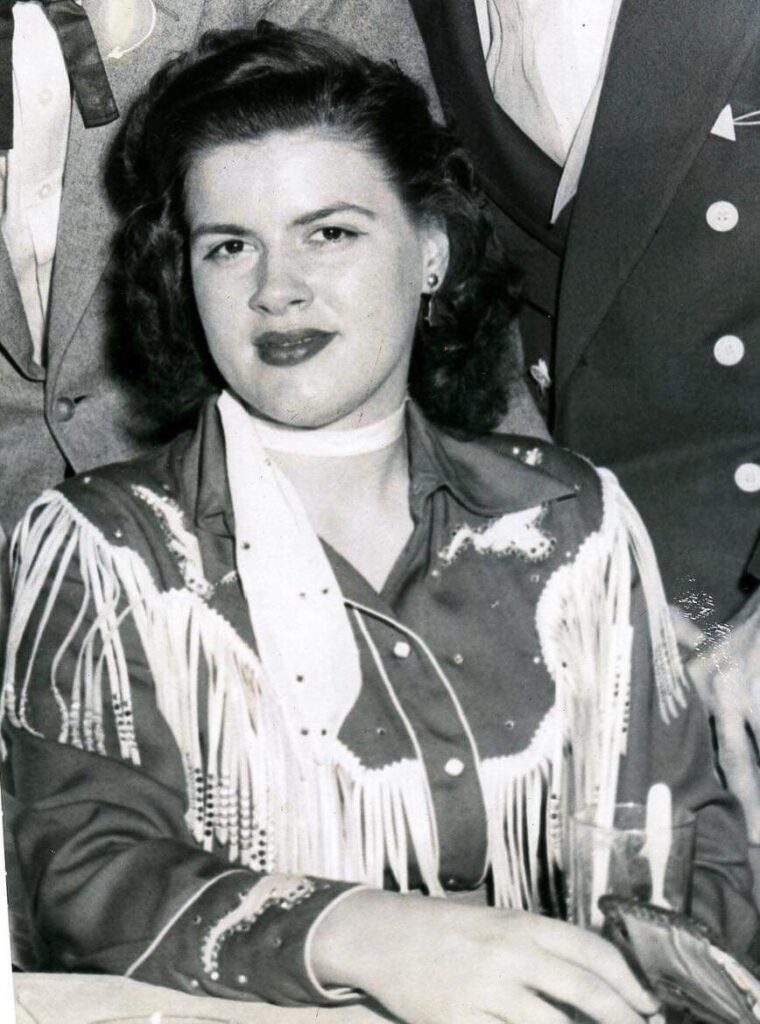
A Voice That Turned Heartbreak Into Timeless Country Truth
In the early days of American television, long before polished stages and digital sound, a young Patsy Cline stepped into the spotlight of the Community Jamboree and delivered a performance of “Lovesick Blues” that still echoes with raw emotional clarity. Originally popularized by Hank Williams, the song had already become a country standard, but in Cline’s hands, it took on a distinctly feminine vulnerability that set her apart.
From the opening line, “I got a feeling called the blues,” her voice carried a quiet ache that felt lived in rather than performed. There was no theatrical excess, only a steady, controlled phrasing that revealed her natural interpretive gift. Each lyric unfolded like a personal confession, especially in lines describing loneliness after a lover’s departure. Her delivery balanced restraint and emotional weight, allowing the sorrow to settle gently rather than overwhelm.
What made this rendition remarkable was not just vocal ability, but timing and nuance. As the melody rose, Cline allowed a slight tremble into her tone, suggesting fragility without ever losing pitch. By the time she reached the familiar refrain, the room seemed to pause with her, as if every listener recognized a piece of their own past in the story she told.
This performance came before the massive success of songs like “Crazy” or “I Fall to Pieces,” yet it already revealed the defining qualities of her artistry. She did not simply sing about heartbreak. She gave it shape, texture, and dignity. The sparse arrangement left space for her voice to lead, and she used that space with remarkable intuition.
Looking back, this moment stands as a quiet but powerful testament to Patsy Cline’s enduring legacy. In just a few minutes, she transformed a well known song into something deeply personal, reminding listeners that the truest country music is not about perfection, but about honesty that lingers long after the final note fades.
 Oldies Songs
  Oldies Songs