
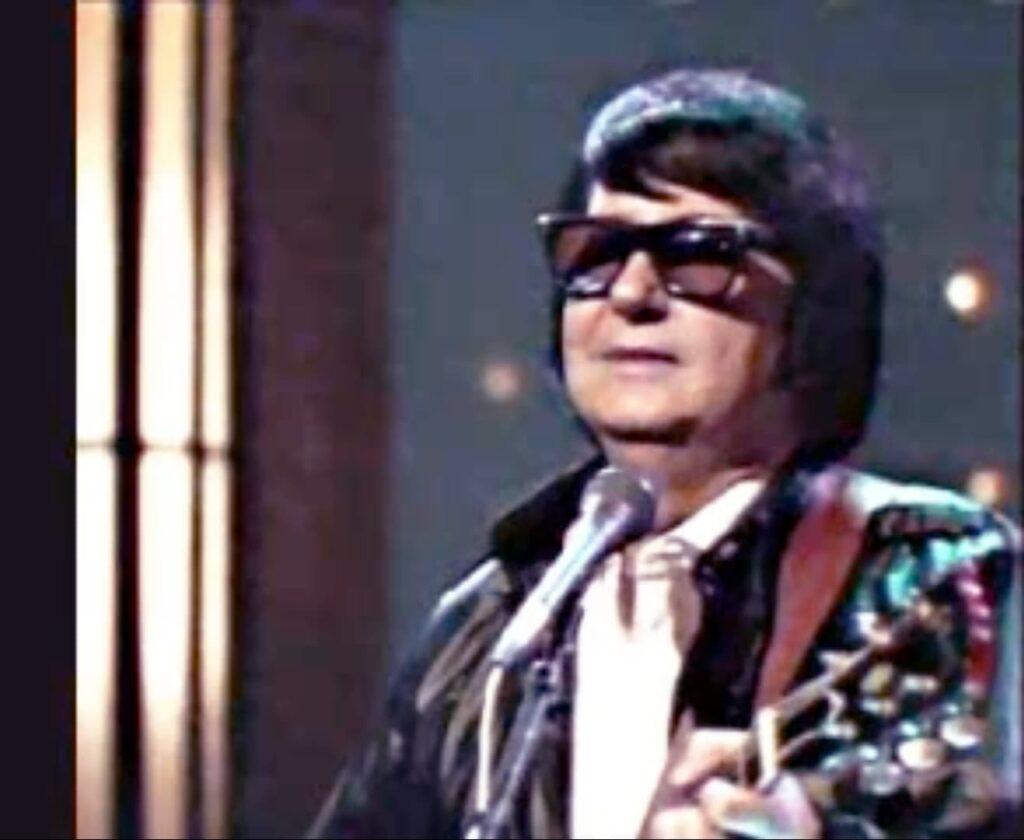
A Rare Roy Orbison Story Where the Journey Ends in Love, Not Heartbreak
For much of his career, Roy Orbison became synonymous with heartbreak. Songs like “Crying,” “It’s Over,” and “Only the Lonely” immortalized characters who loved too deeply, arrived too late, or lost what mattered most. Yet hidden on the B-side of the UK single “Hung Up On You,” released in April 1975, was a very different story. “Spanish Nights,” written by Roy Orbison and longtime collaborator Joe Melson, offered something rarely found in Orbison’s catalog: a happy ending.
At first listen, “Spanish Nights” feels less like a traditional pop song and more like a miniature romantic film. Across just over two minutes, Orbison paints vivid images of village lights glowing after sunset, a small seaside café, moonlit dances, and long walks along the shore. The song unfolds through memories of a love left behind, one that remains alive despite distance and time.
The emotional center of the song arrives when the narrator recalls the words spoken by the woman he left behind: “If you find someone who breaks your heart, you know what to do. Come back. I’ll still be true.” It is a simple promise, yet one that carries remarkable weight. Rather than focusing on betrayal or loss, the song explores loyalty, forgiveness, and the rare comfort of knowing that someone continues to wait.
That theme gives “Spanish Nights” a unique place in Orbison’s body of work. The narrator travels the world searching for something more, only to discover that what he truly needed was the love he had already known. When Orbison sings, “My search is through, I’m coming home,” the line feels deeply personal. By 1975, he had endured profound personal tragedy, dramatic changes in the music industry, and the fading commercial success of his early years. Many listeners have long felt that these lyrics resonate beyond the song’s storyline, reflecting an artist searching for peace after years of uncertainty.
The reunion of Roy Orbison and Joe Melson also adds historical significance. Together, they helped create some of Orbison’s most beloved early classics, including “Only the Lonely,” “Blue Angel,” and “Running Scared.” Hearing their names together again on “Spanish Nights” feels like a return to a creative partnership that once produced musical magic.
Interestingly, Spain itself may be more symbolic than literal. The song’s references to Spanish moons, village lights, sea and sand create a dreamlike landscape that could represent far more than a physical destination. It may be a memory of youth, a lost paradise, or simply a place where love remained untouched by life’s disappointments.
Perhaps the most remarkable aspect of “Spanish Nights” is its conclusion. Unlike so many Orbison songs that end with longing and regret, this story ends with reunion. “At last I’m holding you under the Spanish night,” he sings. The journey is over. The waiting is finished. Love survives.
Looking back today, that may be exactly what makes “Spanish Nights” so enduring. It is not a song about losing one’s way. It is a song about finding the road home again. For an artist whose greatest masterpieces often explored broken hearts, that message feels both rare and beautiful, giving this overlooked B-side a special place in the legacy of Roy Orbison.